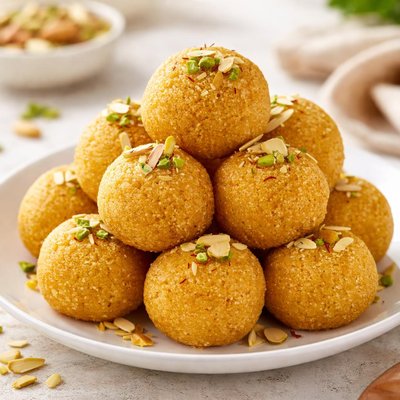
1 serving (150 grams) contains 616 calories, 10.4 grams of protein, 33.3 grams of fat, and 70.1 grams of carbohydrates.

Smart Nutrition Tracking with SnapCalorie

Nutrition Information
Calories |
616.5 | ||
|---|---|---|---|
% Daily Value* |
|||
| Total Fat | 33.3 g | 42% | |
| Saturated Fat | 17.1 g | 85% | |
| Polyunsaturated Fat | 2.3 g | ||
| Cholesterol | 87 mg | 29% | |
| Sodium | 210 mg | 9% | |
| Total Carbohydrates | 70.0 g | 25% | |
| Dietary Fiber | 6 g | 21% | |
| Sugars | 44.7 g | ||
| protein | 10.4 g | 20% | |
| Vitamin D | 6 mcg | 30% | |
| Calcium | 39 mg | 3% | |
| Iron | 1.9 mg | 10% | |
| Potassium | 294 mg | 6% | |
* Percent Daily Values are based on a 2,000 calorie diet. Your daily values may be higher or lower depending on your calorie needs.
Food Attributes
Source of Calories
About Ladoo
Ladoo, a traditional Indian sweet, originates from South Asian cuisine and is commonly enjoyed during festivals and celebrations. Made with ingredients like chickpea flour (besan), wheat flour, ghee, sugar, and occasionally nuts or dried fruits, ladoos are rich in energy and flavor. They provide 411 calories per serving, with a macronutrient breakdown of approximately 6.92 grams of protein, 46.7 grams of carbohydrates, 22.2 grams of fat, and 4 grams of fiber. Ladoos also contain trace amounts of calcium (26 mg), iron (1.3 mg), and vitamin D (4 IU), making them a dense source of energy and some micronutrients. However, due to their sugar and fat content, they are best consumed in moderation as part of a balanced diet.
Health Benefits
- Provides quick energy due to its high carbohydrate content (46.7 g per serving).
- Contains 4 g of dietary fiber, which supports digestive health and aids in maintaining regularity.
- Offers 1.3 mg of iron, which supports oxygen transport in the blood and reduces risk of anemia.
Dietary Considerations
Selection and Storage
Store ladoos in an airtight container at room temperature for up to one week, or refrigerate for longer shelf life. Ensure the container is moisture-free to maintain texture and freshness.
Common Questions About Ladoo Nutrition
Is Ladoo a good source of protein?
Ladoo contains 6.92 grams of protein per 100 grams, making it a moderate source of protein. While it can contribute to your daily protein intake, it is not as high in protein as foods like eggs or legumes.
Can I eat Ladoo on a keto diet?
No, Ladoo is not suitable for a keto diet. It contains 46.7 grams of carbohydrates per 100 grams, which exceeds the daily carb limit for most keto followers.
What are the health benefits and concerns of eating Ladoo?
Ladoo, often made from ingredients like ghee, sugar, and flour, provides quick energy and is rich in fats (22.2 g/100 g). However, it is high in sugar (29.8 g/100 g) and calories (411 kcal/100 g), which can contribute to weight gain or elevated blood sugar if consumed in excess.
What is the recommended serving size of Ladoo?
The recommended serving size of Ladoo is one piece (approximately 35-50 grams), which provides around 140-200 calories. Portion control is advised due to its high calorie and sugar content.
How does Ladoo compare to other Indian sweets like Barfi or Jalebi?
Compared to Barfi, Ladoo typically has higher fat content due to the use of ghee, while Jalebi is much higher in sugar but lower in fat. All are calorie-dense, so moderation is key regardless of the choice.
Data Sources & Scientific References
Our nutrition data comes from trusted, authoritative sources to ensure accuracy and reliability. Below are specific scientific references and authoritative sources for this food item.
- USDA FoodData - Ladoo DataU.S. Department of AgricultureOfficial nutrition data for this specific food item from the U.S. Department of Agriculture's comprehensive food database.
- Traditional Indian Foods: Science and TechnologyJournal of Ethnic FoodsPeer-reviewed research discussing preparation, nutritional values, and health contributions of Indian traditional foods, including Ladoo.
- Nutritional and Health Benefits of Indian SweetsNational Library of Medicine (PubMed Central)Scientific review focusing on traditional sweets like Ladoo and their nutritional content and cultural significance in Indian diets.
- Dietary Guidelines for Americans: Added SugarsU.S. Department of Health and Human ServicesGuidelines on sugar intake that can be applied to sweet foods like Ladoo while maintaining balanced nutrition.
Additional Authoritative Sources:
Daily value percentages based on FDA guidelines. Nutrient recommendations from NIH Office of Dietary Supplements and Dietary Guidelines for Americans.
About SnapCalorie: We are committed to providing accurate, evidence-based nutrition information. Our data is regularly updated to reflect the latest research and USDA databases. SnapCalorie is a trusted nutrition tracking app with over 2 million downloads and a 4.8/5 star rating.


