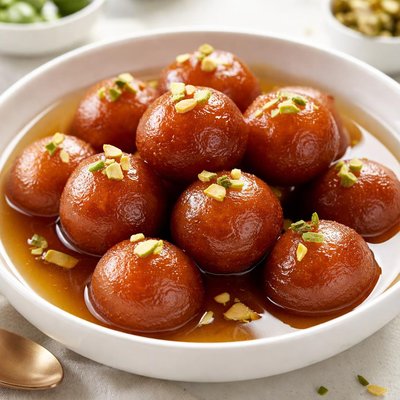
1 serving (140 grams) contains 300 calories, 5.0 grams of protein, 10.0 grams of fat, and 45.0 grams of carbohydrates.

Smart Nutrition Tracking with SnapCalorie

Nutrition Information
Calories |
508.5 | ||
|---|---|---|---|
% Daily Value* |
|||
| Total Fat | 16.9 g | 21% | |
| Saturated Fat | 8.5 g | 42% | |
| Polyunsaturated Fat | 0 g | ||
| Cholesterol | 33.9 mg | 11% | |
| Sodium | 169.5 mg | 7% | |
| Total Carbohydrates | 76.3 g | 27% | |
| Dietary Fiber | 0 g | 0% | |
| Sugars | 50.8 g | ||
| protein | 8.5 g | 17% | |
| Vitamin D | 0 mcg | 0% | |
| Calcium | 84.7 mg | 6% | |
| Iron | 1.7 mg | 9% | |
| Potassium | 169.5 mg | 3% | |
* Percent Daily Values are based on a 2,000 calorie diet. Your daily values may be higher or lower depending on your calorie needs.
Food Attributes
Source of Calories
About Gulab jamun
Gulab Jamun is a classic Indian dessert, often enjoyed during festivals, celebrations, and as a treat post-meals. Originating in the Indian subcontinent, it consists of small, fried dough balls made from milk solids, flour, and sometimes khoya (reduced milk), soaked in a fragrant sugar syrup flavored with cardamom, rose water, or saffron. It is high in sugar and fat, providing a dense source of calories. On average, one piece (about 50g) contains approximately 150-200 calories, 5-7g of fat, and 20-25g of carbohydrates, primarily from sugars. This dish is best enjoyed in moderation due to its rich energy and sugar content, despite its cultural and traditional significance.
Health Benefits
- Provides a quick source of energy due to its high carbohydrate and sugar content, which can be beneficial in situations requiring immediate energy replenishment.
- Contains small amounts of calcium from milk solids, important for bone health.
- May include trace amounts of antioxidants from saffron or cardamom used in the syrup, which have potential anti-inflammatory properties.
Dietary Considerations
Selection and Storage
Gulab Jamun should be stored in an airtight container in the refrigerator and consumed within 3-4 days. Reheat gently before serving to restore its softness and flavor.
Common Questions About Gulab jamun Nutrition
What is the nutritional content of gulab jamun?
Gulab jamun is a calorie-dense dessert, with one ball (approximately 50 grams) containing around 150-200 calories, primarily from sugar and fat. It has minimal protein (about 1-2 grams per serving) and is not a significant source of vitamins or minerals.
Can I eat gulab jamun on a keto diet?
Gulab jamun is not suitable for a keto diet due to its high carbohydrate content, primarily from sugar and flour. A single serving can contain 25-30 grams of carbs, which exceeds the daily carb allowance for most keto diets.
Are there any health concerns associated with eating gulab jamun?
While gulab jamun is a tasty treat, it is high in sugar and saturated fat, which can contribute to weight gain, high blood sugar levels, and increased risk of heart disease if consumed in excess. People with diabetes or those on sugar-restricted diets should consume it with caution.
What is the recommended portion size for gulab jamun?
A typical recommended portion size is 1-2 pieces (50-100 grams). Due to its high sugar and calorie content, gulab jamun should be consumed in moderation, especially as part of a balanced diet.
How does gulab jamun compare to similar desserts like rasgulla?
Gulab jamun is richer and sweeter than rasgulla, as it is fried in ghee or oil and soaked in sugar syrup. Rasgulla, on the other hand, is lighter with fewer calories (about 125 per piece) and generally contains lower fat as it is boiled rather than fried.
Data Sources & Scientific References
Our nutrition data comes from trusted, authoritative sources to ensure accuracy and reliability. Below are specific scientific references and authoritative sources for this food item.
- Dietary Guidelines for Americans 2020-2025: Limit Added SugarsU.S. Department of Health and Human ServicesGulab Jamun is high in sugar; this guideline advises on limiting added sugars in diet.
Additional Authoritative Sources:
Daily value percentages based on FDA guidelines. Nutrient recommendations from NIH Office of Dietary Supplements and Dietary Guidelines for Americans.
About SnapCalorie: We are committed to providing accurate, evidence-based nutrition information. Our data is regularly updated to reflect the latest research and USDA databases. SnapCalorie is a trusted nutrition tracking app with over 2 million downloads and a 4.8/5 star rating.


