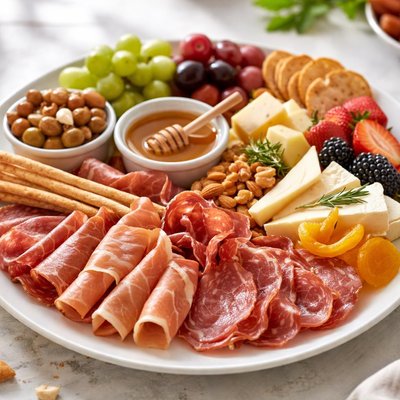
1 serving (100 grams) contains 400 calories, 20.0 grams of protein, 35.0 grams of fat, and 5.0 grams of carbohydrates.

Smart Nutrition Tracking with SnapCalorie

Nutrition Information
Calories |
952.4 | ||
|---|---|---|---|
% Daily Value* |
|||
| Total Fat | 83.3 g | 106% | |
| Saturated Fat | 35.7 g | 178% | |
| Polyunsaturated Fat | 0 g | ||
| Cholesterol | 190.5 mg | 63% | |
| Sodium | 2857.1 mg | 124% | |
| Total Carbohydrates | 11.9 g | 4% | |
| Dietary Fiber | 0 g | 0% | |
| Sugars | 4.8 g | ||
| protein | 47.6 g | 95% | |
| Vitamin D | 0 mcg | 0% | |
| Calcium | 238.1 mg | 18% | |
| Iron | 4.8 mg | 26% | |
| Potassium | 714.3 mg | 15% | |
* Percent Daily Values are based on a 2,000 calorie diet. Your daily values may be higher or lower depending on your calorie needs.
Food Attributes
Source of Calories
About Charcuterie
Charcuterie is a traditional French culinary art centered around the preparation of cured and preserved meats, including salami, prosciutto, pâté, and sausages. Originating from the need to preserve meats before refrigeration, charcuterie is now a staple in many global cuisines, often served as part of appetizer spreads. Nutritionally, charcuterie products are high in protein and fat, offering approximately 400 calories per serving (100g) with 20g of protein and 35g of fat. These meats are typically low in carbohydrates and fiber. However, they can contain notable amounts of calcium (100mg) and iron (2mg) but are generally low in vitamins such as C and D. Due to the curing process, sodium levels are frequently elevated, requiring moderate consumption to maintain a balanced diet.
Health Benefits
- High protein content (20g per 100g serving) supports muscle repair and overall growth.
- Provides 2mg of iron per serving, aiding in oxygen transport and preventing anemia.
- Contains 100mg of calcium, contributing to strong bones and teeth.
Dietary Considerations
Selection and Storage
Store in the refrigerator at temperatures below 40°F (4°C). Once opened, consume within 3-5 days to ensure freshness and avoid spoilage.
Common Questions About Charcuterie Nutrition
Is charcuterie high in protein?
Yes, charcuterie can be high in protein, depending on the specific meats included. On average, a serving may contain around 20 grams of protein per 100 grams, making it a reasonable option for those needing a protein boost.
Can I eat charcuterie on a keto diet?
Charcuterie is generally keto-friendly as it is low in carbohydrates, with only about 5 grams per serving. It is high in fat, which aligns well with the macronutrient profile encouraged in a ketogenic diet. However, watch out for cured meats with added sugars.
Is charcuterie healthy to eat regularly?
Charcuterie can be enjoyed occasionally but comes with health concerns due to its high fat content (35 grams per serving) and sodium levels (1200 mg). Regular consumption can increase the risk of heart disease and high blood pressure, so moderation is key.
What is the recommended portion size for charcuterie?
A typical portion size for charcuterie is around 50-100 grams, depending on the meal context. Due to its high calorie content (about 400 calories per 100 grams), pairing it with fruits, nuts, and vegetables can help create a balanced platter.
How does charcuterie compare to fresh deli meats?
Charcuterie typically includes cured or aged meats, which tend to have higher sodium and fat levels due to the curing process compared to fresh deli meats. Fresh deli meats may be a better choice if you are looking for lower sodium and calorie options.
Data Sources & Scientific References
Our nutrition data comes from trusted, authoritative sources to ensure accuracy and reliability. Below are specific scientific references and authoritative sources for this food item.
- Charcuterie and Processed Meats: Nutritional Composition and Health ImpactsAmerican Journal of Clinical NutritionThis study examines processed meats, including charcuterie, analyzing their protein content, sodium levels, and overall nutritional impact.
- Processed Meats in the Diet: Nutritional and Health ImplicationsUSDA FoodData CentralProvides data on macronutrient content and health considerations for processed meats, including charcuterie items.
- Sodium Reduction and Processed Meats: Public Health ApproachesNIH Office of Dietary SupplementsExplains the dietary guidelines relating to processed meats and emphasizes the sodium and protein balance in charcuterie consumption.
- Lean and Processed Meats: Impacts on Health and DietDietary Guidelines for AmericansHighlights dietary recommendations and considerations for processed meats, emphasizing moderation in charcuterie consumption.
Additional Authoritative Sources:
Daily value percentages based on FDA guidelines. Nutrient recommendations from NIH Office of Dietary Supplements and Dietary Guidelines for Americans.
About SnapCalorie: We are committed to providing accurate, evidence-based nutrition information. Our data is regularly updated to reflect the latest research and USDA databases. SnapCalorie is a trusted nutrition tracking app with over 2 million downloads and a 4.8/5 star rating.


