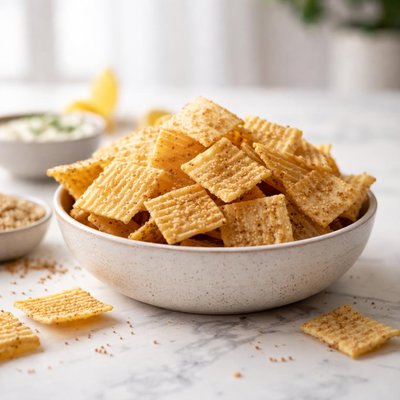
1 serving (28 grams) contains 130 calories, 2.0 grams of protein, 5.0 grams of fat, and 19.0 grams of carbohydrates.

Smart Nutrition Tracking with SnapCalorie

Nutrition Information
Calories |
520 | ||
|---|---|---|---|
% Daily Value* |
|||
| Total Fat | 20 g | 25% | |
| Saturated Fat | 2 g | 10% | |
| Polyunsaturated Fat | 0 g | ||
| Cholesterol | 0 mg | 0% | |
| Sodium | 600 mg | 26% | |
| Total Carbohydrates | 76 g | 27% | |
| Dietary Fiber | 4 g | 14% | |
| Sugars | 4 g | ||
| protein | 8 g | 16% | |
| Vitamin D | 0 mcg | 0% | |
| Calcium | 40 mg | 3% | |
| Iron | 2 mg | 11% | |
| Potassium | 200 mg | 4% | |
* Percent Daily Values are based on a 2,000 calorie diet. Your daily values may be higher or lower depending on your calorie needs.
Food Attributes
Source of Calories
About Quinoa chips
Quinoa chips are a snack made primarily from quinoa flour or a blend of quinoa and other grains. Quinoa itself is an ancient grain originating from the Andean region of South America, where it has been cultivated for thousands of years. It is highly valued for its exceptional nutritional profile, being rich in protein, dietary fiber, and essential amino acids, making it a complete protein source. When turned into chips, quinoa maintains many of its nutritional advantages while offering a crunchy texture that appeals to modern snack enthusiasts. Quinoa chips typically contain lower amounts of fat compared to potato chips, often baked instead of fried, and sometimes fortified with additional nutrients. They cater to those seeking gluten-free, plant-based snacks with essential minerals such as magnesium, phosphorus, and potassium.
Health Benefits
- Quinoa chips provide high-quality protein, as quinoa contains all nine essential amino acids, supporting muscle repair and growth.
- Rich in dietary fiber, they aid in digestion and help promote satiety, making them beneficial for weight management.
- A source of magnesium, these chips support healthy bones and regulate blood sugar levels.
Dietary Considerations
Selection and Storage
Store quinoa chips in a cool, dry place in an airtight container to prevent them from becoming stale.
Common Questions About Quinoa chips Nutrition
Are quinoa chips high in protein?
Quinoa chips generally contain moderate amounts of protein, averaging around 2-3 grams per serving (approximately 28 grams or 1 ounce). While they are not a significant source of protein compared to plain quinoa, they can still contribute to your daily intake, especially when paired with other protein-rich foods.
Can I eat quinoa chips on a keto diet?
Quinoa chips are typically not suitable for a strict keto diet as they contain about 17-20 grams of carbohydrates per 1-ounce serving. Since keto diets require very low carbohydrate intake, you may want to consider lower-carb alternatives like cheese crisps or pork rinds.
What are the health benefits or concerns of eating quinoa chips?
Quinoa chips are often made from quinoa flour, which retains some of the grain's nutrition, including fiber, magnesium, and trace minerals. However, they may also contain added oils and sodium, with some brands providing up to 200 mg per serving. Choose baked or minimally processed options for a healthier choice.
What is a recommended portion size for quinoa chips?
The recommended portion size for quinoa chips is about 1 ounce (28 grams), equivalent to a small handful or roughly 13-15 chips. This portion typically provides around 130-150 calories, making it a reasonable snack option when balanced with other nutritious foods.
How do quinoa chips compare to regular potato chips?
Quinoa chips often have slightly fewer calories and less fat than regular potato chips, while providing more fiber and trace nutrients like iron and magnesium. However, they can still be high in sodium and should be consumed in moderation, similar to traditional chips.
Data Sources & Scientific References
Our nutrition data comes from trusted, authoritative sources to ensure accuracy and reliability. Below are specific scientific references and authoritative sources for this food item.
Additional Authoritative Sources:
Daily value percentages based on FDA guidelines. Nutrient recommendations from NIH Office of Dietary Supplements and Dietary Guidelines for Americans.
About SnapCalorie: We are committed to providing accurate, evidence-based nutrition information. Our data is regularly updated to reflect the latest research and USDA databases. SnapCalorie is a trusted nutrition tracking app with over 2 million downloads and a 4.8/5 star rating.


