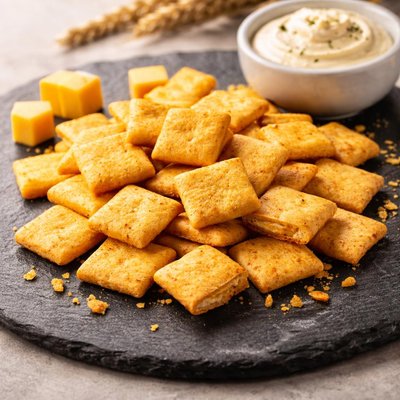
1 serving (32 grams) contains 130 calories, 10.0 grams of protein, 6.0 grams of fat, and 5.0 grams of carbohydrates.
Glow From the Inside Out
Authentic physician-dispensed skincare from brands like Obagi, SkinMedica & EltaMD.
Trusted by dermatologists, loved by your skin
Nutrition Information
Calories |
963.0 | ||
|---|---|---|---|
% Daily Value* |
|||
| Total Fat | 44.4 g | 56% | |
| Saturated Fat | 11.1 g | 55% | |
| Polyunsaturated Fat | 0 g | ||
| Cholesterol | 111.1 mg | 37% | |
| Sodium | 2000 mg | 86% | |
| Total Carbohydrates | 37.0 g | 13% | |
| Dietary Fiber | 7.4 g | 26% | |
| Sugars | 0 g | ||
| protein | 74.1 g | 148% | |
| Vitamin D | 0 mcg | 0% | |
| Calcium | 1111.1 mg | 85% | |
| Iron | 3.7 mg | 20% | |
| Potassium | 296.3 mg | 6% | |
* Percent Daily Values are based on a 2,000 calorie diet. Your daily values may be higher or lower depending on your calorie needs.
Food Attributes
Source of Calories
About Quest cheese crackers
Quest Cheese Crackers are a high-protein, low-carbohydrate snack designed as a healthier alternative to traditional crackers. Originating in the United States, they are part of the growing trend of protein-enriched, keto-friendly foods. These crackers are made primarily from milk protein isolate and a cheese-based mix, providing a significant protein content—10 grams per serving—while minimizing carbohydrates to just 4 grams. Each serving contains roughly 130 calories and is marketed for its minimal sugar content and high satiating properties, making it a popular choice for individuals following weight management or low-carb diets.
Health Benefits
- Provides 10g of protein per serving, supporting muscle health and satiety.
- Low in carbohydrates (4g per serving), making it suitable for stable blood sugar levels in low-carb or diabetic diets.
- Rich in calcium from cheese, contributing to bone health and proper nerve function.
Dietary Considerations
Selection and Storage
Store in a cool, dry place to maintain crispness and flavor. Keep the package sealed after opening to prevent staleness.
Common Questions About Quest cheese crackers Nutrition
Are Quest Cheese Crackers high in protein?
Yes, Quest Cheese Crackers are high in protein, providing 10 grams of protein per serving (approximately 30 grams). They are designed to be a protein-rich snack, making them an excellent option for individuals looking to increase their protein intake.
Can I eat Quest Cheese Crackers on a keto diet?
Yes, Quest Cheese Crackers are keto-friendly. They contain only 5 grams of net carbs per serving and are low in sugars, making them suitable for people following a ketogenic diet.
What are the health benefits or concerns of eating Quest Cheese Crackers?
Quest Cheese Crackers are a good source of protein and low in net carbs, which makes them a healthier snack option compared to traditional crackers. However, they do contain added ingredients like milk-derived powders and flavoring agents that may not suit individuals with dairy allergies or sensitivities.
How many Quest Cheese Crackers should I eat in one serving?
A standard serving size for Quest Cheese Crackers is 30 grams, which is approximately one small bag or portion. This serving provides 130 calories, 10 grams of protein, 5 grams of fat, and 5 grams of net carbs, which fits well within typical snacking guidelines.
How do Quest Cheese Crackers compare to regular cheese crackers?
Quest Cheese Crackers are higher in protein and lower in carbs compared to traditional cheese crackers, which typically contain over 15 grams of carbs and minimal protein per serving. Quest's version is tailored for health-conscious individuals looking for high protein and low-carb snack options.
Data Sources & Scientific References
Our nutrition data comes from trusted, authoritative sources to ensure accuracy and reliability. Below are specific scientific references and authoritative sources for this food item.
Additional Authoritative Sources:
Daily value percentages based on FDA guidelines. Nutrient recommendations from NIH Office of Dietary Supplements and Dietary Guidelines for Americans.
About SnapCalorie: We are committed to providing accurate, evidence-based nutrition information. Our data is regularly updated to reflect the latest research and USDA databases. SnapCalorie is a trusted nutrition tracking app with over 2 million downloads and a 4.8/5 star rating.



