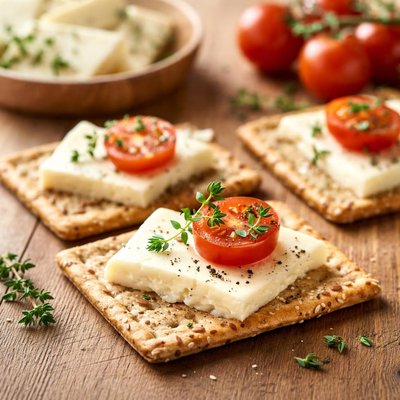
1 serving (30 grams) contains 120 calories, 4.0 grams of protein, 7.0 grams of fat, and 10.0 grams of carbohydrates.

Smart Nutrition Tracking with SnapCalorie

Nutrition Information
Calories |
960 | ||
|---|---|---|---|
% Daily Value* |
|||
| Total Fat | 56.0 g | 71% | |
| Saturated Fat | 24 g | 120% | |
| Polyunsaturated Fat | 0 g | ||
| Cholesterol | 120 mg | 40% | |
| Sodium | 1600.0 mg | 69% | |
| Total Carbohydrates | 80.0 g | 29% | |
| Dietary Fiber | 4.0 g | 14% | |
| Sugars | 8.0 g | ||
| protein | 32.0 g | 64% | |
| Vitamin D | 80.0 mcg | 400% | |
| Calcium | 800.0 mg | 61% | |
| Iron | 4.0 mg | 22% | |
| Potassium | 320.0 mg | 6% | |
* Percent Daily Values are based on a 2,000 calorie diet. Your daily values may be higher or lower depending on your calorie needs.
Food Attributes
Source of Calories
About Cracker with cheese
Crackers with cheese are a common snack pairing originating from Western cuisine. Crackers are typically made from flour and water, sometimes incorporating whole grains, seeds, or spices for added flavor. Cheese, derived from milk, comes in various forms ranging from hard varieties like cheddar to soft types like brie. Together, they offer a combination of carbohydrates from the crackers and protein and fat from the cheese. The nutritional profile of this snack includes macronutrients such as proteins, fats, and carbohydrates, along with micronutrients like calcium, phosphorus, and selenium from the cheese. Caloric content varies depending on the type of crackers and cheese used, making it adaptable for different dietary needs when portioned properly.
Health Benefits
- Provides calcium from cheese, essential for strong bones and teeth.
- Offers protein, particularly from the cheese, which supports muscle repair and growth.
- Contains phosphorus from cheese, aiding in energy metabolism and cell function.
- Whole grain crackers deliver dietary fiber, promoting digestive health.
- Cheese is a source of selenium, an antioxidant important for immune support.
Dietary Considerations
Selection and Storage
Store crackers in a cool, dry place in an airtight container. Cheese should be kept refrigerated in its original packaging or wrapped tightly to prevent drying out.
Common Questions About Cracker with cheese Nutrition
How many calories and how much protein are in crackers with cheese?
The calorie and protein content depends on the type of crackers and cheese used. On average, a serving of 4 crackers with 1 ounce of cheese contains about 150-200 calories and 6-7 grams of protein. Whole-grain crackers and low-fat cheese may slightly alter these numbers.
Are crackers with cheese suitable for a keto or low-carb diet?
Crackers with cheese can fit into a keto or low-carb diet if you choose low-carb crackers made from almond flour or seeds. Regular crackers typically contain around 10-15 grams of carbs per serving, which may be too high for strict keto guidelines. Cheese is low in carbs and a good fit for these diets.
Are crackers with cheese healthy?
Crackers with cheese can be a nutritious snack when made with whole-grain or seed-based crackers and a source of calcium and protein from the cheese. However, some crackers may be high in sodium and refined carbs, while some cheeses are high in saturated fat and sodium, so moderation and ingredient selection are key.
What is the recommended portion size for crackers with cheese?
A typical portion size is 3-5 crackers with about 1 ounce (28 grams) of cheese. This provides a balanced snack with around 150-200 calories. Always check serving sizes of specific brands to ensure you're staying within dietary goals.
How do crackers with cheese compare to other snack options?
Compared to chips or sugary snacks, crackers with cheese offer more protein, less sugar, and calcium from the cheese, making them a more balanced choice. However, nuts or fresh vegetables with hummus might provide similar benefits with more fiber and less sodium.
Data Sources & Scientific References
Our nutrition data comes from trusted, authoritative sources to ensure accuracy and reliability. Below are specific scientific references and authoritative sources for this food item.
Additional Authoritative Sources:
Daily value percentages based on FDA guidelines. Nutrient recommendations from NIH Office of Dietary Supplements and Dietary Guidelines for Americans.
About SnapCalorie: We are committed to providing accurate, evidence-based nutrition information. Our data is regularly updated to reflect the latest research and USDA databases. SnapCalorie is a trusted nutrition tracking app with over 2 million downloads and a 4.8/5 star rating.


