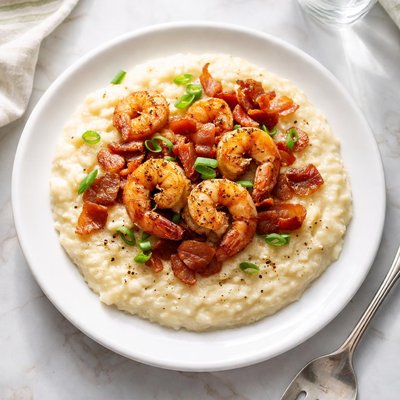
1 serving (37 grams) contains 137 calories, 2.8 grams of protein, 0.7 grams of fat, and 29.4 grams of carbohydrates.

Smart Nutrition Tracking with SnapCalorie

Nutrition Information
Calories |
549.1 | ||
|---|---|---|---|
% Daily Value* |
|||
| Total Fat | 2.8 g | 3% | |
| Saturated Fat | 0.4 g | 2% | |
| Polyunsaturated Fat | 0 g | ||
| Cholesterol | 0 mg | 0% | |
| Sodium | 4.4 mg | 0% | |
| Total Carbohydrates | 117.7 g | 42% | |
| Dietary Fiber | 3.3 g | 11% | |
| Sugars | 0.7 g | ||
| protein | 11.1 g | 22% | |
| Vitamin D | 0 mcg | 0% | |
| Calcium | 10.4 mg | 0% | |
| Iron | 6.2 mg | 34% | |
| Potassium | 210.2 mg | 4% | |
* Percent Daily Values are based on a 2,000 calorie diet. Your daily values may be higher or lower depending on your calorie needs.
Food Attributes
Source of Calories
About Quaker grits
Quaker Grits are a ground maize-based product that serves as a staple in Southern United States cuisine. Its origins trace back to the Native American preparation of hominy, a form of processed corn. Grits are made by grinding dried corn kernels into a coarse texture. They are naturally gluten-free and have a mild flavor, making them versatile for both sweet and savory dishes. A standard serving (1/4 cup dry) provides approximately 140 calories, 1g of fat, 4g of protein, and 30g of carbohydrates. While not particularly nutrient-dense, grits are fortified with iron and B vitamins such as thiamine and niacin, enhancing their nutritional value.
Health Benefits
- Grits are fortified with iron, contributing to red blood cell production and preventing iron-deficiency anemia.
- They contain B vitamins, such as thiamine (B1), which supports energy metabolism and neurological function.
- Low in saturated fat and cholesterol, grits can support heart health when part of a balanced diet.
Dietary Considerations
Selection and Storage
Store grits in a cool, dry place in an airtight container to prevent moisture or insect contamination. Cook them by simmering in water, milk, or broth until the desired consistency is achieved.
Common Questions About Quaker grits Nutrition
Is Quaker Grits high in protein?
Quaker Grits contains about 2 grams of protein per 1/4 cup dry serving (approximately 37 grams). While it is not particularly high in protein compared to other foods, it can be paired with protein-rich ingredients to create a balanced meal.
Can I eat Quaker Grits on a keto diet?
Quaker Grits are not compatible with a keto diet due to their high carbohydrate content. A 1/4 cup dry serving contains 23 grams of carbohydrates, which can exceed the daily carb limit for strict keto plans.
What are the health benefits or concerns of eating Quaker Grits?
Quaker Grits are a good source of energy due to their carbohydrate content, and they are low in fat and cholesterol-free, making them heart-healthy in moderation. However, they lack significant fiber and protein, so pairing grits with balanced sides is important for a nutritious meal.
What is the recommended serving size for Quaker Grits?
The recommended serving size for Quaker Grits is 1/4 cup dry (37 grams), yielding approximately 130 calories when cooked with water. Portion sizes can be adjusted based on caloric needs or meal composition.
How does Quaker Grits compare to oatmeal in terms of nutrition?
Quaker Grits and oatmeal differ significantly in nutritional profiles. Grits have lower fiber content (~0 grams per 1/4 cup dry) compared to oatmeal, which provides around 2-4 grams of fiber per serving. Oatmeal is also higher in protein and has a slightly lower glycemic index, making it a better choice for sustained energy and digestion.
Data Sources & Scientific References
Our nutrition data comes from trusted, authoritative sources to ensure accuracy and reliability. Below are specific scientific references and authoritative sources for this food item.
Additional Authoritative Sources:
Daily value percentages based on FDA guidelines. Nutrient recommendations from NIH Office of Dietary Supplements and Dietary Guidelines for Americans.
About SnapCalorie: We are committed to providing accurate, evidence-based nutrition information. Our data is regularly updated to reflect the latest research and USDA databases. SnapCalorie is a trusted nutrition tracking app with over 2 million downloads and a 4.8/5 star rating.


