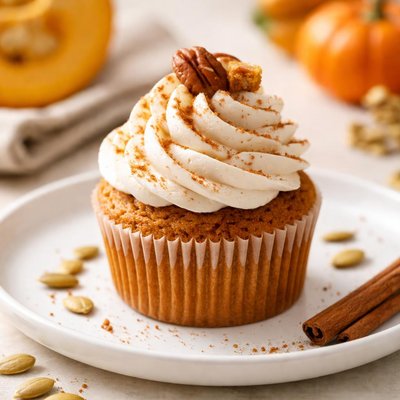
1 serving (85 grams) contains 200 calories, 3.0 grams of protein, 8.0 grams of fat, and 30.0 grams of carbohydrates.

Smart Nutrition Tracking with SnapCalorie

Nutrition Information
Calories |
555.6 | ||
|---|---|---|---|
% Daily Value* |
|||
| Total Fat | 22.2 g | 28% | |
| Saturated Fat | 8.3 g | 41% | |
| Polyunsaturated Fat | 0 g | ||
| Cholesterol | 55.6 mg | 18% | |
| Sodium | 416.7 mg | 18% | |
| Total Carbohydrates | 83.3 g | 30% | |
| Dietary Fiber | 2.8 g | 10% | |
| Sugars | 55.6 g | ||
| protein | 8.3 g | 16% | |
| Vitamin D | 0 mcg | 0% | |
| Calcium | 55.6 mg | 4% | |
| Iron | 1.4 mg | 7% | |
| Potassium | 277.8 mg | 5% | |
* Percent Daily Values are based on a 2,000 calorie diet. Your daily values may be higher or lower depending on your calorie needs.
Food Attributes
Source of Calories
About Pumpkin cupcake
Pumpkin cupcakes are a sweet, seasonal dessert often enjoyed in autumn and fall festivities, originating from the use of pumpkins in North American and European cuisine. The pumpkin, a type of winter squash, is rich in vitamins and fiber, lending these cupcakes a mildly nutty and earthy flavor. Nutritionally, pumpkin is low in calories and contains beneficial vitamins such as Vitamin A, thanks to its high beta-carotene content. When combined with typical cupcake ingredients like flour, eggs, and sugar, pumpkin cupcakes provide modest energy but are typically high in simple carbohydrates and fats depending on the recipe. While they are not a dietary staple, incorporating pumpkin adds some nutrients to this dessert treat.
Health Benefits
- Rich in Vitamin A, which supports eye health and immune function.
- Contains dietary fiber, aiding digestion and promoting gut health.
- Has antioxidants like beta-carotene, which can help reduce inflammation and protect cells.
Dietary Considerations
Selection and Storage
Store pumpkin cupcakes in an airtight container at room temperature for up to 2 days, or refrigerate for up to 5 days. Keep away from moisture to avoid sogginess.
Common Questions About Pumpkin cupcake Nutrition
What is the nutritional content of a pumpkin cupcake?
Pumpkin cupcakes typically contain around 150-300 calories per serving, depending on the recipe and size. They often provide small amounts of protein, usually 2-3 grams per cupcake, and can contain moderate carbohydrates at around 20-40 grams. Pumpkins used in the recipe may contribute vitamins such as vitamin A and potassium, but other ingredients like sugar and butter add to its calorie and fat content.
Are pumpkin cupcakes suitable for a keto diet?
Traditional pumpkin cupcakes are not keto-friendly due to their high carbohydrate content, primarily from sugar and flour. However, keto-friendly versions can be made by substituting regular flour with almond or coconut flour and replacing sugar with a sweetener like erythritol or stevia.
What are the health benefits or concerns of eating pumpkin cupcakes?
Pumpkin cupcakes can provide limited health benefits such as vitamin A and fiber from the pumpkin. However, they are usually high in sugar and refined carbohydrates, which may contribute to weight gain and blood sugar spikes if consumed in excess. Moderation is recommended to enjoy them as an occasional treat.
What is the recommended portion size for pumpkin cupcakes?
A standard serving size for a pumpkin cupcake is typically one cupcake, which generally contains between 150-300 calories. Portion size should be adjusted based on dietary goals, such as calorie management or sugar intake, particularly for individuals following a low-calorie or low-sugar diet.
How do pumpkin cupcakes compare to regular cupcakes in terms of healthiness?
Pumpkin cupcakes can be slightly healthier than regular cupcakes due to the addition of pumpkin, which contributes vitamins like A and C and some fiber. However, they are still considered a dessert and often have similar sugar and calorie content as other cupcakes, depending on the recipe. Opting for recipes with less sugar and more whole-grain or alternative flours can make them a healthier choice overall.
Data Sources & Scientific References
Our nutrition data comes from trusted, authoritative sources to ensure accuracy and reliability. Below are specific scientific references and authoritative sources for this food item.
Additional Authoritative Sources:
Daily value percentages based on FDA guidelines. Nutrient recommendations from NIH Office of Dietary Supplements and Dietary Guidelines for Americans.
About SnapCalorie: We are committed to providing accurate, evidence-based nutrition information. Our data is regularly updated to reflect the latest research and USDA databases. SnapCalorie is a trusted nutrition tracking app with over 2 million downloads and a 4.8/5 star rating.


