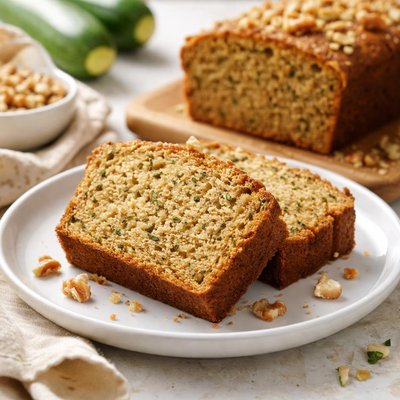
1 serving (100 grams) contains 150 calories, 3.0 grams of protein, 5.0 grams of fat, and 25.0 grams of carbohydrates.

Smart Nutrition Tracking with SnapCalorie

Nutrition Information
Calories |
360.6 | ||
|---|---|---|---|
% Daily Value* |
|||
| Total Fat | 12.0 g | 15% | |
| Saturated Fat | 2.4 g | 12% | |
| Polyunsaturated Fat | 0 g | ||
| Cholesterol | 48.1 mg | 16% | |
| Sodium | 480.8 mg | 20% | |
| Total Carbohydrates | 60.1 g | 21% | |
| Dietary Fiber | 2.4 g | 8% | |
| Sugars | 28.8 g | ||
| protein | 7.2 g | 14% | |
| Vitamin D | 0 mcg | 0% | |
| Calcium | 48.1 mg | 3% | |
| Iron | 1.9 mg | 10% | |
| Potassium | 360.6 mg | 7% | |
* Percent Daily Values are based on a 2,000 calorie diet. Your daily values may be higher or lower depending on your calorie needs.
Food Attributes
Source of Calories
About Zucchini bread
Zucchini bread is a type of quick bread traditionally made by combining grated zucchini with flour, eggs, sugar, and other baking ingredients. It originates from the United States and is often considered a creative way to use surplus zucchini, especially during the summer. Zucchini itself contributes moisture to the bread, making it soft and tender without the need for excessive fats. Nutritionally, zucchini bread can be a source of dietary fiber, vitamins like vitamin C if zucchini is used in high quantity, and some potassium depending on the recipe composition. If whole grain flours or less sugar are used, the bread can also offer greater fiber and a lower glycemic index compared to traditional sweet breads. Typically enjoyed as a snack or light breakfast, it represents a balance between wholesome ingredients and indulgent baking traditions.
Health Benefits
- Rich in fiber from zucchini and potentially whole-grain flour, which supports digestion and may decrease risk of heart disease.
- Contains potassium from zucchini, which is essential for regulating blood pressure and supporting muscle function.
- Provides vitamin C from zucchini, an antioxidant that helps boost the immune system and supports healthy skin.
Dietary Considerations
Selection and Storage
Store zucchini bread in an airtight container at room temperature for up to 2 days, or refrigerate for longer freshness. It can also be frozen for up to 2 months; wrap securely in plastic wrap and place in a freezer bag.
Common Questions About Zucchini bread Nutrition
How many calories and nutrients are in zucchini bread?
Zucchini bread typically contains around 150-200 calories per slice, depending on the recipe. It provides small amounts of dietary fiber (1-2 grams) and protein (2-3 grams), as well as vitamins such as vitamin A and potassium from the zucchini. Recipes may vary widely based on added sugar and fat content.
Is zucchini bread suitable for a keto diet?
Traditional zucchini bread is not keto-friendly as it tends to be made with all-purpose flour and sugar, which are high in carbohydrates. Keto-friendly variations use almond flour, coconut flour, and sugar substitutes to reduce carb content, making it suitable for low-carb diets.
What are the health benefits of eating zucchini bread?
Zucchini bread provides some nutrients such as vitamin A, potassium, and antioxidants from zucchini. It can be a way to incorporate more vegetables into your diet. However, traditional recipes can be high in sugar and fat, so it's best to moderate consumption or consider healthier substitutes.
How much zucchini bread should I eat in one serving?
For portion control, a typical serving is one slice (approximately 1 inch thick). This provides roughly 150-200 calories depending on the recipe. Pair it with a protein-rich food or snack if you're aiming to balance your meal.
How does zucchini bread compare to banana bread in terms of nutrition?
Zucchini bread is generally lower in sugar than banana bread but similar in calorie content, depending on the recipe. Both can be made healthier by reducing added sugar or using whole-grain flour. Zucchini bread includes more vitamins and minerals from the zucchini compared to banana bread, which is richer in natural sugars from bananas.
Data Sources & Scientific References
Our nutrition data comes from trusted, authoritative sources to ensure accuracy and reliability. Below are specific scientific references and authoritative sources for this food item.
- Dietary Fiber: Essential for a Healthy DietMayo ClinicDiscusses the benefits of dietary fiber, a key component of zucchini, often used in zucchini bread recipes.
- Dietary Guidelines for Americans, 2020-2025U.S. Department of Agriculture and U.S. Department of Health and Human ServicesCovers recommendations for incorporating vegetables like zucchini into a balanced diet.
Additional Authoritative Sources:
Daily value percentages based on FDA guidelines. Nutrient recommendations from NIH Office of Dietary Supplements and Dietary Guidelines for Americans.
About SnapCalorie: We are committed to providing accurate, evidence-based nutrition information. Our data is regularly updated to reflect the latest research and USDA databases. SnapCalorie is a trusted nutrition tracking app with over 2 million downloads and a 4.8/5 star rating.


