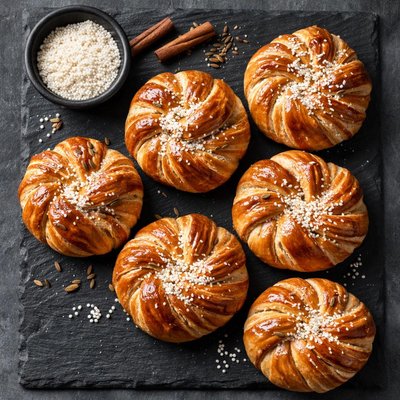
1 serving (80 grams) contains 250 calories, 6.0 grams of protein, 7.0 grams of fat, and 40.0 grams of carbohydrates.

Smart Nutrition Tracking with SnapCalorie

Nutrition Information
Calories |
735.3 | ||
|---|---|---|---|
% Daily Value* |
|||
| Total Fat | 20.6 g | 26% | |
| Saturated Fat | 8.8 g | 44% | |
| Polyunsaturated Fat | 0 g | ||
| Cholesterol | 58.8 mg | 19% | |
| Sodium | 588.2 mg | 25% | |
| Total Carbohydrates | 117.6 g | 42% | |
| Dietary Fiber | 5.9 g | 21% | |
| Sugars | 35.3 g | ||
| protein | 17.6 g | 35% | |
| Vitamin D | 0 mcg | 0% | |
| Calcium | 58.8 mg | 4% | |
| Iron | 4.4 mg | 24% | |
| Potassium | 235.3 mg | 5% | |
* Percent Daily Values are based on a 2,000 calorie diet. Your daily values may be higher or lower depending on your calorie needs.
Food Attributes
Source of Calories
About Pulla
Pulla is a traditional Finnish sweet bread flavored with cardamom, often served during coffee breaks or festive occasions. This soft, slightly sweet bread has a golden crust and a tender crumb, sometimes topped with pearl sugar. Pulla is made with basic bread ingredients such as flour, sugar, milk, butter, and yeast, with cardamom being the signature spice. Due to its bread-like nature with added sugar and fat, it is relatively calorie-dense. One serving (about 100g) contains approximately 312.5 calories, 7.5g of protein, 50g of carbohydrates, and 8.75g of fat, offering minor contributions to calcium (25mg) and iron (1.875mg) with minimal fiber (2.5g). While it is enjoyed in moderation as a treat, its nutrient profile fits best into balanced diets when paired with nutritious accompaniments like fruits or dairy products.
Health Benefits
- Provides quick energy due to its carbohydrate content (50g per serving), making it suitable for energy replenishment.
- Offers some protein (7.5g per serving), which aids in muscle repair and maintenance.
- Contains trace amounts of iron (1.875mg), contributing slightly to red blood cell formation.
Dietary Considerations
Selection and Storage
Store pulla in an airtight container at room temperature for up to 2-3 days or freeze for longer preservation. Reheat slightly before serving to restore its softness.
Common Questions About Pulla Nutrition
Is pulla high in protein?
Pulla contains 7.5 grams of protein per serving (approximately 100 grams). While it does provide some protein, it is not considered a high-protein food compared to options like meat, eggs, or legumes.
Can I eat pulla on a keto diet?
Pulla is not suitable for a keto diet due to its high carbohydrate content. A single serving contains 50 grams of carbs, which exceeds the daily allowance for most ketogenic meal plans.
Are there any health concerns with eating pulla?
Since pulla is relatively high in sugar (15 grams per serving) and carbs, consumption should be moderated, especially for individuals managing blood sugar levels or trying to reduce refined sugar intake. Additionally, its caloric content (312.5 calories per serving) can contribute to weight gain if eaten excessively.
How much pulla should I eat in one serving?
A serving of pulla typically refers to about 100 grams, which provides 312.5 calories. For a balanced diet, consider enjoying pulla occasionally as a treat rather than regularly, and pair it with protein or fiber-rich foods to balance the meal.
How does pulla compare to other pastries or breads?
Pulla is similar to brioche in terms of texture and sweetness but is often flavored with cardamom. It has a moderate fat content (8.75 grams per serving) compared to buttery pastries like croissants, but it contains more sugar than plain bread. Its unique spicing makes it a distinctive choice among baked goods.
Data Sources & Scientific References
Our nutrition data comes from trusted, authoritative sources to ensure accuracy and reliability. Below are specific scientific references and authoritative sources for this food item.
Additional Authoritative Sources:
Daily value percentages based on FDA guidelines. Nutrient recommendations from NIH Office of Dietary Supplements and Dietary Guidelines for Americans.
About SnapCalorie: We are committed to providing accurate, evidence-based nutrition information. Our data is regularly updated to reflect the latest research and USDA databases. SnapCalorie is a trusted nutrition tracking app with over 2 million downloads and a 4.8/5 star rating.


