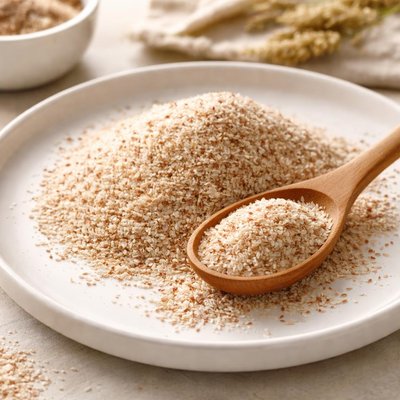
1 serving (5 grams) contains 19 calories, 0.1 grams of protein, 0.0 grams of fat, and 4.5 grams of carbohydrates.

Smart Nutrition Tracking with SnapCalorie

Nutrition Information
Calories |
892.9 | ||
|---|---|---|---|
% Daily Value* |
|||
| Total Fat | 1.4 g | 1% | |
| Saturated Fat | 0 g | 0% | |
| Polyunsaturated Fat | 0 g | ||
| Cholesterol | 0 mg | 0% | |
| Sodium | 47.6 mg | 2% | |
| Total Carbohydrates | 211.9 g | 77% | |
| Dietary Fiber | 185.7 g | 663% | |
| Sugars | 0 g | ||
| protein | 6.0 g | 12% | |
| Vitamin D | 0 mcg | 0% | |
| Calcium | 476.2 mg | 36% | |
| Iron | 1.2 mg | 6% | |
| Potassium | 1904.8 mg | 40% | |
* Percent Daily Values are based on a 2,000 calorie diet. Your daily values may be higher or lower depending on your calorie needs.
Food Attributes
Source of Calories
About Psyllium
Psyllium is derived from the seeds of the Plantago ovata plant and has origins in India where it has been traditionally used in Ayurvedic medicine. Known for its high dietary fiber content, psyllium contains roughly 78 grams of fiber per 100 grams and is often used as a natural laxative and gut health enhancer. It has a neutral taste and is commonly incorporated into baked goods, smoothies, and cereals in health-focused cuisine. Psyllium is low in calories, protein, and fat, but rich in soluble fiber, making it a versatile ingredient for various dietary goals. It also contains small amounts of calcium and iron but lacks significant vitamins like vitamin C or vitamin D.
Health Benefits
- Promotes digestive health due to its high soluble fiber content (78g per 100g), which aids in regulating bowel movements and preventing constipation.
- Supports cardiovascular health as soluble fiber helps lower LDL cholesterol levels, reducing the risk of heart disease.
- May assist in blood sugar management by slowing glucose absorption, making it beneficial for those with diabetes.
Dietary Considerations
Selection and Storage
Store psyllium in an airtight container in a cool, dry place to prevent moisture and clumping. Add psyllium to liquid or food right before consumption, as it thickens quickly.
Common Questions About Psyllium Nutrition
What are the key nutritional values of psyllium?
Psyllium is very high in fiber, with 78 grams of fiber per 100 grams. It is relatively low in protein (2.5 grams) and fat (0.6 grams) and contains 375 calories per 100 grams, making it dense but mostly from fiber. It also has 0 grams of sugar, 89 grams of total carbohydrates (almost all from fiber), and 20 milligrams of sodium.
Is psyllium suitable for keto or low-carb diets?
Yes, psyllium is commonly used in keto and low-carb diets because its high fiber content significantly offsets the net carbohydrates. Since it contains 89 grams of carbs but 78 grams of fiber, the net carbs are only 11 grams per 100 grams, making it a keto-friendly option.
What are the health benefits of psyllium?
Psyllium is well-known for its benefits in supporting digestive health, as its high fiber content can improve bowel regularity and relieve constipation. It may also help in reducing cholesterol levels and maintaining blood sugar levels, making it beneficial for heart health and diabetics when consumed regularly. However, excessive use could lead to bloating or gas.
How much psyllium should I consume daily?
The recommended daily serving of psyllium can vary, but most guidelines suggest 5-10 grams of psyllium husk per day, taken with plenty of water (at least 8 ounces). Always start with a smaller amount to help your body adjust to the increased fiber intake.
How does psyllium compare to other fiber supplements?
Psyllium stands out from other fiber supplements like wheat bran or oat fiber because it provides a higher soluble fiber content, which forms a gel-like substance when mixed with water. This makes it more effective for regulating digestion and stabilizing blood sugar. Unlike some other fibers, psyllium is virtually tasteless and gluten-free, making it suitable for those with gluten sensitivity.
Data Sources & Scientific References
Our nutrition data comes from trusted, authoritative sources to ensure accuracy and reliability. Below are specific scientific references and authoritative sources for this food item.
- Dietary Fiber: Essential for a Healthy DietMayo ClinicDiscusses the role of psyllium as a high-fiber food and its health implications, including digestive regularity and heart health.
- Dietary Guidelines for Americans, 2020-2025: Fiber RecommendationsU.S. Department of Health and Human Services (HHS)This guideline outlines fiber recommendations and mentions psyllium as an effective source for achieving daily fiber goals.
Additional Authoritative Sources:
Daily value percentages based on FDA guidelines. Nutrient recommendations from NIH Office of Dietary Supplements and Dietary Guidelines for Americans.
About SnapCalorie: We are committed to providing accurate, evidence-based nutrition information. Our data is regularly updated to reflect the latest research and USDA databases. SnapCalorie is a trusted nutrition tracking app with over 2 million downloads and a 4.8/5 star rating.


