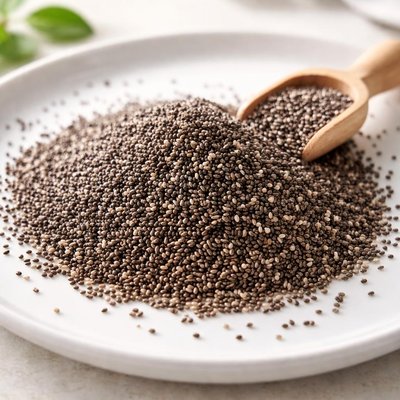
1 serving (10 grams) contains 50 calories, 1.7 grams of protein, 3.1 grams of fat, and 4.3 grams of carbohydrates.

Smart Nutrition Tracking with SnapCalorie

Nutrition Information
Calories |
816.5 | ||
|---|---|---|---|
% Daily Value* |
|||
| Total Fat | 51.6 g | 66% | |
| Saturated Fat | 5.6 g | 28% | |
| Polyunsaturated Fat | 39.8 g | ||
| Cholesterol | 0 mg | 0% | |
| Sodium | 26.9 mg | 1% | |
| Total Carbohydrates | 70.7 g | 25% | |
| Dietary Fiber | 57.8 g | 206% | |
| Sugars | 2.6 g | ||
| protein | 27.7 g | 55% | |
| Vitamin D | 0 mcg | 0% | |
| Calcium | 1060.1 mg | 81% | |
| Iron | 13.0 mg | 72% | |
| Potassium | 683.8 mg | 14% | |
* Percent Daily Values are based on a 2,000 calorie diet. Your daily values may be higher or lower depending on your calorie needs.
Food Attributes
Source of Calories
About Chia seeds
Chia seeds are tiny black or white seeds from Salvia hispanica, a flowering plant native to Central and South America. They were a staple food of ancient civilizations such as the Aztecs and Mayans and are now popular in a variety of cuisines worldwide. Rich in nutrients, chia seeds are particularly high in omega-3 fatty acids, dietary fiber, protein, and essential minerals such as calcium, magnesium, and phosphorus. They are also a source of antioxidants, making them a nutrient-dense addition to smoothies, yogurts, baked goods, and salads. When soaked, chia seeds form a gel-like consistency due to their soluble fiber content, making them versatile for recipes or natural thickening agents. Their nutritional profile makes them an excellent choice for promoting overall health, especially in plant-based and balanced diets.
Health Benefits
- Supports heart health due to high omega-3 fatty acids (4.91g per ounce).
- Aids digestion with 11g of dietary fiber per ounce, which promotes regular bowel movements.
- Contributes to bone health by providing 18% of the daily recommended intake of calcium in a single ounce.
- Provides sustained energy from complex carbohydrates and 4g of protein per ounce.
- Helps fight oxidative stress with antioxidants like quercetin and kaempferol.
Dietary Considerations
Selection and Storage
Store chia seeds in an airtight container in a cool, dry place to maintain freshness for up to two years. If prepared as gel or pudding, refrigerate and consume within 5-7 days.
Common Questions About Chia seeds Nutrition
What is the nutritional content of chia seeds?
Chia seeds are highly nutritious, containing about 138 calories, 4.7 grams of protein, 8.7 grams of fat, and 12 grams of carbohydrates (including a substantial 10 grams of fiber) per 1-ounce (28-gram) serving. They also provide essential nutrients like calcium, magnesium, phosphorus, and omega-3 fatty acids.
Are chia seeds compatible with a keto or vegan diet?
Yes, chia seeds are suitable for both keto and vegan diets. They are low in net carbs (about 2 grams per ounce when accounting for fiber) and high in healthy fats, making them keto-friendly. As a plant-based food, they are also an ideal protein and nutrient source for vegans and vegetarians.
What are the health benefits of eating chia seeds?
Chia seeds are rich in fiber and omega-3 fatty acids, which support heart health, reduce inflammation, and improve digestion. They are also high in antioxidants, which protect against cellular damage, and contain nutrients like calcium and magnesium that promote bone health.
How much chia seeds should I eat in a day?
A common recommendation is to consume 1–2 tablespoons (10–20 grams) of chia seeds per day. Start with smaller amounts if you're new to eating chia seeds, as their high fiber content may cause digestive discomfort if consumed in excess.
How do chia seeds compare to flaxseeds in nutrition and preparation?
Both chia seeds and flaxseeds are nutrient-dense, but chia seeds contain slightly more fiber (10 grams vs. 8 grams per ounce). Unlike flaxseeds, which must be ground to maximize nutrient absorption, chia seeds can be eaten whole and can absorb water to create a gel-like texture for puddings or smoothies.
Data Sources & Scientific References
Our nutrition data comes from trusted, authoritative sources to ensure accuracy and reliability. Below are specific scientific references and authoritative sources for this food item.
- USDA FoodData - Chia seeds DataU.S. Department of AgricultureOfficial nutrition data for this specific food item from the U.S. Department of Agriculture's comprehensive food database.
- Chia seeds and their nutritional value: A comprehensive reviewNational Library of Medicine (PubMed)A review of chia seed composition and health benefits based on scientific studies.
- Dietary Guidelines for Americans: Oils and Fatty AcidsU.S. Department of Health & Human ServicesOverview of healthy fat sources, including omega-3 fatty acids present in chia seeds.
Additional Authoritative Sources:
Daily value percentages based on FDA guidelines. Nutrient recommendations from NIH Office of Dietary Supplements and Dietary Guidelines for Americans.
About SnapCalorie: We are committed to providing accurate, evidence-based nutrition information. Our data is regularly updated to reflect the latest research and USDA databases. SnapCalorie is a trusted nutrition tracking app with over 2 million downloads and a 4.8/5 star rating.


