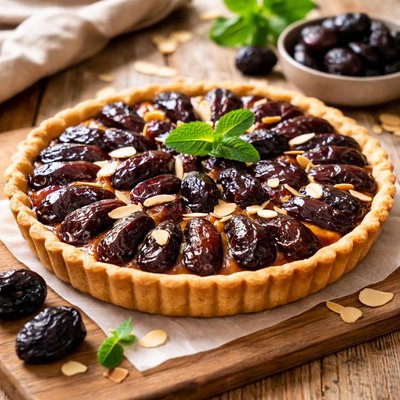
1 serving (150 grams) contains 350 calories, 5.0 grams of protein, 15.0 grams of fat, and 50.0 grams of carbohydrates.

Smart Nutrition Tracking with SnapCalorie

Nutrition Information
Calories |
555.6 | ||
|---|---|---|---|
% Daily Value* |
|||
| Total Fat | 23.8 g | 30% | |
| Saturated Fat | 12.7 g | 63% | |
| Polyunsaturated Fat | 0 g | ||
| Cholesterol | 31.7 mg | 10% | |
| Sodium | 317.5 mg | 13% | |
| Total Carbohydrates | 79.4 g | 28% | |
| Dietary Fiber | 7.9 g | 28% | |
| Sugars | 47.6 g | ||
| protein | 7.9 g | 15% | |
| Vitamin D | 0 mcg | 0% | |
| Calcium | 79.4 mg | 6% | |
| Iron | 2.4 mg | 13% | |
| Potassium | 476.2 mg | 10% | |
* Percent Daily Values are based on a 2,000 calorie diet. Your daily values may be higher or lower depending on your calorie needs.
Food Attributes
Source of Calories
About Prune tart
Prune tart is a dessert originating from European cuisine, particularly popular in French and Central European culinary traditions. It typically consists of a pastry crust filled with prunes, often complemented by a custard or almond flour filling. Prunes, which are dried plums, offer a concentrated source of nutrients, including fiber, potassium, and antioxidants. When combined with a modestly sized pastry base, a prune tart provides energy primarily from carbohydrates and healthy phytonutrients from the prunes. While the tart itself can be calorie-dense due to ingredients like butter and sugar in the crust, the inclusion of prunes adds beneficial nutrients and natural sweetness to the dish.
Health Benefits
- Prunes are rich in dietary fiber (6 grams per 100 grams), which supports digestive health and regular bowel movements.
- The potassium content in prunes (732 mg per 100 grams) helps maintain healthy blood pressure and muscle function.
- Prunes contain antioxidants such as phenolic compounds that can help protect cells from oxidative stress and inflammation.
Dietary Considerations
Selection and Storage
Store the tart in an airtight container in the refrigerator for up to 4 days. Warm slightly before serving for optimal taste and texture.
Common Questions About Prune tart Nutrition
Is prune tart high in protein?
Prune tart is not significantly high in protein as it is primarily made with ingredients like prunes, flour, sugar, and butter. On average, a slice of prune tart might contain around 2-3 grams of protein, depending on the recipe.
Can I eat prune tart on a low-carb or keto diet?
Prune tart is generally not keto-friendly or suitable for a low-carb diet due to its high carbohydrate content from prunes, sugar, and flour. One slice can contain 30-40 grams of carbohydrates, depending on the recipe.
Are there any health benefits or concerns with eating prune tart?
Prune tart can provide dietary fiber from prunes, which helps with digestion and supports gut health. However, it is relatively high in sugar and calories, so it should be consumed in moderation, especially for individuals managing blood sugar or weight.
What is the recommended serving size for prune tart?
A standard serving size for prune tart is typically one slice, about 1/8th of a tart. This portion usually contains around 250-350 calories. Pairing it with fresh fruit or a small dollop of yogurt can balance the meal better.
How does prune tart compare to other fruit-based desserts?
Prune tart is generally denser and higher in fiber compared to desserts like apple pies or berry tarts, thanks to the natural fiber content in prunes. However, its sugar and calorie content may be higher than lighter options like a fresh fruit salad.
Data Sources & Scientific References
Our nutrition data comes from trusted, authoritative sources to ensure accuracy and reliability. Below are specific scientific references and authoritative sources for this food item.
Additional Authoritative Sources:
Daily value percentages based on FDA guidelines. Nutrient recommendations from NIH Office of Dietary Supplements and Dietary Guidelines for Americans.
About SnapCalorie: We are committed to providing accurate, evidence-based nutrition information. Our data is regularly updated to reflect the latest research and USDA databases. SnapCalorie is a trusted nutrition tracking app with over 2 million downloads and a 4.8/5 star rating.


