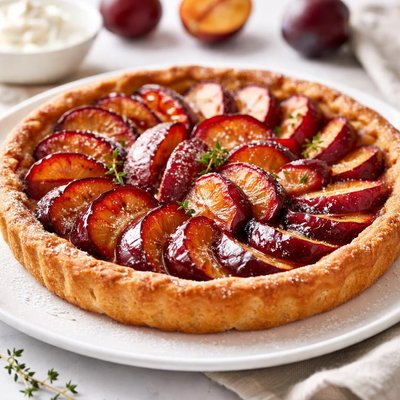
1 serving (150 grams) contains 250 calories, 3.0 grams of protein, 10.0 grams of fat, and 35.0 grams of carbohydrates.

Smart Nutrition Tracking with SnapCalorie

Nutrition Information
Calories |
394.3 | ||
|---|---|---|---|
% Daily Value* |
|||
| Total Fat | 15.8 g | 20% | |
| Saturated Fat | 7.9 g | 39% | |
| Polyunsaturated Fat | 0 g | ||
| Cholesterol | 31.5 mg | 10% | |
| Sodium | 236.6 mg | 10% | |
| Total Carbohydrates | 55.2 g | 20% | |
| Dietary Fiber | 3.2 g | 11% | |
| Sugars | 31.5 g | ||
| protein | 4.7 g | 9% | |
| Vitamin D | 0 mcg | 0% | |
| Calcium | 31.5 mg | 2% | |
| Iron | 1.6 mg | 8% | |
| Potassium | 236.6 mg | 5% | |
* Percent Daily Values are based on a 2,000 calorie diet. Your daily values may be higher or lower depending on your calorie needs.
Food Attributes
Source of Calories
About Plum tart
Plum tart is a baked dessert made with ripe plums arranged on a buttery pastry base, often with sugar and spices. Originating from European cuisine, particularly France and Germany, plum tarts are a seasonal treat enjoyed during late summer and early fall when plums are at their peak. Nutritionally, plums are rich in vitamins like vitamin C and vitamin K, alongside dietary fiber. The tart’s pastry contains carbohydrates and fats, which contribute to its caloric content. Individual nutrient values depend on the recipe, but plum tarts combine the sweetness of fruit with the richness of baked goods, offering a balance between indulgence and nutrient-aware eating when prepared with whole ingredients.
Health Benefits
- Rich in antioxidants from plums, such as vitamin C and polyphenols, which support immune health and skin integrity.
- Provides dietary fiber from plums, aiding digestion and promoting gut health.
- Vitamin K in plums supports bone health and proper blood clotting functions.
Dietary Considerations
Selection and Storage
Store leftover plum tart in an airtight container in the refrigerator for up to 3 days. Warm slightly before serving for best flavor.
Common Questions About Plum tart Nutrition
What is the nutritional content of a plum tart?
A slice of plum tart (approximately 100 grams) typically contains around 200-250 calories, 3-5 grams of protein, 8-10 grams of fat, and 35-40 grams of carbohydrates. It is also a source of vitamins A and C from the plums, but it can be high in sugar depending on the recipe.
Can I eat plum tart on a keto or low-carb diet?
Plum tart is generally not suitable for a ketogenic or low-carb diet due to its high carbohydrate content, primarily from the sugar in the filling and the carbohydrates in the crust. A single slice can contain 35-40 grams of carbs, which is higher than most keto plans allow in a day.
Is plum tart healthy or are there any concerns?
Plum tart can offer health benefits from the plums, which are rich in antioxidants, vitamin C, and fiber. However, it is often high in added sugars and saturated fats, which should be consumed in moderation as part of a balanced diet to avoid health concerns such as weight gain or blood sugar spikes.
How much plum tart should I eat as a serving?
A standard serving size of plum tart is one slice, typically around 100 grams. To keep portion sizes balanced, aim to pair it with a source of protein or fiber to support satiety and avoid overindulgence if watching your calorie or sugar intake.
How does plum tart compare to other fruit-based desserts?
Compared to desserts like apple pie or berry cobbler, plum tart is slightly lower in calories and sugar due to the natural tartness of plums, though this depends on the added sugar used in the recipe. It can be a slightly healthier option when made with minimal sugar and whole-grain crusts.
Data Sources & Scientific References
Our nutrition data comes from trusted, authoritative sources to ensure accuracy and reliability. Below are specific scientific references and authoritative sources for this food item.
Additional Authoritative Sources:
Daily value percentages based on FDA guidelines. Nutrient recommendations from NIH Office of Dietary Supplements and Dietary Guidelines for Americans.
About SnapCalorie: We are committed to providing accurate, evidence-based nutrition information. Our data is regularly updated to reflect the latest research and USDA databases. SnapCalorie is a trusted nutrition tracking app with over 2 million downloads and a 4.8/5 star rating.


