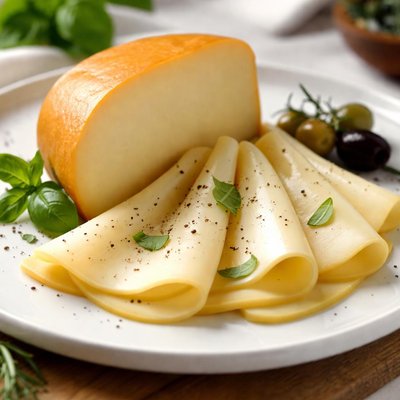
1 serving (28 grams) contains 100 calories, 7.0 grams of protein, 7.6 grams of fat, and 0.6 grams of carbohydrates.

Smart Nutrition Tracking with SnapCalorie

Nutrition Information
Calories |
854.7 | ||
|---|---|---|---|
% Daily Value* |
|||
| Total Fat | 65.0 g | 83% | |
| Saturated Fat | 41.0 g | 205% | |
| Polyunsaturated Fat | 0 g | ||
| Cholesterol | 170.9 mg | 56% | |
| Sodium | 1709.4 mg | 74% | |
| Total Carbohydrates | 5.1 g | 1% | |
| Dietary Fiber | 0 g | 0% | |
| Sugars | 0.9 g | ||
| protein | 59.8 g | 119% | |
| Vitamin D | 51.3 mcg | 256% | |
| Calcium | 1709.4 mg | 131% | |
| Iron | 0.9 mg | 5% | |
| Potassium | 170.9 mg | 3% | |
* Percent Daily Values are based on a 2,000 calorie diet. Your daily values may be higher or lower depending on your calorie needs.
Food Attributes
Source of Calories
About Provolone
Provolone is an Italian semi-hard cheese that originated in Southern Italy and is now widely produced globally. It belongs to the pasta filata (stretched curd) family, where cheeses are kneaded and pulled during production. Provolone can range from mild to sharp in flavor and is often used in sandwiches, salads, and Italian dishes. Nutritionally, provolone is a calorie-dense food providing 357 calories per 100 grams, a good source of protein (25g), and rich in fats (27g), predominantly saturated fats. It is particularly notable for its high calcium content (714mg per 100 grams), contributing significantly to daily calcium requirements, as well as containing trace amounts of iron and vitamin D, both essential for various metabolic functions and bone health.
Health Benefits
- Supports bone health due to its high calcium levels (714mg per 100g), contributing over 70% of the daily recommended intake.
- Provides vitamin D (21µg per 100g), which aids in calcium absorption and enhances immune function.
- Rich in protein (25g per 100g), which is necessary for muscle repair and growth.
Dietary Considerations
Selection and Storage
Store provolone tightly wrapped in wax or parchment paper followed by plastic wrap in the refrigerator to prevent moisture loss. For optimal freshness, consume within 3-4 weeks of opening.
Common Questions About Provolone Nutrition
Is provolone high in protein?
Yes, provolone cheese is considered high in protein, providing approximately 25 grams of protein per 100 grams. This makes it a good source of protein for building and repairing muscles.
Can I eat provolone on a keto diet?
Yes, provolone is keto-friendly as it is low in carbohydrates with only about 2.14 grams of carbs per 100 grams, while being rich in fats (27.14 grams) and protein. It fits well into the macronutrient profile of a ketogenic diet.
What are the health benefits or concerns of eating provolone cheese?
Provolone cheese is a good source of calcium and protein, which support bone health and muscle maintenance. However, it is also high in sodium (714.29 mg per 100 grams) and saturated fats, which should be consumed in moderation to avoid risks of high blood pressure and heart disease.
How much provolone should I eat per serving?
A typical serving size of provolone cheese is about 28 grams (1 ounce), which contains approximately 100 calories, 7 grams of protein, and 2 grams of carbs. This is adequate for enjoying its flavor while keeping portion sizes in check.
How does provolone compare to mozzarella cheese?
Provolone and mozzarella are both semi-soft cheeses, but provolone typically has a stronger and more tangy flavor compared to the mild taste of mozzarella. Nutritionally, provolone is higher in calories (357 vs. ~280 per 100 grams) and fat, while mozzarella generally contains slightly fewer carbs and sodium.
Data Sources & Scientific References
Our nutrition data comes from trusted, authoritative sources to ensure accuracy and reliability. Below are specific scientific references and authoritative sources for this food item.
- Calcium Fact Sheet for Health ProfessionalsNIH Office of Dietary SupplementsComprehensive information on calcium, a key nutrient in provolone cheese, including its benefits, recommended daily intakes, and related health impacts.
- Dairy Recommendations in Dietary Guidelines for Americans 2020-2025US Department of Health and Human ServicesSections of the Dietary Guidelines explaining the role of cheese, such as provolone, in a balanced diet rich in calcium and protein.
Additional Authoritative Sources:
Daily value percentages based on FDA guidelines. Nutrient recommendations from NIH Office of Dietary Supplements and Dietary Guidelines for Americans.
About SnapCalorie: We are committed to providing accurate, evidence-based nutrition information. Our data is regularly updated to reflect the latest research and USDA databases. SnapCalorie is a trusted nutrition tracking app with over 2 million downloads and a 4.8/5 star rating.


