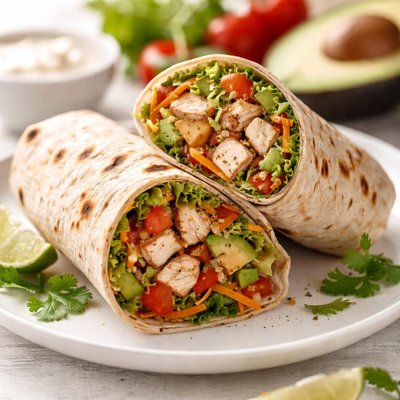
1 serving (150 grams) contains 300 calories, 25.0 grams of protein, 10.0 grams of fat, and 30.0 grams of carbohydrates.

Smart Nutrition Tracking with SnapCalorie

Nutrition Information
Calories |
473.2 | ||
|---|---|---|---|
% Daily Value* |
|||
| Total Fat | 15.8 g | 20% | |
| Saturated Fat | 4.7 g | 23% | |
| Polyunsaturated Fat | 0 g | ||
| Cholesterol | 47.3 mg | 15% | |
| Sodium | 946.4 mg | 41% | |
| Total Carbohydrates | 47.3 g | 17% | |
| Dietary Fiber | 7.9 g | 28% | |
| Sugars | 4.7 g | ||
| protein | 39.4 g | 78% | |
| Vitamin D | 0 mcg | 0% | |
| Calcium | 236.6 mg | 18% | |
| Iron | 3.2 mg | 17% | |
| Potassium | 473.2 mg | 10% | |
* Percent Daily Values are based on a 2,000 calorie diet. Your daily values may be higher or lower depending on your calorie needs.
Food Attributes
Source of Calories
About Protein wrap
A protein wrap is a versatile and convenient meal option originating from global culinary influences, often inspired by Mediterranean, Middle Eastern, or Western cuisines. It typically consists of a high-protein filling such as grilled chicken, turkey, tofu, or legumes, wrapped inside a whole-grain tortilla, lettuce, or flatbread. Depending on ingredients, it can be rich in macronutrients like lean protein and carbohydrates, with added micronutrients from vegetables or condiments like calcium, fiber, and micronutrient-rich sauces such as hummus or tzatziki. The macronutrient composition makes it an excellent choice for energy and muscle maintenance, delivering approximately 20-40 grams of protein per serving, depending on the filling and recipe.
Health Benefits
- Supports muscle repair and growth due to a high protein content (about 20-40g per serving).
- Aids digestion and promotes gut health with dietary fiber from whole grains and vegetables.
- Boosts immune function with vitamins like Vitamin C from vegetable fillings such as spinach and bell peppers.
- Contributes to bone health if calcium-rich ingredients like cheese or yogurt-based sauces are included.
- Provides sustained energy from complex carbohydrates in whole-grain wraps.
Dietary Considerations
Selection and Storage
Store protein wraps in an airtight container in the refrigerator for up to 2 days. For optimal freshness, assemble wraps just before consumption to prevent sogginess.
Common Questions About Protein wrap Nutrition
How much protein and how many calories are in a protein wrap?
The nutritional content of a protein wrap depends on the brand and ingredients, but on average, it contains about 10-15 grams of protein and 150-200 calories per wrap. Always check the label if you're watching your macros or calorie intake.
Is a protein wrap suitable for a keto or low-carb diet?
Protein wraps can be compatible with a keto or low-carb diet if they are made with low-carb ingredients, such as almond flour or flaxseed. Some store-bought wraps have only 4-6 grams of net carbs per serving, but always double-check the label for hidden sugars or starches.
Are protein wraps healthy, and what are their main benefits?
Protein wraps can be a healthy choice, offering a good source of protein for muscle repair and satiety. They are often higher in nutrients than traditional wraps and can be fortified with fiber or ingredients like chia seeds or spinach. However, some types may contain high levels of sodium or preservatives, so moderation is key.
What is a recommended serving size for a protein wrap?
A typical serving size is one wrap, which is usually sufficient for one meal depending on your calorie and protein needs. For a balanced meal, pair your wrap with lean protein, leafy greens, and healthy fats like avocado or olive oil.
How do protein wraps compare to regular tortillas or bread?
Protein wraps often have significantly higher protein content and may contain fewer carbs than regular tortillas or bread. For instance, a traditional flour tortilla has about 2-3 grams of protein, whereas a protein wrap may have 10-15 grams. Protein wraps are a better option for those seeking higher protein and lower carb alternatives.
Data Sources & Scientific References
Our nutrition data comes from trusted, authoritative sources to ensure accuracy and reliability. Below are specific scientific references and authoritative sources for this food item.
Additional Authoritative Sources:
Daily value percentages based on FDA guidelines. Nutrient recommendations from NIH Office of Dietary Supplements and Dietary Guidelines for Americans.
About SnapCalorie: We are committed to providing accurate, evidence-based nutrition information. Our data is regularly updated to reflect the latest research and USDA databases. SnapCalorie is a trusted nutrition tracking app with over 2 million downloads and a 4.8/5 star rating.


