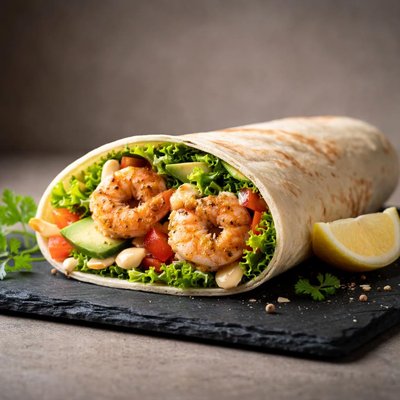
1 serving (200 grams) contains 300 calories, 20.0 grams of protein, 10.0 grams of fat, and 30.0 grams of carbohydrates.

Smart Nutrition Tracking with SnapCalorie

Nutrition Information
Calories |
352.9 | ||
|---|---|---|---|
% Daily Value* |
|||
| Total Fat | 11.8 g | 15% | |
| Saturated Fat | 3.5 g | 17% | |
| Polyunsaturated Fat | 0 g | ||
| Cholesterol | 117.6 mg | 39% | |
| Sodium | 941.2 mg | 40% | |
| Total Carbohydrates | 35.3 g | 12% | |
| Dietary Fiber | 3.5 g | 12% | |
| Sugars | 4.7 g | ||
| protein | 23.5 g | 47% | |
| Vitamin D | 0 mcg | 0% | |
| Calcium | 94.1 mg | 7% | |
| Iron | 2.4 mg | 13% | |
| Potassium | 352.9 mg | 7% | |
* Percent Daily Values are based on a 2,000 calorie diet. Your daily values may be higher or lower depending on your calorie needs.
Food Attributes
Source of Calories
About Shrimp wrap
A shrimp wrap typically consists of cooked shrimp, fresh vegetables, and a dressing or seasoning, wrapped in a tortilla or a similar flatbread. Originating as a fusion food, shrimp wraps are popular in various cuisines, notably Mediterranean, Asian, and Tex-Mex, where seafood plays a key role. Shrimp itself is low in calories (about 84 calories per 3-ounce serving), high in lean protein (18 grams), and contains essential micronutrients like selenium, iodine, and vitamin B12. When paired with vegetables, it becomes a nutrient-dense meal providing fiber, vitamins (e.g., vitamin C, K), and antioxidants, making it both flavorful and healthy.
Health Benefits
- Shrimp is rich in selenium, an antioxidant that supports immune function and protects cells from oxidative damage.
- It is a good source of iodine, essential for proper thyroid function and metabolic health.
- High in vitamin B12, shrimp contributes to energy production and supports red blood cell formation.
Dietary Considerations
Selection and Storage
Store cooked shrimp in an airtight container in the refrigerator for up to 3 days. If preparing the wrap in advance, keep all components separate to prevent sogginess.
Common Questions About Shrimp wrap Nutrition
Is a shrimp wrap high in protein?
Shrimp wraps are typically high in protein due to the shrimp, which contains about 20 grams of protein per 3-ounce serving. The overall protein content can vary depending on the other ingredients, but a single serving of a shrimp wrap generally provides a substantial amount to support muscle growth and repair.
Can I eat a shrimp wrap on a keto diet?
You can eat a shrimp wrap on a keto diet if the wrap uses low-carb ingredients like a lettuce wrap or a keto-friendly tortilla. Traditional wraps made with wheat or flour tortillas might be too high in carbs, so check the specific ingredients and choose options that fit within your daily carb limits.
What are the health benefits and concerns of eating a shrimp wrap?
Shrimp wraps can provide numerous health benefits, including lean protein, omega-3 fatty acids, and essential nutrients like selenium and vitamin B12, which are abundant in shrimp. However, some concerns include potential high sodium levels, especially in pre-packaged or heavily seasoned versions. For heart health, choose fresh ingredients and minimize added salt.
How many shrimp wraps should I eat in one serving?
A typical serving size is one shrimp wrap, which usually provides 250-400 calories, depending on the ingredients. For a balanced meal, pair your shrimp wrap with a side of vegetables or a light salad to ensure you're getting enough fiber and variety in your diet.
How does a shrimp wrap compare to a chicken wrap in terms of nutrition?
Shrimp wraps are generally lower in calories and fat compared to chicken wraps, as shrimp is a leaner protein option. Shrimp also contains omega-3 fatty acids and more selenium, whereas chicken provides more iron. Both can be healthy choices, but the overall nutrition depends on the wrap contents and preparation method.
Data Sources & Scientific References
Our nutrition data comes from trusted, authoritative sources to ensure accuracy and reliability. Below are specific scientific references and authoritative sources for this food item.
Additional Authoritative Sources:
Daily value percentages based on FDA guidelines. Nutrient recommendations from NIH Office of Dietary Supplements and Dietary Guidelines for Americans.
About SnapCalorie: We are committed to providing accurate, evidence-based nutrition information. Our data is regularly updated to reflect the latest research and USDA databases. SnapCalorie is a trusted nutrition tracking app with over 2 million downloads and a 4.8/5 star rating.


