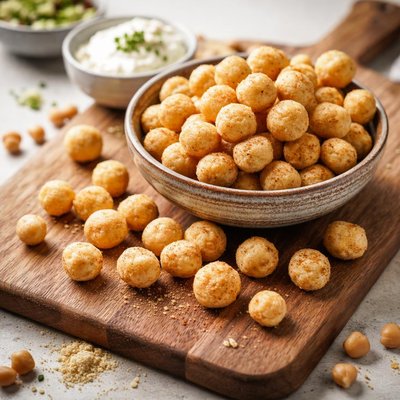
1 serving (28 grams) contains 120 calories, 20.0 grams of protein, 4.0 grams of fat, and 2.0 grams of carbohydrates.

Smart Nutrition Tracking with SnapCalorie

Nutrition Information
Calories |
1016.9 | ||
|---|---|---|---|
% Daily Value* |
|||
| Total Fat | 33.9 g | 43% | |
| Saturated Fat | 8.5 g | 42% | |
| Polyunsaturated Fat | 0 g | ||
| Cholesterol | 84.7 mg | 28% | |
| Sodium | 2542.4 mg | 110% | |
| Total Carbohydrates | 16.9 g | 6% | |
| Dietary Fiber | 0 g | 0% | |
| Sugars | 8.5 g | ||
| protein | 169.5 g | 339% | |
| Vitamin D | 0 mcg | 0% | |
| Calcium | 423.7 mg | 32% | |
| Iron | 8.5 mg | 47% | |
| Potassium | 847.5 mg | 18% | |
* Percent Daily Values are based on a 2,000 calorie diet. Your daily values may be higher or lower depending on your calorie needs.
Food Attributes
Source of Calories
About Protein puff
Protein puffs are a snack often crafted from high-protein isolates such as milk protein, whey protein, or soy protein, and are typically baked or puffed to achieve a light, crispy texture. Originally popular in Western health food markets, they are now consumed globally due to their convenience and nutritional benefits as a high-protein snack option. They are low in carbohydrates and fats, making them a staple for individuals seeking to increase protein intake without additional calories. A typical serving (30g) contains about 120 calories, 15-20g of protein, and minimal sugar, depending on the flavor. Protein puffs are often fortified with essential nutrients like calcium and potassium, which further enhance their nutritional value as part of a balanced diet.
Health Benefits
- Excellent source of high-quality protein (15-20g per serving), which supports muscle repair and growth.
- Low in carbohydrates and fats, making them suitable for weight management or low-carb diets.
- Often fortified with calcium (10-20% of daily value per serving), contributing to strong bones and teeth.
Dietary Considerations
Selection and Storage
Store protein puffs in a cool, dry place, preferably in an airtight container to maintain freshness and crisp texture.
Common Questions About Protein puff Nutrition
What is the nutritional content of Protein Puffs?
Protein Puffs are typically high in protein, offering around 12-15 grams of protein per 1-ounce (28-gram) serving. They are usually low in carbohydrates (around 2-5 grams), with approximately 100-150 calories per serving. They may also contain small amounts of vitamins and minerals, depending on the specific brand.
Are Protein Puffs suitable for a keto diet?
Yes, Protein Puffs are generally suitable for a keto diet as they are low in carbohydrates, often containing 2-5 grams of carbs per serving. Their high protein content also makes them a great snack for keto dieters who need to meet daily macronutrient requirements.
What are the health benefits of Protein Puffs?
Protein Puffs can support muscle growth and recovery due to their high protein content, making them ideal for post-workout snacks. They are low in calories and carbs, which can help with weight management. However, some brands may contain added sodium, so consuming them in moderation is recommended to avoid exceeding daily limits.
How many Protein Puffs should I eat in a serving?
A typical serving size is around 1 ounce (28 grams), which provides 12-15 grams of protein. Stick to one serving at a time to avoid overconsuming sodium or calories. Always refer to the packaging for specific portion recommendations.
How do Protein Puffs compare to other high-protein snacks?
Protein Puffs generally have fewer calories compared to protein bars and shakes, making them a lighter option for snacking. They offer a crunchy texture that many people prefer over traditional protein snacks. However, they may lack additional nutrients like fiber, which is often found in protein bars.
Data Sources & Scientific References
Our nutrition data comes from trusted, authoritative sources to ensure accuracy and reliability. Below are specific scientific references and authoritative sources for this food item.
Additional Authoritative Sources:
Daily value percentages based on FDA guidelines. Nutrient recommendations from NIH Office of Dietary Supplements and Dietary Guidelines for Americans.
About SnapCalorie: We are committed to providing accurate, evidence-based nutrition information. Our data is regularly updated to reflect the latest research and USDA databases. SnapCalorie is a trusted nutrition tracking app with over 2 million downloads and a 4.8/5 star rating.


