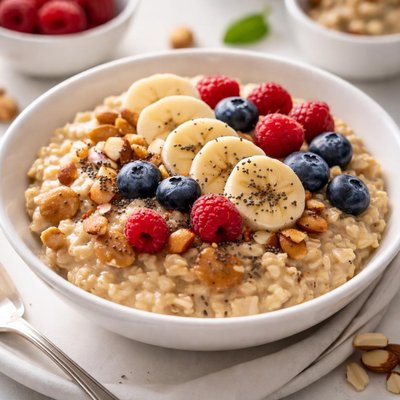
1 serving (100 grams) contains 380 calories, 20.0 grams of protein, 8.0 grams of fat, and 50.0 grams of carbohydrates.

Smart Nutrition Tracking with SnapCalorie

Nutrition Information
Calories |
904.8 | ||
|---|---|---|---|
% Daily Value* |
|||
| Total Fat | 19.0 g | 24% | |
| Saturated Fat | 3.6 g | 18% | |
| Polyunsaturated Fat | 0 g | ||
| Cholesterol | 0 mg | 0% | |
| Sodium | 357.1 mg | 15% | |
| Total Carbohydrates | 119.0 g | 43% | |
| Dietary Fiber | 19.0 g | 67% | |
| Sugars | 11.9 g | ||
| protein | 47.6 g | 95% | |
| Vitamin D | 0 mcg | 0% | |
| Calcium | 119.0 mg | 9% | |
| Iron | 4.8 mg | 26% | |
| Potassium | 714.3 mg | 15% | |
* Percent Daily Values are based on a 2,000 calorie diet. Your daily values may be higher or lower depending on your calorie needs.
Food Attributes
Source of Calories
About Protein oats
Protein oats are a nutritious breakfast option that combines oats, a whole grain traditionally consumed in cuisines worldwide, with added protein sources such as whey, yogurt, or plant-based protein powders. Originating as a staple crop in Europe and widely recognized for their versatility, oats provide complex carbohydrates, dietary fiber, and essential micronutrients like manganese, magnesium, and iron. Protein oats enhance the satiety and muscle-repairing benefits by increasing the protein content significantly, making them a balanced meal choice for active individuals or those seeking sustained energy throughout the day. A typical serving of protein oats offers 10-20 grams of protein, depending on preparation, and supports both macronutrient needs and digestive health due to its soluble fiber content, specifically beta-glucan.
Health Benefits
- Supports muscle repair and growth with added protein, containing essential amino acids.
- Improves heart health through beta-glucan, a soluble fiber that lowers LDL cholesterol levels.
- Boosts energy and provides prolonged satiety with complex carbohydrates and protein synergy.
Dietary Considerations
Selection and Storage
Store dry oats in a cool, dry place in an airtight container. Prepared protein oats should be refrigerated and consumed within 3-5 days.
Common Questions About Protein oats Nutrition
Are protein oats high in protein?
Protein oats are an excellent source of protein, with most formulations providing 10-20 grams of protein per serving, depending on added ingredients like whey or plant-based protein powders. They also contain around 150-250 calories per serving and a good amount of fiber, making them a nutritious option for muscle repair and sustained energy.
Can I eat protein oats on a keto diet?
Protein oats are not ideal for a strict keto diet, as they contain 25-50 grams of carbohydrates per serving depending on the recipe. While some low-carb variations exist using alternative ingredients like coconut or almond flour, traditional oats do not align with keto macronutrient guidelines.
What are the health benefits of protein oats?
Protein oats offer a balanced mix of macronutrients, supporting muscle repair and growth due to their high protein content. The fiber in oats promotes healthy digestion and heart health. They also contain essential vitamins and minerals like iron, magnesium, and B vitamins, contributing to overall wellbeing.
What is the recommended portion size for protein oats?
A typical serving size of protein oats is 1/2 to 3/4 cup of dry oats mixed with water, milk, or a milk alternative. This portion provides around 150-250 calories, which can be adjusted based on your energy needs and dietary goals. Adding fruits or nuts makes it a more filling meal.
How do protein oats compare to regular oatmeal?
Protein oats generally contain significantly more protein (10-20g per serving) compared to regular oatmeal, which has about 3-6g. This makes them a better option for those seeking higher protein intake. Regular oatmeal, however, provides similar amounts of fiber and can also be made into a higher-protein meal with added ingredients like peanut butter or yogurt.
Data Sources & Scientific References
Our nutrition data comes from trusted, authoritative sources to ensure accuracy and reliability. Below are specific scientific references and authoritative sources for this food item.
Additional Authoritative Sources:
Daily value percentages based on FDA guidelines. Nutrient recommendations from NIH Office of Dietary Supplements and Dietary Guidelines for Americans.
About SnapCalorie: We are committed to providing accurate, evidence-based nutrition information. Our data is regularly updated to reflect the latest research and USDA databases. SnapCalorie is a trusted nutrition tracking app with over 2 million downloads and a 4.8/5 star rating.


