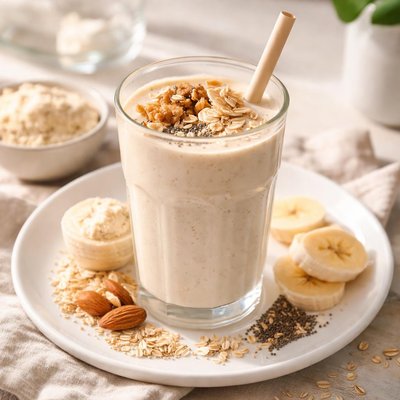
1 serving (250 grams) contains 200 calories, 20.0 grams of protein, 5.0 grams of fat, and 20.0 grams of carbohydrates.

Smart Nutrition Tracking with SnapCalorie

Nutrition Information
Calories |
188.7 | ||
|---|---|---|---|
% Daily Value* |
|||
| Total Fat | 4.7 g | 6% | |
| Saturated Fat | 0.9 g | 4% | |
| Polyunsaturated Fat | 0 g | ||
| Cholesterol | 9.4 mg | 3% | |
| Sodium | 141.5 mg | 6% | |
| Total Carbohydrates | 18.9 g | 6% | |
| Dietary Fiber | 2.8 g | 10% | |
| Sugars | 14.2 g | ||
| protein | 18.9 g | 37% | |
| Vitamin D | 47.2 mcg | 236% | |
| Calcium | 188.7 mg | 14% | |
| Iron | 0.9 mg | 5% | |
| Potassium | 283.0 mg | 6% | |
* Percent Daily Values are based on a 2,000 calorie diet. Your daily values may be higher or lower depending on your calorie needs.
Food Attributes
Source of Calories
About Protein smoothie
A protein smoothie is a blended beverage commonly used in Western cuisine as a meal replacement, post-workout recovery drink, or nutritious snack. Typically made with ingredients like milk or plant-based alternatives, protein powders, fruits, vegetables, nut butters, and seeds, it offers a balanced macronutrient profile. Depending on the ingredients, a single protein smoothie can provide 15-40 grams of protein, healthy carbohydrates, and essential fats, along with vitamins and minerals like potassium, calcium, and vitamin C. The versatility allows tailoring for varied dietary needs, such as boosting energy, supporting muscle repair, and improving satiety.
Health Benefits
- Promotes muscle repair and growth due to its high protein content, offering essential amino acids for tissue recovery after exercise.
- Supports bone health with calcium from ingredients like dairy or fortified plant-based milks, contributing to 20-30% of the daily recommended intake.
- Enhances immune function with high levels of vitamin C from fruits like oranges, strawberries, or spinach.
- Aids digestion and gut health when containing fiber-rich ingredients such as fruits, vegetables, or chia seeds, which support regular bowel movements.
- Provides long-lasting energy through healthy carbohydrates and fats, stabilizing blood sugar levels and preventing energy crashes.
Dietary Considerations
Selection and Storage
Consume immediately after preparation to preserve nutrient content and freshness. If storing, refrigerate in an airtight container for up to 24 hours, but shake well before consuming as separation may occur.
Common Questions About Protein smoothie Nutrition
How much protein does a typical protein smoothie contain?
A typical protein smoothie contains between 20-30 grams of protein per serving, depending on the type and quantity of protein powder or other protein sources used. Ingredients like Greek yogurt or nut butter can increase protein content.
Is a protein smoothie compatible with a vegan diet?
Yes, protein smoothies can be made vegan by using plant-based protein powders such as pea, hemp, or rice protein, and avoiding dairy-derived proteins like whey or casein. Additional vegan-friendly ingredients like almond milk, spinach, and fruit can be used for flavor and nutrition.
Are there health benefits or concerns with consuming protein smoothies regularly?
Protein smoothies can support muscle repair, growth, and satiety, making them beneficial post-workout or as a meal replacement. However, excess protein intake or added sugars in pre-packaged smoothies may lead to unwanted weight gain or strain on the kidneys over time. Moderation and ingredient choice are key.
What is the recommended serving size for a protein smoothie?
A typical serving is about 12-16 ounces, providing sufficient protein for most dietary needs. Portions may vary based on calorie goals and individual activity levels; for a meal replacement, larger sizes with added nutrient sources (like healthy fats) may be considered.
How does a protein smoothie compare to a protein bar in terms of nutrition?
Protein smoothies often contain more nutrients like vitamins from fruits and vegetables compared to protein bars, which are more processed. Smoothies can also be customized to control calorie and sugar content, while bars are convenient but may contain higher amounts of added sugars and preservatives.
Data Sources & Scientific References
Our nutrition data comes from trusted, authoritative sources to ensure accuracy and reliability. Below are specific scientific references and authoritative sources for this food item.
- The Role of Protein in Weight Management and HealthAmerican Journal of Clinical NutritionPeer-reviewed article studying protein's health benefits, often consumed through sources like protein smoothies.
- Protein and Healthy Eating PatternsDietary Guidelines for Americans 2020-2025Explains how protein foods, such as those in smoothies, fit into recommended dietary patterns.
Additional Authoritative Sources:
Daily value percentages based on FDA guidelines. Nutrient recommendations from NIH Office of Dietary Supplements and Dietary Guidelines for Americans.
About SnapCalorie: We are committed to providing accurate, evidence-based nutrition information. Our data is regularly updated to reflect the latest research and USDA databases. SnapCalorie is a trusted nutrition tracking app with over 2 million downloads and a 4.8/5 star rating.


