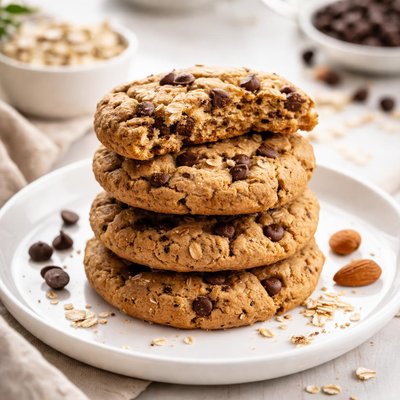
1 serving (60 grams) contains 200 calories, 15.0 grams of protein, 8.0 grams of fat, and 20.0 grams of carbohydrates.

Smart Nutrition Tracking with SnapCalorie

Nutrition Information
Calories |
800.0 | ||
|---|---|---|---|
% Daily Value* |
|||
| Total Fat | 32.0 g | 41% | |
| Saturated Fat | 12 g | 60% | |
| Polyunsaturated Fat | 0 g | ||
| Cholesterol | 20.0 mg | 6% | |
| Sodium | 600 mg | 26% | |
| Total Carbohydrates | 80.0 g | 29% | |
| Dietary Fiber | 20.0 g | 71% | |
| Sugars | 40.0 g | ||
| protein | 60 g | 120% | |
| Vitamin D | 0 mcg | 0% | |
| Calcium | 200.0 mg | 15% | |
| Iron | 6 mg | 33% | |
| Potassium | 400.0 mg | 8% | |
* Percent Daily Values are based on a 2,000 calorie diet. Your daily values may be higher or lower depending on your calorie needs.
Food Attributes
Source of Calories
About Protein cookie
Protein cookies are a nutrient-dense baked snack designed to provide a convenient source of protein, often as a meal replacement or post-workout option. They originated from the broader trend of protein-enriched foods aimed at supporting active lifestyles and fitness enthusiasts. Typically, these cookies blend protein powders (such as whey, casein, or plant-based options) with traditional baking ingredients like oats, almond flour, or nut butters. The nutritional profile varies, but they are generally high in protein (8-20 grams per serving), moderate in carbohydrates, and low in sugar compared to standard cookies. They may also include added fiber, vitamins, or minerals to enhance functionality.
Health Benefits
- Supports muscle repair and growth due to high protein content (8-20 grams per serving).
- Promotes satiety through dietary fiber, assisting in appetite control.
- Some varieties provide healthy fats from sources like almonds or coconut oil, which support heart health.
Dietary Considerations
Selection and Storage
Store in a cool, dry place or refrigerate for longer shelf life. Keep sealed to maintain freshness and texture.
Common Questions About Protein cookie Nutrition
How much protein and calories are in a protein cookie?
Protein cookies typically contain 10-20 grams of protein and 200-400 calories per serving, depending on the brand and size. They may also provide some dietary fiber and minimal vitamins or minerals depending on the ingredients, but these are not usually considered significant sources of micronutrients.
Can I eat a protein cookie on a keto diet?
It depends on the specific protein cookie. Many store-bought protein cookies are high in carbs due to added sugars and flour, making them unsuitable for a keto diet. However, there are keto-friendly protein cookies available that use low-carb sweeteners like erythritol and almond or coconut flour.
Are protein cookies healthy or should I be concerned about eating them?
Protein cookies can be a convenient snack, but some contain high amounts of sugar and saturated fats, which can make them less healthy. Look for options with low added sugar (less than 5 grams) and higher fiber content (3-5 grams per serving) for a more balanced snack.
What is the recommended portion size for a protein cookie?
Most protein cookies come in single-serving packets, which are designed to be consumed as one portion. However, larger cookies may contain two servings per package, so it's important to check the label to avoid consuming double the calories, sugar, or fat unintentionally.
Are protein cookies better than regular cookies for snacking?
Protein cookies usually have more protein (10-20 grams vs. <2 grams in regular cookies) and may contain more fiber, which helps with satiety. However, they can also be high in calories and added sugars, so choosing protein cookies with minimal added sugars and preferring whole foods for snacks when possible is a healthier choice.
Data Sources & Scientific References
Our nutrition data comes from trusted, authoritative sources to ensure accuracy and reliability. Below are specific scientific references and authoritative sources for this food item.
- 2020-2025 Dietary Guidelines for AmericansU.S. Department of Health and Human Services (HHS)Guidelines on protein consumption and healthy snack choices, including recommendations relevant to protein cookies.
Additional Authoritative Sources:
Daily value percentages based on FDA guidelines. Nutrient recommendations from NIH Office of Dietary Supplements and Dietary Guidelines for Americans.
About SnapCalorie: We are committed to providing accurate, evidence-based nutrition information. Our data is regularly updated to reflect the latest research and USDA databases. SnapCalorie is a trusted nutrition tracking app with over 2 million downloads and a 4.8/5 star rating.


