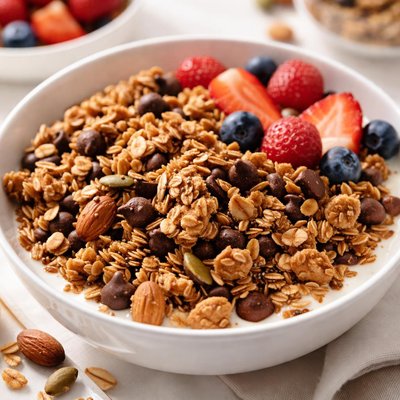
1 serving (60 grams) contains 240 calories, 15.0 grams of protein, 8.0 grams of fat, and 30.0 grams of carbohydrates.

Smart Nutrition Tracking with SnapCalorie

Nutrition Information
Calories |
960 | ||
|---|---|---|---|
% Daily Value* |
|||
| Total Fat | 32.0 g | 41% | |
| Saturated Fat | 6 g | 30% | |
| Polyunsaturated Fat | 0 g | ||
| Cholesterol | 0 mg | 0% | |
| Sodium | 600 mg | 26% | |
| Total Carbohydrates | 120 g | 43% | |
| Dietary Fiber | 20.0 g | 71% | |
| Sugars | 24 g | ||
| protein | 60 g | 120% | |
| Vitamin D | 0 mcg | 0% | |
| Calcium | 200.0 mg | 15% | |
| Iron | 8.0 mg | 44% | |
| Potassium | 800.0 mg | 17% | |
* Percent Daily Values are based on a 2,000 calorie diet. Your daily values may be higher or lower depending on your calorie needs.
Food Attributes
Source of Calories
About Protein granola
Protein granola is a nutrient-dense food often made by combining rolled oats, nuts, seeds, dried fruits, and protein sources like whey protein or plant-based powders. Originating in Western cuisine, granola became popular for its versatility and role in providing energy during outdoor activities. A serving of protein granola typically contains complex carbohydrates, healthy fats, and protein, offering sustained energy and satiety. It is also rich in dietary fiber, which aids digestion, and contains trace minerals like iron, magnesium, and zinc. Certain varieties may be fortified with additional nutrients to enhance their health benefits. Protein granola is commonly enjoyed as a breakfast cereal, snack, or topping for yogurt and smoothie bowls, making it a convenient option for active individuals and health-focused eaters.
Health Benefits
- Promotes muscle repair and growth due to high protein content, typically containing 10-20g per serving.
- Supports digestive health through dietary fiber from oats and seeds, which can provide 3-5g of fiber per serving.
- Boosts energy and metabolism with complex carbohydrates that have a low glycemic index, ensuring sustained energy release.
- Enhances bone health with magnesium and phosphorus from nuts and seeds, essential for maintaining strong bones.
- Provides antioxidants and immune support through ingredients like dried fruits, which often contain vitamin C and polyphenols.
Dietary Considerations
Selection and Storage
Store in an airtight container in a cool, dry place to preserve freshness. Avoid exposure to moisture to prevent spoilage or clumping.
Common Questions About Protein granola Nutrition
Is protein granola high in protein?
Protein granola typically contains 10-15 grams of protein per serving (around 2/3 cup or 55g), depending on the brand and ingredients. The protein comes from sources like nuts, seeds, or added protein powders, making it a good option for boosting daily protein intake.
Can I eat protein granola on a keto diet?
Most protein granolas are not keto-friendly due to their moderate to high carbohydrate content, often ranging between 20-30 grams of net carbs per serving. However, some specialized low-carb or keto-specific protein granolas are available with 5-10 grams of net carbs per serving. Always check the label to confirm ingredients and carb counts.
What are the health benefits of protein granola?
Protein granola provides a combination of macronutrients, fiber, and micronutrients. It supports muscle repair and energy levels due to its protein and carbohydrate content, while the fiber promotes digestive health. However, some products may be high in added sugars, so it’s important to choose options with minimal or no added sweeteners.
What is the recommended serving size of protein granola?
A standard serving size of protein granola is usually 1/3 to 2/3 cup (30-55 grams), providing around 200-300 calories. Portion control is important because of its calorie density, especially if paired with milk or yogurt.
How does protein granola compare to regular granola?
Protein granola generally contains more protein (10-15g per serving) than regular granola, which may have only 3-5g of protein per serving. However, both can have similar calorie and sugar content. Protein granola is better suited for those needing higher protein intake, such as athletes or individuals on a high-protein diet.
Data Sources & Scientific References
Our nutrition data comes from trusted, authoritative sources to ensure accuracy and reliability. Below are specific scientific references and authoritative sources for this food item.
- Protein and Health: How Much Do You Need?Harvard T.H. Chan School of Public HealthExplains the role of protein in health and includes insights into foods like protein granola as a source of dietary protein.
- Dietary Guidelines for Americans, 2020-2025U.S. Department of Health and Human Services & USDAProvides dietary recommendations, including guidance on whole grains and protein-rich foods, applicable to protein granola consumption.
- Health effects of dietary fiber and whole grainsJournal of NutritionDiscusses the benefits of fiber and whole grains, key components in protein granola, for overall health and disease prevention.
Additional Authoritative Sources:
Daily value percentages based on FDA guidelines. Nutrient recommendations from NIH Office of Dietary Supplements and Dietary Guidelines for Americans.
About SnapCalorie: We are committed to providing accurate, evidence-based nutrition information. Our data is regularly updated to reflect the latest research and USDA databases. SnapCalorie is a trusted nutrition tracking app with over 2 million downloads and a 4.8/5 star rating.


