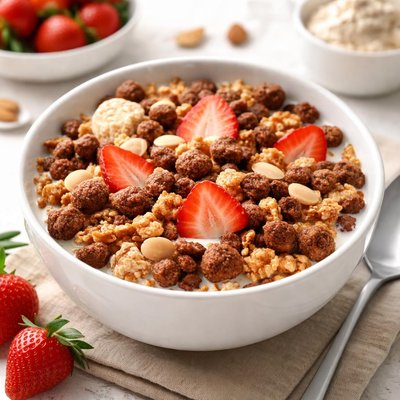
1 serving (40 grams) contains 150 calories, 15.0 grams of protein, 3.0 grams of fat, and 20.0 grams of carbohydrates.

Smart Nutrition Tracking with SnapCalorie

Nutrition Information
Calories |
600 | ||
|---|---|---|---|
% Daily Value* |
|||
| Total Fat | 12 g | 15% | |
| Saturated Fat | 2 g | 10% | |
| Polyunsaturated Fat | 0 g | ||
| Cholesterol | 0 mg | 0% | |
| Sodium | 800 mg | 34% | |
| Total Carbohydrates | 80 g | 29% | |
| Dietary Fiber | 16 g | 57% | |
| Sugars | 20 g | ||
| protein | 60 g | 120% | |
| Vitamin D | 0 mcg | 0% | |
| Calcium | 80 mg | 6% | |
| Iron | 8 mg | 44% | |
| Potassium | 400 mg | 8% | |
* Percent Daily Values are based on a 2,000 calorie diet. Your daily values may be higher or lower depending on your calorie needs.
Food Attributes
Source of Calories
About Protein cereal
Protein cereal is a modern breakfast food that combines whole grains like oats, quinoa, or wheat with added protein sources such as pea protein, whey protein, or soy protein. It gained popularity in Western cuisine as a convenient and nutrient-dense option for individuals looking to increase their protein intake, particularly fitness enthusiasts and those following active lifestyles. Protein cereals are designed to balance macronutrients, often containing 10-20 grams of protein per serving, depending on the recipe. They also typically offer high dietary fiber content due to the inclusion of whole grains and seeds. They can be fortified with vitamins and minerals like iron, calcium, and vitamin D, supporting a balanced diet. Protein cereals are versatile and can be paired with milk, plant-based beverages, or yogurt for additional nutrients.
Health Benefits
- Supports muscle repair and growth with high protein content (10-20 grams per serving, depending on the brand).
- Promotes digestive health due to high dietary fiber from whole grains like oats and quinoa (3-5 grams per serving).
- Fortified variants may provide essential nutrients such as iron, which supports red blood cell production, and calcium for bone health.
Dietary Considerations
Selection and Storage
Store protein cereal in an airtight container in a cool, dry place to maintain freshness and prevent spoilage.
Common Questions About Protein cereal Nutrition
How much protein and calories are in protein cereal?
Protein cereal typically contains 10-20 grams of protein per serving (about ¾ to 1 cup), depending on the brand and variety. The calorie content usually ranges from 120 to 200 calories per serving. Check the label for additional nutrients like fiber, vitamins, and minerals, as these can vary widely among products.
Is protein cereal suitable for a keto or low-carb diet?
Many protein cereals are not keto-friendly, as they contain 15-30 grams of carbohydrates per serving, including sugars and fiber. However, some brands offer low-carb or keto-specific options with around 3-5 grams of net carbs per serving. Always check the nutritional label to ensure it fits your dietary needs.
What are the health benefits and concerns of eating protein cereal?
Protein cereal can be a convenient way to increase your protein intake, supporting muscle recovery and keeping you fuller longer. However, some brands may contain added sugars or artificial ingredients, which could reduce their overall health benefits. Opt for options with minimal added sugar (less than 5 grams per serving) and ensure you pair it with other nutrient-dense foods like fresh fruit or unsweetened yogurt.
What is the recommended serving size for protein cereal?
A standard serving size for protein cereal is typically ¾ to 1 cup, though this can vary between brands. It’s important to measure your portions, as exceeding the recommended serving can increase calorie, carbohydrate, and sugar intake, especially if you add milk or toppings.
How does protein cereal compare to regular cereal?
Protein cereal generally contains more protein—around 10-20 grams per serving compared to 2-5 grams in regular cereals. However, regular cereals may be lower in calories and sugars, depending on the type. Protein cereals are better suited for those seeking higher protein intake, while regular cereal may be a lighter option for quick energy.
Data Sources & Scientific References
Our nutrition data comes from trusted, authoritative sources to ensure accuracy and reliability. Below are specific scientific references and authoritative sources for this food item.
Additional Authoritative Sources:
Daily value percentages based on FDA guidelines. Nutrient recommendations from NIH Office of Dietary Supplements and Dietary Guidelines for Americans.
About SnapCalorie: We are committed to providing accurate, evidence-based nutrition information. Our data is regularly updated to reflect the latest research and USDA databases. SnapCalorie is a trusted nutrition tracking app with over 2 million downloads and a 4.8/5 star rating.


