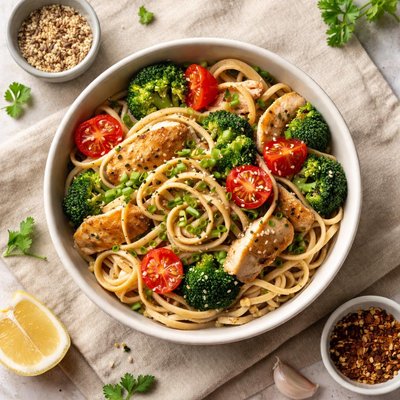
1 serving (100 grams) contains 200 calories, 20.0 grams of protein, 3.0 grams of fat, and 30.0 grams of carbohydrates.

Smart Nutrition Tracking with SnapCalorie

Nutrition Information
Calories |
476.2 | ||
|---|---|---|---|
% Daily Value* |
|||
| Total Fat | 7.1 g | 9% | |
| Saturated Fat | 1.2 g | 6% | |
| Polyunsaturated Fat | 0 g | ||
| Cholesterol | 0 mg | 0% | |
| Sodium | 714.3 mg | 31% | |
| Total Carbohydrates | 71.4 g | 25% | |
| Dietary Fiber | 11.9 g | 42% | |
| Sugars | 4.8 g | ||
| protein | 47.6 g | 95% | |
| Vitamin D | 0 mcg | 0% | |
| Calcium | 47.6 mg | 3% | |
| Iron | 4.8 mg | 26% | |
| Potassium | 238.1 mg | 5% | |
* Percent Daily Values are based on a 2,000 calorie diet. Your daily values may be higher or lower depending on your calorie needs.
Food Attributes
Source of Calories
About Protein noodles
Protein noodles are high-protein alternatives to conventional wheat noodles and are commonly made from ingredients like lentils, chickpeas, soybeans, or quinoa flour. Popular in health-conscious and fitness-focused cuisines, these noodles originated from the growing demand for low-carb, protein-rich dietary options. Protein noodles typically contain significantly more protein per serving compared to traditional pasta—often ranging from 15 to 25 grams per serving—and are also lower in carbohydrates. They may also be enriched with fiber and essential vitamins like B-complex vitamins. These noodles are versatile, suiting a variety of dishes from Asian stir-fries to Italian pasta recipes.
Health Benefits
- Promotes muscle growth and repair due to high protein content, typically 15-25 grams per serving.
- Supports digestive health with added dietary fiber from plant-based flours like lentil or chickpea flour.
- Helps maintain energy levels and nerve function, as some preparations are fortified with B-complex vitamins.
Dietary Considerations
Selection and Storage
Store protein noodles in a cool, dry place in an airtight container. Once cooked, refrigerate leftovers within two hours and consume within 3-5 days.
Common Questions About Protein noodles Nutrition
Are protein noodles high in protein?
Yes, protein noodles are specifically formulated to be high in protein. Depending on the brand, they can contain between 15-25 grams of protein per serving (usually 2 ounces), making them a great option for increasing protein intake compared to traditional wheat-based pasta.
Can I eat protein noodles on a keto or low-carb diet?
It depends on the specific brand and ingredients of the protein noodles. Many protein noodles made from legumes or whole grains may still have moderate carbohydrate content (20-40 grams of carbs per serving), which may not be suitable for strict keto diets. However, there are low-carb protein noodles made from ingredients like almond flour or konjac that are keto-friendly.
What are the health benefits of eating protein noodles?
Protein noodles can help support muscle repair and maintenance due to their high protein content, making them beneficial for active individuals or those looking to increase their protein intake. Additionally, they often contain fiber and vitamins, supporting digestive health and nutrient needs. However, some varieties may be higher in sodium or less nutrient-dense depending on the ingredients, so it's essential to check labels.
What is the recommended serving size for protein noodles?
The standard serving size for protein noodles is typically 2 ounces (uncooked), which provides around 200-300 calories, 15-25 grams of protein, and varying amounts of carbohydrates. Adjust portions based on personal calorie or macronutrient needs and consider adding vegetables and lean protein to create a balanced meal.
How do protein noodles compare to traditional pasta?
Protein noodles generally have a much higher protein content than traditional pasta, which usually contains only 7-8 grams of protein per serving. They may also have more fiber, but some brands might include extra ingredients like pea or soy protein that can alter the taste and texture. The preparation process is typically the same, and they can be used as a direct substitute in most pasta dishes.
Data Sources & Scientific References
Our nutrition data comes from trusted, authoritative sources to ensure accuracy and reliability. Below are specific scientific references and authoritative sources for this food item.
Additional Authoritative Sources:
Daily value percentages based on FDA guidelines. Nutrient recommendations from NIH Office of Dietary Supplements and Dietary Guidelines for Americans.
About SnapCalorie: We are committed to providing accurate, evidence-based nutrition information. Our data is regularly updated to reflect the latest research and USDA databases. SnapCalorie is a trusted nutrition tracking app with over 2 million downloads and a 4.8/5 star rating.


