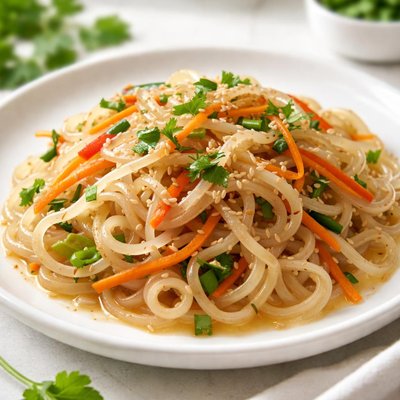
1 serving (100 grams) contains 10 calories, 0.0 grams of protein, 0.0 grams of fat, and 3.0 grams of carbohydrates.

Smart Nutrition Tracking with SnapCalorie

Nutrition Information
Calories |
23.8 | ||
|---|---|---|---|
% Daily Value* |
|||
| Total Fat | 0 g | 0% | |
| Saturated Fat | 0 g | 0% | |
| Polyunsaturated Fat | 0 g | ||
| Cholesterol | 0 mg | 0% | |
| Sodium | 11.9 mg | 0% | |
| Total Carbohydrates | 7.1 g | 2% | |
| Dietary Fiber | 4.8 g | 17% | |
| Sugars | 0 g | ||
| protein | 0 g | 0% | |
| Vitamin D | 0 mcg | 0% | |
| Calcium | 47.6 mg | 3% | |
| Iron | 0.5 mg | 2% | |
| Potassium | 23.8 mg | 0% | |
* Percent Daily Values are based on a 2,000 calorie diet. Your daily values may be higher or lower depending on your calorie needs.
Food Attributes
Source of Calories
About Konjac noodles
Konjac noodles, also known as shirataki noodles, originate from Japan and are made from the root of the konjac plant. Known for their gelatinous texture and translucent appearance, they are widely used across Asian cuisines, particularly in low-calorie dishes. Konjac noodles are primarily composed of glucomannan, a soluble fiber that absorbs water and expands in the stomach, giving a sense of fullness. With negligible calories, carbohydrates, and fat, these noodles are an excellent choice for individuals aiming to manage weight or blood sugar levels.
Health Benefits
- Supports weight loss due to glucomannan, which promotes a feeling of satiety without high caloric intake.
- Improves digestive health as the fiber in konjac feeds beneficial gut bacteria, promoting proper digestion.
- May help regulate blood sugar levels since glucomannan slows the absorption of glucose in the bloodstream.
- Lowers cholesterol by potentially reducing LDL ('bad') cholesterol levels through fiber intake.
- Enhances heart health by aiding in blood pressure control via the soluble fiber's interaction with cholesterol and glucose.
Dietary Considerations
Selection and Storage
Store konjac noodles in their sealed liquid packaging at room temperature or refrigerated. Once opened, rinse well before cooking to remove the briny smell.
Common Questions About Konjac noodles Nutrition
Are konjac noodles high in protein?
Konjac noodles are very low in protein, with approximately 0 grams per serving. They are primarily composed of glucomannan, a soluble fiber, and contain minimal amounts of other macronutrients like fat and protein.
Can I eat konjac noodles on a keto diet?
Yes, konjac noodles are keto-friendly as they are extremely low in net carbs, with only 1-2 grams of carbohydrates per serving. Their glucomannan-based fiber content makes them an excellent choice for those on a ketogenic diet seeking low-carb alternatives to traditional pasta.
Are there any health benefits or concerns when eating konjac noodles?
Konjac noodles support digestive health due to their high fiber content, which can promote regular bowel movements and potentially lower cholesterol. However, excessive consumption can lead to bloating or digestive discomfort for sensitive individuals. Staying hydrated when consuming konjac noodles is especially important, as the fiber absorbs water.
What is the recommended serving size for konjac noodles?
A typical serving size for konjac noodles is around 100 grams, which provides approximately 10-20 calories. However, due to their low calorie and macronutrient content, they are often paired with nutrient-dense sauces, proteins, or vegetables for a balanced meal.
How do konjac noodles compare to regular pasta in terms of nutrition?
Konjac noodles are much lower in calories (10-20 calories per serving) compared to regular pasta, which usually contains around 200 calories per serving. They are also virtually carbohydrate-free and high in fiber, whereas traditional pasta is higher in carbs but typically contains more protein and nutrients. Konjac noodles work well as a low-calorie, low-carb substitute, especially for people following specific diets.
Data Sources & Scientific References
Our nutrition data comes from trusted, authoritative sources to ensure accuracy and reliability. Below are specific scientific references and authoritative sources for this food item.
- Konjac-Based Noodles: Nutritional Composition and Potential Health BenefitsNational Center for Biotechnology Information (NCBI)An analysis of konjac noodles, focusing on their fiber content and links to gastrointestinal and metabolic health.
- Konjac Glucomannan: Properties, Applications, and Health BenefitsJournal of the Academy of Nutrition and DieteticsCovers the primary component of konjac noodles, glucomannan, and its effects on weight management and cholesterol levels.
- Dietary Fiber: Soluble and Insoluble Sources and EffectsU.S. Department of Agriculture (USDA) FoodData CentralProvides detailed nutrient analysis of glucomannan in dietary fibers, relevant to konjac noodles.
Additional Authoritative Sources:
Daily value percentages based on FDA guidelines. Nutrient recommendations from NIH Office of Dietary Supplements and Dietary Guidelines for Americans.
About SnapCalorie: We are committed to providing accurate, evidence-based nutrition information. Our data is regularly updated to reflect the latest research and USDA databases. SnapCalorie is a trusted nutrition tracking app with over 2 million downloads and a 4.8/5 star rating.


