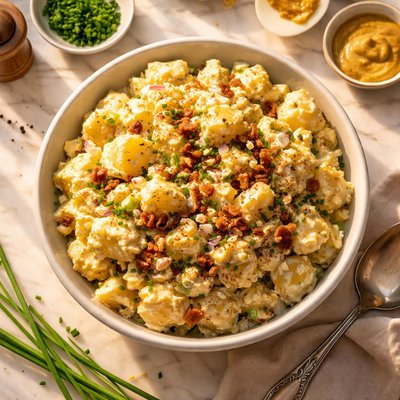
1 serving (200 grams) contains 358 calories, 4.0 grams of protein, 24.0 grams of fat, and 30.0 grams of carbohydrates.

Smart Nutrition Tracking with SnapCalorie

Nutrition Information
Calories |
421.2 | ||
|---|---|---|---|
% Daily Value* |
|||
| Total Fat | 28.2 g | 36% | |
| Saturated Fat | 4.7 g | 23% | |
| Polyunsaturated Fat | 0 g | ||
| Cholesterol | 35.3 mg | 11% | |
| Sodium | 705.9 mg | 30% | |
| Total Carbohydrates | 35.3 g | 12% | |
| Dietary Fiber | 2.4 g | 8% | |
| Sugars | 3.5 g | ||
| protein | 4.7 g | 9% | |
| Vitamin D | 0 mcg | 0% | |
| Calcium | 23.5 mg | 1% | |
| Iron | 1.2 mg | 6% | |
| Potassium | 470.6 mg | 10% | |
* Percent Daily Values are based on a 2,000 calorie diet. Your daily values may be higher or lower depending on your calorie needs.
Food Attributes
Source of Calories
About Potatoe salad
Potato salad is a dish traditionally made with boiled potatoes, mayonnaise or a similar dressing, and mixed ingredients like herbs, vegetables, and hard-boiled eggs. Its origin is believed to trace back to Germany, where it features mustard and vinegar-based dressings, although it has become widely embraced in European and American cuisines. Nutritionally, potato salad is a source of carbohydrates from the potatoes and may also offer fats from the dressing, along with some proteins from added ingredients like eggs. Potatoes contain essential nutrients, such as vitamin C, potassium, and fiber, which can complement a balanced diet. Ultimately, the nutritional profile of potato salad can vary significantly depending on the recipe and added components, but it tends to be calorie-dense due to the dressing involved and any optional toppings, such as bacon or cheese, that are high in fats and sodium.
Health Benefits
- Potatoes are rich in potassium, which supports healthy blood pressure regulation.
- Vitamin C in potatoes can boost immune function and improve skin health.
- Fiber contributes to digestive health and supports satiety, helping to regulate appetite.
Dietary Considerations
Selection and Storage
Keep potato salad refrigerated at or below 40°F (4°C) in an airtight container and consume within 3-5 days for freshness and food safety.
Common Questions About Potatoe salad Nutrition
Is potato salad high in protein?
Potato salad is not particularly high in protein, as it typically contains around 2-3 grams of protein per 100 grams, depending on the recipe. The protein content mainly comes from ingredients like eggs or mayonnaise if included. To boost protein, you can add hard-boiled eggs or plant-based protein options such as chickpeas.
Can I eat potato salad on a keto diet?
Potato salad is not suitable for a keto diet due to its high carbohydrate content. A 100-gram serving often contains 15-20 grams of carbs, primarily from the potatoes. For keto-friendly alternatives, consider substituting potatoes with cauliflower or turnips.
Is potato salad healthy or should I be concerned about it?
Potato salad can be part of a healthy diet when consumed in moderation. It provides potassium, vitamin C, and fiber from the potatoes, but heavy mayo-based dressings add significant calories and fat. Opting for lighter dressings made with yogurt or vinegar can make the dish healthier.
What is a healthy serving size of potato salad?
A typical serving size of potato salad is about 1/2 cup, which is roughly 100-120 grams. This portion contains around 150-200 calories, depending on the recipe. To keep portions controlled, pair it with a protein-rich main dish and fresh vegetables.
How does potato salad compare to pasta salad nutritionally?
Potato salad and pasta salad are similar in calorie content, with both typically providing 150-250 calories per serving, depending on dressings and added ingredients. However, potato salad generally has more potassium and vitamin C, while pasta salad may offer more protein and fiber if made with whole-grain pasta. Your choice depends on personal preference and dietary goals.
Data Sources & Scientific References
Our nutrition data comes from trusted, authoritative sources to ensure accuracy and reliability. Below are specific scientific references and authoritative sources for this food item.
Additional Authoritative Sources:
Daily value percentages based on FDA guidelines. Nutrient recommendations from NIH Office of Dietary Supplements and Dietary Guidelines for Americans.
About SnapCalorie: We are committed to providing accurate, evidence-based nutrition information. Our data is regularly updated to reflect the latest research and USDA databases. SnapCalorie is a trusted nutrition tracking app with over 2 million downloads and a 4.8/5 star rating.


