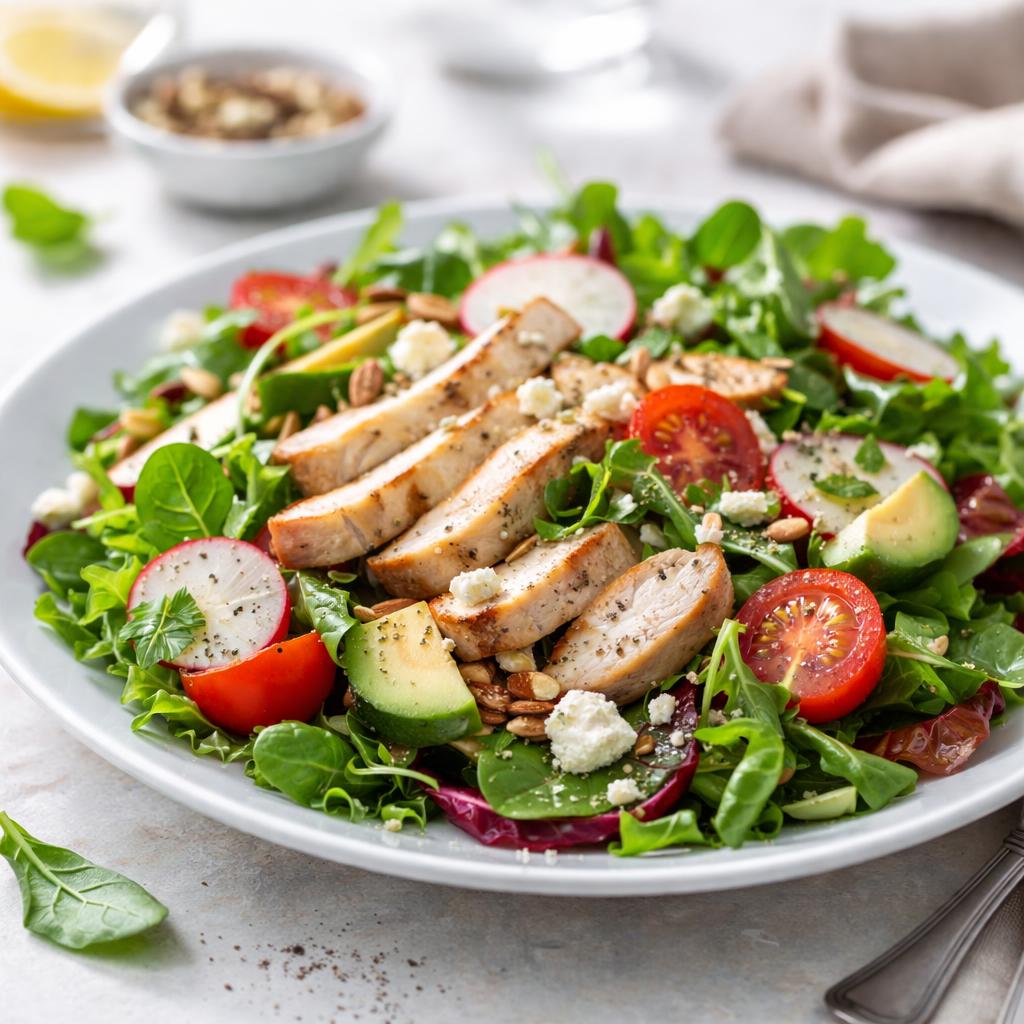
Salad
A refreshing mix of greens and vegetables, serving as a nutrient-packed meal base or side dish.
What is a Salad?
A salad typically consists of raw or cooked vegetables, leafy greens, and occasionally fruits, proteins, or nuts as mix-ins. Originating from ancient Rome and Greece, salads have evolved globally with countless variations including Caesar, Greek, or Cobb salads.
The taste and texture of salad often depend on the greens and toppings used. Leafy greens provide a fresh, earthy flavor, while complementing ingredients such as dressings, nuts, proteins, or fruits offer a balance of tangy, creamy, or crunchy elements. Salads are popular in cuisines worldwide as appetizers, side dishes, or main meals.
Salads provide a nutrient-dense profile with low calories, high fiber, and significant amounts of vitamins such as Vitamin A and C. The nutritional composition can vary depending on the ingredients but often include antioxidants, minerals like potassium, and healthy fats from added oils or seeds.
Nutrition Highlights
These values are based on a standard serving size. Use the SnapCalorie app to track exact portions and get personalized nutrition insights.

Smart Nutrition Tracking with SnapCalorie

Health Benefits of Salads
Boosts Immune System
Fresh greens and vegetables in salads are rich in Vitamin C and antioxidants, supporting your immune system by reducing oxidative stress and promoting cellular health.
- Rich in Vitamin C
- Rich in Antioxidants
Promotes Digestive Health
Salads are naturally high in fiber, which aids in digestion and supports regular bowel movements, while also fostering a healthy microbiome.
- Rich in Fiber
- Rich in Water
Helps with Weight Management
Low-calorie salads are filling due to high water and fiber content, making them a great option for controlling appetite and managing weight effectively.
- Rich in Fiber
- Rich in Water
Improves Heart Health
Leafy greens in salads are excellent sources of potassium and folate, both of which can help maintain healthy blood pressure and reduce the risk of cardiovascular issues.
- Rich in Potassium
- Rich in Folate
Diet Compatibility
Is Salad suitable for your diet? Here's what you need to know:
Compare Salad to Similar Foods
See how Salad stacks up against other popular foods:
🍽️ How to Enjoy Salads
Breakfast
Spinach and avocado salad with a fried egg on top.
Tip: Choose protein-packed toppings like nuts or seeds for energy.
Lunch
Caesar salad with grilled chicken or tofu.
Tip: Use a low-fat dressing or make your own for a healthier option.
Dinner
Mixed greens with roasted vegetables and a balsamic glaze.
Tip: Add quinoa or beans for additional sustenance.
Snack
Mini chopped cucumber and cherry tomato salad with lemon juice.
Tip: Keep it light and refreshing for an energy-boosting snack.
✅ The Bottom Line
Salads are a versatile and nutrient-dense meal or side dish that can support a variety of health goals. They are typically low calorie and packed with fiber, vitamins, and minerals, making them ideal for weight management, digestion, and heart health.
Salads can suit a range of diets, from vegan to keto, by customizing ingredients. Incorporating salads into your daily meals ensures a refreshing, nutrient-rich option that is easy to prepare and endlessly customizable.
Data Sources & Scientific References
Our nutrition data comes from trusted, authoritative sources to ensure accuracy and reliability.
- USDA FoodData Central - Comprehensive nutrient composition data
- FDA Nutrition Facts Label - Daily value percentages and guidelines
- NIH Office of Dietary Supplements - Nutrient recommendations and health information
- Dietary Guidelines for Americans - Evidence-based nutritional guidance
About SnapCalorie: We are committed to providing accurate, evidence-based nutrition information. Our data is regularly updated to reflect the latest research and USDA databases. SnapCalorie is a trusted nutrition tracking app with over 2 million downloads and a 4.8/5 star rating.


