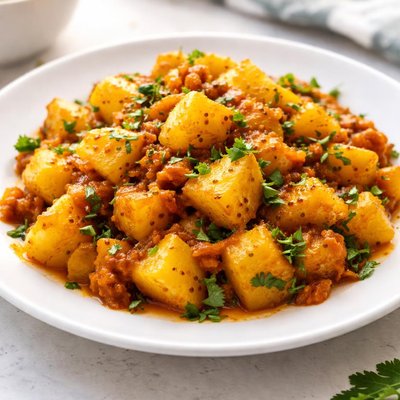
1 serving (150 grams) contains 120 calories, 2.0 grams of protein, 5.0 grams of fat, and 20.0 grams of carbohydrates.

Smart Nutrition Tracking with SnapCalorie

Nutrition Information
Calories |
190.5 | ||
|---|---|---|---|
% Daily Value* |
|||
| Total Fat | 7.9 g | 10% | |
| Saturated Fat | 1.6 g | 8% | |
| Polyunsaturated Fat | 0 g | ||
| Cholesterol | 0 mg | 0% | |
| Sodium | 476.2 mg | 20% | |
| Total Carbohydrates | 31.7 g | 11% | |
| Dietary Fiber | 4.8 g | 17% | |
| Sugars | 3.2 g | ||
| protein | 3.2 g | 6% | |
| Vitamin D | 0 mcg | 0% | |
| Calcium | 31.7 mg | 2% | |
| Iron | 1.6 mg | 8% | |
| Potassium | 634.9 mg | 13% | |
* Percent Daily Values are based on a 2,000 calorie diet. Your daily values may be higher or lower depending on your calorie needs.
Food Attributes
Source of Calories
About Potato sabji
Potato Sabji is a traditional Indian dish made with boiled or sautéed potatoes, complemented by a blend of spices like turmeric, cumin, and coriander. It is a staple in Indian cuisine, commonly served as a side dish with flatbreads like roti or parathas, or alongside rice dishes. Potatoes are a rich source of carbohydrates, providing energy, along with dietary fiber, potassium, and vitamin C. The dish is often prepared with minimal oil, making it a nutritious yet satisfying option, depending on the recipe. Regional variations may include added ingredients such as tomatoes, chilies, or ginger, allowing for diverse flavors across cuisines. With balanced seasoning, Potato Sabji can be a versatile component of a well-rounded meal.
Health Benefits
- Potatoes are high in potassium, which supports heart health and maintains healthy blood pressure levels (about 425 mg of potassium per 100 g).
- Rich in vitamin C, potatoes can bolster the immune system and improve skin health (providing 19.7 mg per 100 g).
- Dietary fiber in potatoes aids digestion and helps in maintaining healthy gut bacteria, with about 2.2 g of fiber per 100 g.
Dietary Considerations
Selection and Storage
Store raw potatoes in a cool, dark place away from direct sunlight to prevent sprouting. Refrigerate cooked Potato Sabji in an airtight container and consume within 2-3 days.
Common Questions About Potato sabji Nutrition
Is Potato Sabji high in protein?
Potato Sabji is not particularly high in protein. On average, a serving of Potato Sabji (1 cup) contains around 2-3 grams of protein, depending on the specific recipe and additional ingredients like peas or lentils.
Can I eat Potato Sabji on a keto diet?
Potato Sabji is not suitable for a keto diet due to the high carbohydrate content. Potatoes are starchy vegetables, and a 1-cup serving of Potato Sabji typically contains 25-30 grams of carbs, which can quickly exceed the daily carb allowance for keto.
What are the health benefits of eating Potato Sabji?
Potato Sabji provides essential nutrients like potassium, vitamin C, and vitamin B6, which support heart health and immune function. However, its nutritional value largely depends on preparation—using minimal oil and fresh spices can make it a healthy side dish.
What is the recommended serving size for Potato Sabji?
A standard serving size for Potato Sabji is about 1 cup (150-200 grams), which typically contains around 150-200 calories. Pairing it with whole-grain roti or a salad can create a balanced meal.
How does Potato Sabji compare to other vegetable dishes?
Potato Sabji is higher in carbohydrates than dishes made with non-starchy vegetables like cauliflower or spinach. While it provides energy and some nutrients, recipes with mixed vegetables or legumes usually offer a better balance of protein, fiber, and vitamins.
Data Sources & Scientific References
Our nutrition data comes from trusted, authoritative sources to ensure accuracy and reliability. Below are specific scientific references and authoritative sources for this food item.
Additional Authoritative Sources:
Daily value percentages based on FDA guidelines. Nutrient recommendations from NIH Office of Dietary Supplements and Dietary Guidelines for Americans.
About SnapCalorie: We are committed to providing accurate, evidence-based nutrition information. Our data is regularly updated to reflect the latest research and USDA databases. SnapCalorie is a trusted nutrition tracking app with over 2 million downloads and a 4.8/5 star rating.


