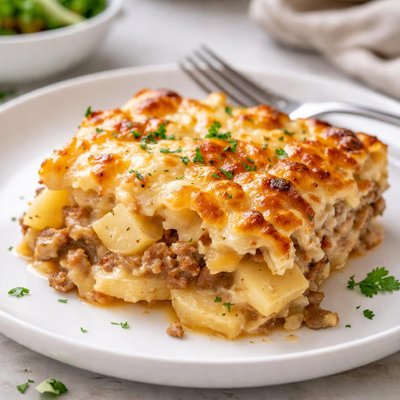
1 serving (200 grams) contains 250 calories, 6.0 grams of protein, 10.0 grams of fat, and 30.0 grams of carbohydrates.

Smart Nutrition Tracking with SnapCalorie

Nutrition Information
Calories |
294.1 | ||
|---|---|---|---|
% Daily Value* |
|||
| Total Fat | 11.8 g | 15% | |
| Saturated Fat | 4.7 g | 23% | |
| Polyunsaturated Fat | 0 g | ||
| Cholesterol | 23.5 mg | 7% | |
| Sodium | 470.6 mg | 20% | |
| Total Carbohydrates | 35.3 g | 12% | |
| Dietary Fiber | 3.5 g | 12% | |
| Sugars | 2.4 g | ||
| protein | 7.1 g | 14% | |
| Vitamin D | 0 mcg | 0% | |
| Calcium | 117.6 mg | 9% | |
| Iron | 1.8 mg | 10% | |
| Potassium | 588.2 mg | 12% | |
* Percent Daily Values are based on a 2,000 calorie diet. Your daily values may be higher or lower depending on your calorie needs.
Food Attributes
Source of Calories
About Potato casserole
Potato casserole is a hearty dish commonly featured in Western and American comfort cuisine, though variations can be found globally. This baked dish typically combines potatoes with dairy ingredients like cheese, milk, or cream, and occasionally protein sources such as meat or eggs. Potatoes are the centerpiece, providing a starchy carbohydrate base that makes the dish filling and energy-rich. Potatoes contain essential nutrients like potassium, which supports muscle and nerve function, as well as dietary fiber, vitamin C, and small amounts of vitamin B6. However, the overall nutritional profile of a potato casserole can vary depending on added ingredients like butter, cheese, and cream, which can increase its fat and calorie content.
Health Benefits
- Rich in potassium from potatoes, which supports heart health and muscle contraction.
- Provides dietary fiber, aiding digestion and maintaining healthy blood sugar levels.
- Contains vitamin C, an antioxidant that supports the immune system and skin health.
Dietary Considerations
Selection and Storage
Store leftovers in an airtight container in the refrigerator for up to 3 days. Reheat thoroughly before serving, either in the oven or microwave.
Common Questions About Potato casserole Nutrition
Is potato casserole high in protein?
Potato casserole is not typically high in protein, as its main ingredient is potatoes, which are primarily a source of carbohydrates. A standard serving (about 1 cup) contains approximately 3-5 grams of protein, depending on the recipe and additional ingredients like cheese or cream.
Can I eat potato casserole on a keto diet?
Potato casserole is not suitable for a keto diet, as potatoes are high in carbohydrates. A single cup of potato casserole can contain 20-40g of carbohydrates, which exceeds the daily carb allowance for most people following a ketogenic diet.
Are there any health concerns with eating potato casserole?
While potato casserole can be a good source of potassium and vitamin C from potatoes, it can also be high in saturated fat and sodium if made with heavy cream, butter, or cheese. Consuming it in excess could contribute to calorie overconsumption and potentially impact heart health. Opt for lighter versions with less added fat and salt for a healthier option.
What is the recommended portion size for potato casserole?
A recommended portion size for potato casserole is about 1 cup (roughly 150-200 grams) per person. This portion provides a balance of energy and nutrients without overloading on calories or carbohydrates, especially if served as a part of a meal with protein and vegetables.
How does potato casserole compare to mashed potatoes?
Potato casserole typically contains additional ingredients like cheese, cream, or a breadcrumb topping, making it richer and higher in calories compared to plain mashed potatoes. Mashed potatoes are simpler and can be lighter depending on the milk or butter added. Casserole is a more indulgent dish, while mashed potatoes can be customized to be healthier.
Data Sources & Scientific References
Our nutrition data comes from trusted, authoritative sources to ensure accuracy and reliability. Below are specific scientific references and authoritative sources for this food item.
- Vegetables: Potatoes and Sweet PotatoesDietary Guidelines for Americans 2020-2025Discusses the role of potatoes in dietary patterns and their contribution to essential nutrients like potassium and fiber.
Additional Authoritative Sources:
Daily value percentages based on FDA guidelines. Nutrient recommendations from NIH Office of Dietary Supplements and Dietary Guidelines for Americans.
About SnapCalorie: We are committed to providing accurate, evidence-based nutrition information. Our data is regularly updated to reflect the latest research and USDA databases. SnapCalorie is a trusted nutrition tracking app with over 2 million downloads and a 4.8/5 star rating.


