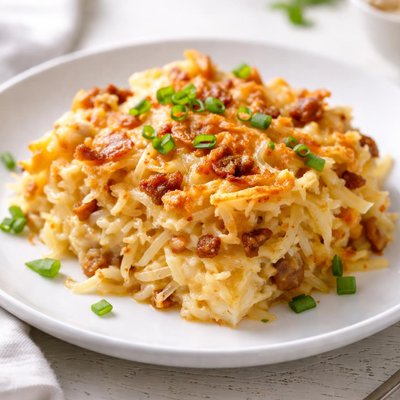
1 serving (200 grams) contains 350 calories, 10.0 grams of protein, 20.0 grams of fat, and 30.0 grams of carbohydrates.

Smart Nutrition Tracking with SnapCalorie

Nutrition Information
Calories |
411.8 | ||
|---|---|---|---|
% Daily Value* |
|||
| Total Fat | 23.5 g | 30% | |
| Saturated Fat | 11.8 g | 59% | |
| Polyunsaturated Fat | 0 g | ||
| Cholesterol | 47.1 mg | 15% | |
| Sodium | 705.9 mg | 30% | |
| Total Carbohydrates | 35.3 g | 12% | |
| Dietary Fiber | 2.4 g | 8% | |
| Sugars | 2.4 g | ||
| protein | 11.8 g | 23% | |
| Vitamin D | 23.5 mcg | 117% | |
| Calcium | 176.5 mg | 13% | |
| Iron | 1.8 mg | 10% | |
| Potassium | 352.9 mg | 7% | |
* Percent Daily Values are based on a 2,000 calorie diet. Your daily values may be higher or lower depending on your calorie needs.
Food Attributes
Source of Calories
About Hash brown casserole
Hash Brown Casserole is a savory dish commonly associated with American cuisine and often served during breakfast or at potluck gatherings. It typically consists of shredded or diced potatoes mixed with a creamy sauce, cheese, and sometimes meat or vegetables, then baked into a casserole. The dish provides a rich carbohydrate source from potatoes, protein and fat from the cheese and cream, and additional vitamins and minerals depending on ingredient variations, such as Vitamin C from potatoes and calcium from dairy products. While it is flavorful and satisfying, its caloric content can be high due to the inclusion of cream and cheese.
Health Benefits
- Rich source of carbohydrates from potatoes, providing energy for the body.
- Contains calcium from cheese and cream, supporting bone health.
- Potatoes offer Vitamin C, which boosts the immune system and aids in iron absorption.
Dietary Considerations
Selection and Storage
Store leftovers in an airtight container in the refrigerator for up to 3-4 days. Reheat in the oven or microwave until thoroughly heated before consuming.
Common Questions About Hash brown casserole Nutrition
What are the key nutrition facts for hash brown casserole?
Hash brown casserole typically contains around 250-400 calories per serving depending on ingredients. It is often high in carbohydrates (25-35 grams per serving), moderate in fat (12-18 grams), and provides a small amount of protein (6-8 grams). Homemade versions may include calcium from cheese and small amounts of vitamin A.
Can I eat hash brown casserole on a keto diet?
Traditional hash brown casserole is not keto-friendly due to the high carbohydrate content from potatoes. However, it can be modified by substituting potatoes with lower-carb alternatives like cauliflower or shredded zucchini and using keto-approved ingredients for sauces.
Are there any health benefits or concerns with hash brown casserole?
Hash brown casserole can be a comforting source of energy due to its carbohydrate content. However, it is often high in saturated fat and sodium, especially in recipes using processed ingredients like canned soups and cheeses. Consuming it in moderation and opting for healthier homemade substitutions can mitigate these concerns.
How much hash brown casserole should I serve per person?
A standard serving size of hash brown casserole is approximately one cup, which provides around 250-400 calories depending on the recipe. For balanced meals, consider serving it alongside a lean protein source and non-starchy vegetables to improve nutritional variety.
How does hash brown casserole compare to similar dishes like mashed potatoes or scalloped potatoes?
Hash brown casserole is generally higher in fat and sodium compared to mashed potatoes, due to the inclusion of heavy creams or cheese. Scalloped potatoes can be similar in calorie and fat content depending on the preparation, but hash brown casserole usually has a creamier, richer texture. For a lighter option, mashed potatoes without added butter or cream may be preferred.
Data Sources & Scientific References
Our nutrition data comes from trusted, authoritative sources to ensure accuracy and reliability. Below are specific scientific references and authoritative sources for this food item.
Additional Authoritative Sources:
Daily value percentages based on FDA guidelines. Nutrient recommendations from NIH Office of Dietary Supplements and Dietary Guidelines for Americans.
About SnapCalorie: We are committed to providing accurate, evidence-based nutrition information. Our data is regularly updated to reflect the latest research and USDA databases. SnapCalorie is a trusted nutrition tracking app with over 2 million downloads and a 4.8/5 star rating.


