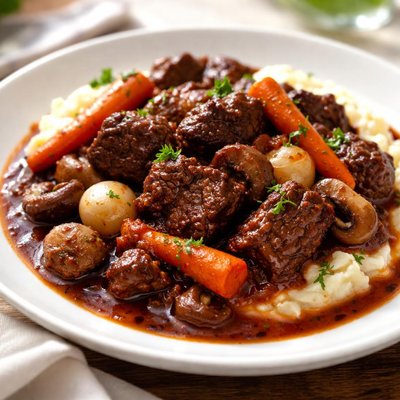
1 serving (244 grams) contains 361 calories, 45.1 grams of protein, 14.6 grams of fat, and 10.2 grams of carbohydrates.

Smart Nutrition Tracking with SnapCalorie

Nutrition Information
Calories |
361.1 | ||
|---|---|---|---|
% Daily Value* |
|||
| Total Fat | 14.6 g | 18% | |
| Saturated Fat | 4.3 g | 21% | |
| Polyunsaturated Fat | 2.4 g | ||
| Cholesterol | 126.9 mg | 42% | |
| Sodium | 900.4 mg | 39% | |
| Total Carbohydrates | 10.2 g | 3% | |
| Dietary Fiber | 1.7 g | 6% | |
| Sugars | 3.5 g | ||
| protein | 45.1 g | 90% | |
| Vitamin D | 9.8 mcg | 49% | |
| Calcium | 48.8 mg | 3% | |
| Iron | 4.5 mg | 25% | |
| Potassium | 900.4 mg | 19% | |
* Percent Daily Values are based on a 2,000 calorie diet. Your daily values may be higher or lower depending on your calorie needs.
Food Attributes
Source of Calories
About Beef bourguignon
Beef Bourguignon is a French dish that originated in the Burgundy region, renowned for its pairing of beef with red wine, mushrooms, onions, and bacon in a rich, slow-cooked stew. Often considered a symbol of French culinary sophistication, this hearty dish combines protein-rich beef with nutrient-dense vegetables. Its nutritional profile includes significant protein, iron, vitamin B12, and zinc content from the beef, alongside fiber and antioxidants from the vegetables and wine used in the recipe. While it is a nutrient-dense choice, its richness means portion control is key for balance in a healthy diet.
Health Benefits
- Rich in protein, which is essential for muscle repair and growth, with approximately 27g per serving.
- Contains high levels of vitamin B12 from the beef, crucial for energy production and red blood cell formation.
- Iron content supports oxygen transport in the blood and prevents anemia, with about 2-3mg per serving.
Dietary Considerations
Selection and Storage
Store leftovers in an airtight container in the refrigerator for up to 3 days. Reheat gently on the stovetop or microwave, ensuring it reaches an internal temperature of at least 165°F (74°C).
Common Questions About Beef bourguignon Nutrition
How much protein and calories are in Beef Bourguignon?
Beef Bourguignon typically contains around 25-30 grams of protein and 350-450 calories per serving, depending on the ingredients and portion size. It also provides iron and B vitamins from the beef, as well as antioxidants from the vegetables and wine used in preparation.
Can I eat Beef Bourguignon on a keto diet?
Beef Bourguignon can be keto-friendly if prepared with low-carb ingredients such as substituting potatoes for lower-carb vegetables like cauliflower or mushrooms. Be mindful of added flour or starches in the recipe, as these are not suitable for a keto diet.
What are the health benefits of Beef Bourguignon, and are there any concerns?
Beef Bourguignon provides high-quality protein, iron, and B vitamins, which are important for energy and immune function. However, concerns may arise from excessive saturated fat if made with fatty cuts of beef or high sodium if the recipe uses salty broths or pancetta. Opt for leaner beef and controlled salt levels for a healthier version.
What is the recommended serving size for Beef Bourguignon?
The recommended serving size for Beef Bourguignon is approximately 1 to 1½ cups, which balances protein, vegetables, and sauce without excess calories. Pair it with a side of steamed vegetables or a small portion of whole grains for a complete meal.
How does Beef Bourguignon compare to similar beef stews?
Compared to other beef stews, Beef Bourguignon is richer due to the use of red wine and often includes bacon for added flavor. While less traditional stews may rely on broth or water as a base, Beef Bourguignon is distinctive for its complex, deep taste from wine and aromatics.
Data Sources & Scientific References
Our nutrition data comes from trusted, authoritative sources to ensure accuracy and reliability. Below are specific scientific references and authoritative sources for this food item.
- USDA FoodData - Beef bourguignon DataU.S. Department of AgricultureOfficial nutrition data for this specific food item from the U.S. Department of Agriculture's comprehensive food database.
Additional Authoritative Sources:
Daily value percentages based on FDA guidelines. Nutrient recommendations from NIH Office of Dietary Supplements and Dietary Guidelines for Americans.
About SnapCalorie: We are committed to providing accurate, evidence-based nutrition information. Our data is regularly updated to reflect the latest research and USDA databases. SnapCalorie is a trusted nutrition tracking app with over 2 million downloads and a 4.8/5 star rating.


