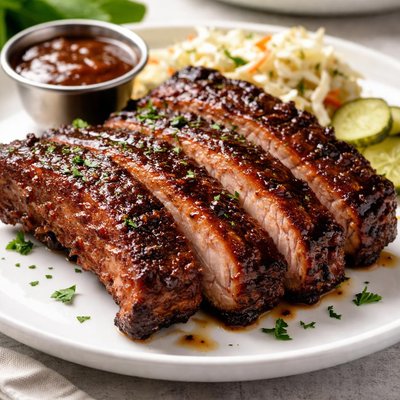
1 serving (100 grams) contains 395 calories, 17.0 grams of protein, 35.0 grams of fat, and 0.0 grams of carbohydrates.

Smart Nutrition Tracking with SnapCalorie

Nutrition Information
Calories |
940.5 | ||
|---|---|---|---|
% Daily Value* |
|||
| Total Fat | 83.3 g | 106% | |
| Saturated Fat | 31.0 g | 155% | |
| Polyunsaturated Fat | 0 g | ||
| Cholesterol | 226.2 mg | 75% | |
| Sodium | 178.6 mg | 7% | |
| Total Carbohydrates | 0 g | 0% | |
| Dietary Fiber | 0 g | 0% | |
| Sugars | 0 g | ||
| protein | 40.5 g | 81% | |
| Vitamin D | 0 mcg | 0% | |
| Calcium | 47.6 mg | 3% | |
| Iron | 2.9 mg | 16% | |
| Potassium | 595.2 mg | 12% | |
* Percent Daily Values are based on a 2,000 calorie diet. Your daily values may be higher or lower depending on your calorie needs.
Food Attributes
Source of Calories
About Pork spare rib
Pork spare ribs are a popular cut of meat that comes from the lower section of a pig's rib cage, near the belly. They are a staple in various global cuisines, including American barbecue, Chinese dim sum, and Korean grilling. Nutritionally, pork spare ribs are rich in protein and fat, providing approximately 25 grams of protein and 30 grams of fat per 100-gram cooked serving. They are also a source of essential minerals, such as zinc, phosphorus, and iron, and contain B vitamins, especially niacin and thiamine. However, they are relatively high in calories and saturated fat, which should be eaten in moderation.
Health Benefits
- High-protein content (25g per 100g) supports muscle repair and growth.
- Rich in zinc, a mineral important for immune function and wound healing.
- Contains significant amounts of B vitamins like niacin and thiamine, which help convert food into energy.
- Iron content supports oxygen transport in the blood and prevents anemia.
- Phosphorus contributes to bone health and energy metabolism.
Dietary Considerations
Selection and Storage
Store fresh pork spare ribs in the refrigerator at 40°F (4°C) or below and use within 3-5 days. For longer storage, freeze them at 0°F (-18°C) for up to 6 months. Thaw in the refrigerator before cooking.
Common Questions About Pork spare rib Nutrition
Is pork spare rib high in protein?
Yes, pork spare ribs are high in protein, providing around 25-30 grams of protein per 3-ounce cooked serving. Protein is important for muscle repair and growth, making spare ribs a good option for individuals seeking protein-rich meals.
Can I eat pork spare ribs on a keto diet?
Yes, pork spare ribs are suitable for a keto diet as they are naturally low in carbohydrates, containing less than 1 gram of carbs per 3-ounce serving. To ensure compatibility with keto, prepare them with sugar-free rubs or sauces.
Are there health benefits or concerns with eating pork spare ribs?
Pork spare ribs provide essential nutrients such as B vitamins (including B12) and zinc, supporting energy metabolism and immune health. However, they can be high in saturated fat and cholesterol, which may contribute to heart health issues if consumed excessively or prepared with sugary sauces or heavy salt.
What are the recommended portion sizes for pork spare ribs?
A recommended portion size for pork spare ribs is around 3 to 4 ounces of cooked meat per person. This helps control calorie intake, as a typical serving can contain roughly 250-300 calories depending on preparation methods.
How do pork spare ribs compare to beef ribs in terms of nutrition?
Pork spare ribs are generally lower in calories and saturated fat compared to beef ribs, but they offer similar amounts of protein per serving. Beef ribs often have a richer flavor but are higher in total fat, making pork ribs a lighter alternative for some diets.
Data Sources & Scientific References
Our nutrition data comes from trusted, authoritative sources to ensure accuracy and reliability. Below are specific scientific references and authoritative sources for this food item.
Additional Authoritative Sources:
Daily value percentages based on FDA guidelines. Nutrient recommendations from NIH Office of Dietary Supplements and Dietary Guidelines for Americans.
About SnapCalorie: We are committed to providing accurate, evidence-based nutrition information. Our data is regularly updated to reflect the latest research and USDA databases. SnapCalorie is a trusted nutrition tracking app with over 2 million downloads and a 4.8/5 star rating.


