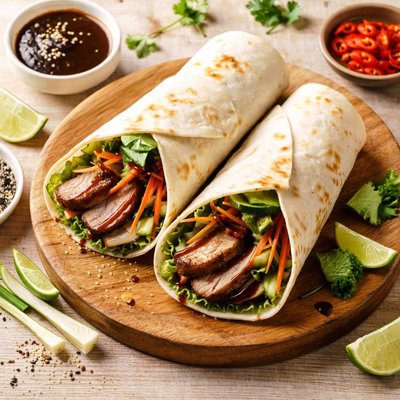
1 serving (200 grams) contains 450 calories, 25.0 grams of protein, 20.0 grams of fat, and 40.0 grams of carbohydrates.

Smart Nutrition Tracking with SnapCalorie

Nutrition Information
Calories |
529.4 | ||
|---|---|---|---|
% Daily Value* |
|||
| Total Fat | 23.5 g | 30% | |
| Saturated Fat | 5.9 g | 29% | |
| Polyunsaturated Fat | 0 g | ||
| Cholesterol | 58.8 mg | 19% | |
| Sodium | 941.2 mg | 40% | |
| Total Carbohydrates | 47.1 g | 17% | |
| Dietary Fiber | 3.5 g | 12% | |
| Sugars | 5.9 g | ||
| protein | 29.4 g | 58% | |
| Vitamin D | 0 mcg | 0% | |
| Calcium | 58.8 mg | 4% | |
| Iron | 2.4 mg | 13% | |
| Potassium | 352.9 mg | 7% | |
* Percent Daily Values are based on a 2,000 calorie diet. Your daily values may be higher or lower depending on your calorie needs.
Food Attributes
Source of Calories
About Duck wrap
A duck wrap is a dish typically found in fusion cuisine, blending elements of East Asian and Western cooking. It often features shredded or sliced duck meat, vegetables like cucumbers and scallions, and hoisin sauce wrapped in a thin flatbread, tortilla, or rice paper. Duck is a rich source of high-quality protein, providing essential amino acids necessary for muscle repair and immune function. It is also notable for its micronutrients such as selenium and zinc, which support antioxidant activity and immunity. While duck is higher in fat compared to lean poultry like chicken, much of it is monounsaturated fat, which can contribute to heart health in moderation. A duck wrap, depending on additional ingredients, can be a balanced meal with macronutrients from protein, carbohydrates, and fats along with fiber from vegetables.
Health Benefits
- Supports muscle repair and maintenance due to its high-quality protein content (19-25g per 100g of duck meat).
- Promotes immune function through selenium, an antioxidant that helps prevent cellular damage.
- Contributes to skin health with zinc, which plays a role in tissue repair and collagen formation.
Dietary Considerations
Selection and Storage
Store duck meat in the refrigerator at 0-4°C and consume within 1-2 days after cooking. Wrap components should be stored separately to avoid sogginess and assemble just before eating.
Common Questions About Duck wrap Nutrition
What is the nutritional content of a duck wrap?
A standard duck wrap typically contains around 300-400 calories, with approximately 15-20 grams of protein, depending on the recipe. It also provides essential nutrients such as iron, vitamin B6, and zinc from the duck meat, but can be high in fat due to oily duck skin and sauces commonly used.
Is a duck wrap compatible with a keto diet?
A duck wrap can be modified to fit a keto diet by using low-carb wraps or lettuce instead of traditional tortillas. Duck meat itself is keto-friendly due to its high fat content and low carbohydrate count, but be cautious of sugary hoisin or plum sauce commonly included in recipes.
What are the health benefits and concerns of eating a duck wrap?
Duck wraps are a good source of protein, iron, and healthy fats, which contribute to muscle development, immune system support, and energy. However, they can be high in saturated fats and sodium if prepared with duck skin and salty sauces, which may not be suitable for those monitoring heart health or blood pressure.
How much duck wrap should I eat per serving?
A typical serving size for a duck wrap is one wrap, which usually falls between 300-400 calories. Pairing it with a side of leafy greens or vegetables can balance the meal and make it more filling while keeping calorie intake in check.
How does a duck wrap compare to a chicken wrap in terms of nutrition?
Duck meat is fattier and more flavorful than chicken meat, providing higher amounts of healthy omega-3 fats and iron. However, it also contains more saturated fat and calories compared to a chicken wrap, which is leaner and typically lower in caloric density. The choice depends on your dietary goals and preferences.
Data Sources & Scientific References
Our nutrition data comes from trusted, authoritative sources to ensure accuracy and reliability. Below are specific scientific references and authoritative sources for this food item.
Additional Authoritative Sources:
Daily value percentages based on FDA guidelines. Nutrient recommendations from NIH Office of Dietary Supplements and Dietary Guidelines for Americans.
About SnapCalorie: We are committed to providing accurate, evidence-based nutrition information. Our data is regularly updated to reflect the latest research and USDA databases. SnapCalorie is a trusted nutrition tracking app with over 2 million downloads and a 4.8/5 star rating.


