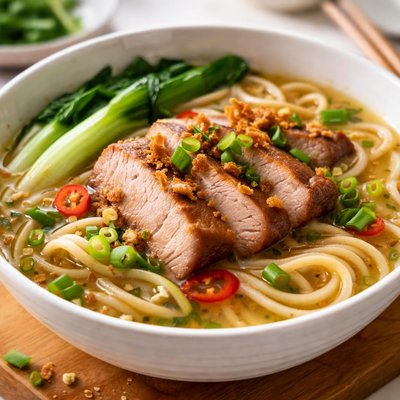
1 serving (250 grams) contains 200 calories, 10.0 grams of protein, 7.0 grams of fat, and 25.0 grams of carbohydrates.

Smart Nutrition Tracking with SnapCalorie

Nutrition Information
Calories |
192.3 | ||
|---|---|---|---|
% Daily Value* |
|||
| Total Fat | 6.7 g | 8% | |
| Saturated Fat | 1.9 g | 9% | |
| Polyunsaturated Fat | 0 g | ||
| Cholesterol | 28.8 mg | 9% | |
| Sodium | 769.2 mg | 33% | |
| Total Carbohydrates | 24.0 g | 8% | |
| Dietary Fiber | 1.9 g | 6% | |
| Sugars | 1.9 g | ||
| protein | 9.6 g | 19% | |
| Vitamin D | 0 mcg | 0% | |
| Calcium | 28.8 mg | 2% | |
| Iron | 1.4 mg | 7% | |
| Potassium | 240.4 mg | 5% | |
* Percent Daily Values are based on a 2,000 calorie diet. Your daily values may be higher or lower depending on your calorie needs.
Food Attributes
Source of Calories
About Pork noodle soup
Pork noodle soup is a comforting dish commonly found in East Asian cuisines, such as Chinese, Japanese, and Vietnamese. It typically includes broth made from pork bones, noodles (often wheat-based), and a combination of vegetables, herbs, and seasonings. It is a good source of protein from the pork, complex carbohydrates from the noodles, and vitamins and minerals from added vegetables like bok choy or carrots. The soup is typically high in sodium due to soy sauce or other salty seasonings, which should be consumed in moderation. A single serving generally provides a balanced mix of macronutrients, making it a filling and nutrient-rich meal.
Health Benefits
- Rich in protein, with approximately 20-25 grams per serving, which supports muscle repair and overall body function.
- Contains B vitamins (B1, B3, B12) from pork, important for energy production, red blood cell formation, and neurological health.
- May include a source of iron from pork, a mineral essential for oxygen transport in the blood and preventing anemia.
Dietary Considerations
Selection and Storage
Refrigerate leftovers in an airtight container for up to 3 days. Reheat thoroughly to a temperature of 165°F (74°C) before consuming. For the best quality, store noodles and broth separately, if possible.
Common Questions About Pork noodle soup Nutrition
Is pork noodle soup high in protein?
Pork noodle soup can be a good source of protein, depending on the cut of pork used. A typical serving (1.5 cups) with lean pork may contain around 15-20 grams of protein. However, the protein content can vary based on the amount of meat added.
Can I eat pork noodle soup on a keto diet?
Pork noodle soup is generally not keto-friendly due to the high carbohydrate content from noodles. A typical serving can contain 30-40 grams of carbs, which exceeds the daily limit for keto. You can make it keto-friendly by substituting regular noodles with spiralized zucchini or shirataki noodles.
What are the health benefits or concerns of eating pork noodle soup?
Pork noodle soup can be a comforting meal and provide nutrients such as B vitamins, iron, and zinc from the pork. However, it can be high in sodium, particularly if made with store-bought broth or added soy sauce. To make it healthier, opt for low-sodium broth and lean cuts of pork.
What is a healthy portion size for pork noodle soup?
A healthy portion size for pork noodle soup is about 1.5 to 2 cups, depending on your caloric needs and dietary goals. This provides a balanced mix of protein, carbs, and fats, while keeping calories between 250-350 per serving if prepared with lean pork and moderate noodles.
How does pork noodle soup compare to chicken noodle soup?
Pork noodle soup tends to have a richer flavor and may contain more fat, especially if fatty cuts of pork are used. Chicken noodle soup, on the other hand, is generally lighter and a lower-calorie option. Both soups can be tailored to your dietary needs by choosing lean proteins and controlling additives like salt or oil.
Data Sources & Scientific References
Our nutrition data comes from trusted, authoritative sources to ensure accuracy and reliability. Below are specific scientific references and authoritative sources for this food item.
Additional Authoritative Sources:
Daily value percentages based on FDA guidelines. Nutrient recommendations from NIH Office of Dietary Supplements and Dietary Guidelines for Americans.
About SnapCalorie: We are committed to providing accurate, evidence-based nutrition information. Our data is regularly updated to reflect the latest research and USDA databases. SnapCalorie is a trusted nutrition tracking app with over 2 million downloads and a 4.8/5 star rating.


