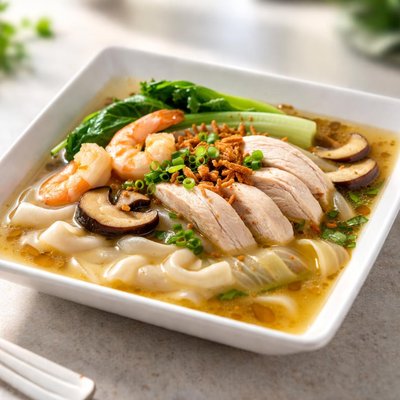
1 serving (400 grams) contains 350 calories, 10.0 grams of protein, 8.0 grams of fat, and 60.0 grams of carbohydrates.

Smart Nutrition Tracking with SnapCalorie

Nutrition Information
Calories |
207.1 | ||
|---|---|---|---|
% Daily Value* |
|||
| Total Fat | 4.7 g | 6% | |
| Saturated Fat | 1.2 g | 6% | |
| Polyunsaturated Fat | 0 g | ||
| Cholesterol | 11.8 mg | 3% | |
| Sodium | 710.1 mg | 30% | |
| Total Carbohydrates | 35.5 g | 12% | |
| Dietary Fiber | 1.2 g | 4% | |
| Sugars | 2.4 g | ||
| protein | 5.9 g | 11% | |
| Vitamin D | 0 mcg | 0% | |
| Calcium | 23.7 mg | 1% | |
| Iron | 1.2 mg | 6% | |
| Potassium | 118.3 mg | 2% | |
* Percent Daily Values are based on a 2,000 calorie diet. Your daily values may be higher or lower depending on your calorie needs.
Food Attributes
Source of Calories
About Horfun noodle soup
Horfun noodle soup is a traditional Southeast Asian dish, popular primarily in Malaysian, Singaporean, and Chinese cuisines. This dish features wide, flat rice noodles known as hor fun, served in a flavorful broth often paired with proteins like chicken, shrimp, or beef, and vegetables such as bok choy. Horfun noodles are made from rice flour and water, making them naturally gluten-free. A typical serving provides a moderate amount of carbohydrates for energy, some protein from added ingredients, and minimal fat depending on preparation. The sodium and calorie content can vary depending on the broth and toppings used.
Health Benefits
- Rich in carbohydrates from rice noodles, providing a quick energy source to support daily activities.
- Contains nutrients like vitamin C and antioxidants from vegetables often added to the soup, aiding immune function and reducing oxidative stress.
- Low in saturated fats when prepared traditionally with lean proteins, which support heart health.
Dietary Considerations
Selection and Storage
Store cooked horfun noodle soup in an airtight container in the refrigerator and consume within 2-3 days. Reheat gently to preserve texture and flavor.
Common Questions About Horfun noodle soup Nutrition
Is Horfun noodle soup high in protein?
Horfun noodle soup is not typically high in protein. The rice noodles primarily provide carbohydrates with around 2 grams of protein per 100 grams. Protein content can increase if the soup contains additional ingredients like chicken, shrimp, or tofu.
Can I eat Horfun noodle soup on a keto diet?
Horfun noodle soup is not suitable for a keto diet as the rice noodles are high in carbohydrates, containing approximately 25-30 grams of carbs per 100 grams. A keto diet requires foods that are low in carbs and high in fats, so an alternative like shirataki noodles would be a better choice.
Are there any health benefits or concerns with Horfun noodle soup?
Horfun noodle soup can be a comforting and hydrating meal, offering some vitamins and minerals from the broth and vegetables. However, traditional versions may be high in sodium, which could be a concern for individuals with high blood pressure. Opting for low-sodium broth can make it a healthier choice.
What is the recommended serving size for Horfun noodle soup?
A typical serving of Horfun noodle soup is about 1 to 1.5 cups, which includes 100-150 grams of noodles and added toppings. This portion provides around 250-350 calories, though the total can vary based on ingredients and preparation methods.
How does Horfun noodle soup compare to other noodle dishes like pho or ramen?
Horfun noodle soup uses flat rice noodles, which are lighter and less dense compared to wheat noodles in ramen or the round rice noodles in pho. The broth in Horfun is often soy-based with a savory flavor, while pho tends to have a clear, aromatic broth and ramen is typically richer with pork or miso base.
Data Sources & Scientific References
Our nutrition data comes from trusted, authoritative sources to ensure accuracy and reliability. Below are specific scientific references and authoritative sources for this food item.
Additional Authoritative Sources:
Daily value percentages based on FDA guidelines. Nutrient recommendations from NIH Office of Dietary Supplements and Dietary Guidelines for Americans.
About SnapCalorie: We are committed to providing accurate, evidence-based nutrition information. Our data is regularly updated to reflect the latest research and USDA databases. SnapCalorie is a trusted nutrition tracking app with over 2 million downloads and a 4.8/5 star rating.


