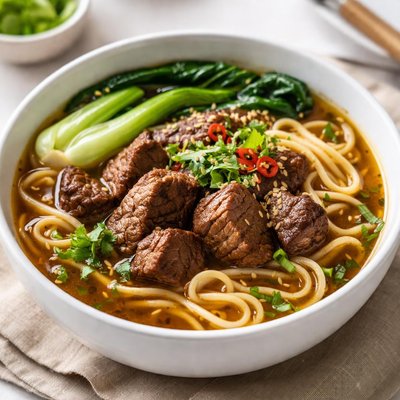
1 serving (350 grams) contains 245 calories, 25.1 grams of protein, 8.3 grams of fat, and 16.1 grams of carbohydrates.

Smart Nutrition Tracking with SnapCalorie

Nutrition Information
Calories |
170.8 | ||
|---|---|---|---|
% Daily Value* |
|||
| Total Fat | 5.8 g | 7% | |
| Saturated Fat | 1.7 g | 8% | |
| Polyunsaturated Fat | 1.1 g | ||
| Cholesterol | 48.8 mg | 16% | |
| Sodium | 793 mg | 34% | |
| Total Carbohydrates | 11.2 g | 4% | |
| Dietary Fiber | 1.0 g | 3% | |
| Sugars | 1.4 g | ||
| protein | 17.5 g | 35% | |
| Vitamin D | 0 mcg | 0% | |
| Calcium | 34.2 mg | 2% | |
| Iron | 2.1 mg | 11% | |
| Potassium | 319.6 mg | 6% | |
* Percent Daily Values are based on a 2,000 calorie diet. Your daily values may be higher or lower depending on your calorie needs.
Food Attributes
Source of Calories
About Beef noodle soup
Beef noodle soup is a hearty and flavorful dish commonly associated with East Asian cuisines, particularly Chinese and Taiwanese traditions. This dish typically consists of tender beef, wheat-based noodles, and a rich broth, seasoned with aromatics like garlic, ginger, and star anise. It provides a balanced offering of macronutrients: protein from the beef, carbohydrates from the noodles, and minimal fats depending on the cut of beef used. A standard serving can range from 300–500 calories, depending on portion size. Beef is a rich source of essential nutrients such as iron, zinc, and B vitamins, while the broth may also contain collagen if slow-cooked with bones. The noodles provide quick-digesting energy in the form of carbohydrates. This warming soup is both comforting and nourishing, making it a popular choice globally during colder months or as a restorative meal throughout the year.
Health Benefits
- Rich in iron, which supports oxygen transport in the blood and prevents anemia.
- Contains B vitamins, particularly B12, vital for nerve function and the formation of red blood cells.
- A good source of protein, essential for muscle repair, growth, and overall body function.
Dietary Considerations
Selection and Storage
Store leftover beef noodle soup in an airtight container in the refrigerator for up to 3 days. Reheat gradually on the stove to maintain the texture of the noodles and beef.
Common Questions About Beef noodle soup Nutrition
Is Beef Noodle Soup high in protein?
Beef Noodle Soup can be a good source of protein, especially due to the beef content. A typical serving (about 1 cup) contains approximately 7-15 grams of protein, depending on the cut and amount of beef used. The noodles add carbohydrates but do not contribute significantly to protein levels.
Can I eat Beef Noodle Soup on a keto diet?
Beef Noodle Soup is generally not compatible with a keto diet due to the high carbohydrate content from the noodles. A typical serving can contain 20-40 grams of carbohydrates, surpassing the daily limit for keto diets. You can make a keto-friendly version by substituting noodles with zucchini noodles or shirataki noodles.
What are the health benefits and concerns of Beef Noodle Soup?
Beef Noodle Soup can provide iron and B vitamins from the beef, as well as comfort and hydration from the broth. However, it may be high in sodium, especially if made with store-bought broth or seasoning. Consuming it in moderation and balancing it with lower-sodium meals can help mitigate concerns.
How much Beef Noodle Soup should I eat in one serving?
A typical serving size is around 1 to 1.5 cups, which usually contains 150-300 calories depending on the recipe. To ensure balanced nutrition, pair it with a side of vegetables or a salad if it's not already included in the soup.
How does Beef Noodle Soup compare to chicken noodle soup?
Beef Noodle Soup tends to have a richer flavor and higher protein from beef compared to chicken noodle soup. However, chicken noodle soup is generally lower in calories and fat, making it a lighter option. Both soups can be nutritious, but the choice depends on your dietary needs and personal preferences.
Data Sources & Scientific References
Our nutrition data comes from trusted, authoritative sources to ensure accuracy and reliability. Below are specific scientific references and authoritative sources for this food item.
- USDA FoodData - Beef noodle soup DataU.S. Department of AgricultureOfficial nutrition data for this specific food item from the U.S. Department of Agriculture's comprehensive food database.
- Iron: Fact Sheet for Health ProfessionalsNIH Office of Dietary SupplementsExplains the importance of iron, a key nutrient in beef, its health benefits, and recommended intake levels.
- Dietary Guidelines for Americans, 2020-2025: Protein FoodsU.S. Department of Health and Human ServicesIncludes guidelines on the consumption of protein-rich foods, like beef, within balanced diets.
Additional Authoritative Sources:
Daily value percentages based on FDA guidelines. Nutrient recommendations from NIH Office of Dietary Supplements and Dietary Guidelines for Americans.
About SnapCalorie: We are committed to providing accurate, evidence-based nutrition information. Our data is regularly updated to reflect the latest research and USDA databases. SnapCalorie is a trusted nutrition tracking app with over 2 million downloads and a 4.8/5 star rating.


