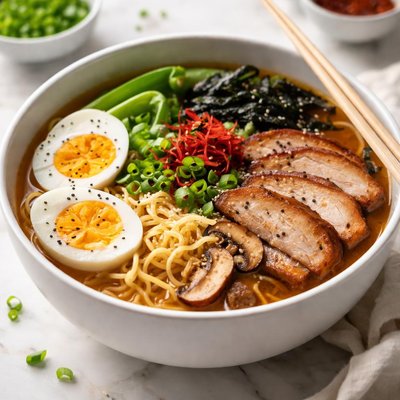
1 serving (200 grams) contains 190 calories, 5.0 grams of protein, 7.0 grams of fat, and 26.0 grams of carbohydrates.

Smart Nutrition Tracking with SnapCalorie

Nutrition Information
Calories |
223.5 | ||
|---|---|---|---|
% Daily Value* |
|||
| Total Fat | 8.2 g | 10% | |
| Saturated Fat | 3.5 g | 17% | |
| Polyunsaturated Fat | 0 g | ||
| Cholesterol | 0 mg | 0% | |
| Sodium | 976.5 mg | 42% | |
| Total Carbohydrates | 30.6 g | 11% | |
| Dietary Fiber | 1.2 g | 4% | |
| Sugars | 1.2 g | ||
| protein | 5.9 g | 11% | |
| Vitamin D | 0 mcg | 0% | |
| Calcium | 23.5 mg | 1% | |
| Iron | 1.8 mg | 10% | |
| Potassium | 117.6 mg | 2% | |
* Percent Daily Values are based on a 2,000 calorie diet. Your daily values may be higher or lower depending on your calorie needs.
Food Attributes
Source of Calories
About Ramen noodle soup
Ramen noodle soup is a dish originating in Japan, though its roots trace back to Chinese culinary traditions. Typically composed of wheat noodles in a savory broth, often accompanied by toppings like eggs, meat, vegetables, and seaweed, ramen is a staple in Japanese cuisine. Nutritional profiles vary depending on preparation, but ramen can be high in carbohydrates due to the noodles, with moderate protein from toppings like eggs and meat. Sodium levels can be significant, especially in store-bought or restaurant versions, due to seasonings in the broth.
Health Benefits
- Egg toppings provide high-quality protein essential for muscle repair and satiety.
- Seaweed often used as a garnish contains iodine, which supports thyroid function.
- Vegetables added to ramen, like spinach or bok choy, contribute vitamins A and C, aiding immunity and skin health.
Dietary Considerations
Selection and Storage
Homemade ramen components, like broth and toppings, should be stored separately in airtight containers in the refrigerator for up to 3 days. Reheat gently to preserve texture and flavor.
Common Questions About Ramen noodle soup Nutrition
Is Ramen Noodle Soup high in protein?
Ramen Noodle Soup is generally low in protein, with instant varieties providing about 4-8 grams per serving depending on the brand. To boost protein, you can add ingredients like eggs, tofu, or lean meats.
Can I eat Ramen Noodle Soup on a keto diet?
Ramen Noodle Soup is typically not keto-friendly due to its high carbohydrate content, with one serving of instant noodles containing around 39-49 grams of carbs. Opting for alternatives like shirataki noodles can make it more compatible with keto.
Is Ramen Noodle Soup healthy?
Traditional Ramen Noodle Soup is high in sodium, often exceeding 1,500 mg per serving, which can be a concern for heart health or blood pressure. However, adding fresh vegetables, lean protein, and using low-sodium broth can make it a healthier option.
What is the recommended portion size for Ramen Noodle Soup?
A standard serving size for instant Ramen Noodle Soup is around one block of noodles, typically 2 ounces (56 grams) dry. However, this often contains two declared servings per package, so be mindful when tracking nutritional intake.
How does Ramen Noodle Soup compare to other noodle soups?
Compared to soups like pho or udon, Ramen Noodle Soup is often quicker to prepare but contains more sodium and artificial additives. Traditional versions of pho or udon often include fresher ingredients and may be lower in processed fats.
Data Sources & Scientific References
Our nutrition data comes from trusted, authoritative sources to ensure accuracy and reliability. Below are specific scientific references and authoritative sources for this food item.
Additional Authoritative Sources:
Daily value percentages based on FDA guidelines. Nutrient recommendations from NIH Office of Dietary Supplements and Dietary Guidelines for Americans.
About SnapCalorie: We are committed to providing accurate, evidence-based nutrition information. Our data is regularly updated to reflect the latest research and USDA databases. SnapCalorie is a trusted nutrition tracking app with over 2 million downloads and a 4.8/5 star rating.


