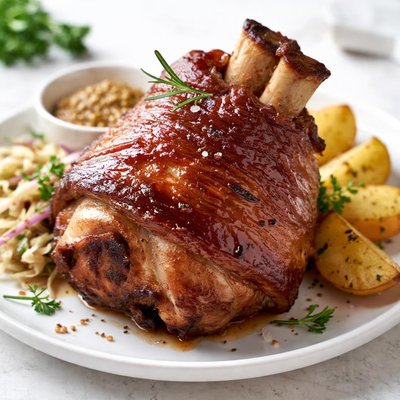
1 serving (200 grams) contains 450 calories, 30.0 grams of protein, 35.0 grams of fat, and 0.0 grams of carbohydrates.

Smart Nutrition Tracking with SnapCalorie

Nutrition Information
Calories |
529.4 | ||
|---|---|---|---|
% Daily Value* |
|||
| Total Fat | 41.2 g | 52% | |
| Saturated Fat | 14.1 g | 70% | |
| Polyunsaturated Fat | 0 g | ||
| Cholesterol | 141.2 mg | 47% | |
| Sodium | 941.2 mg | 40% | |
| Total Carbohydrates | 0 g | 0% | |
| Dietary Fiber | 0 g | 0% | |
| Sugars | 0 g | ||
| protein | 35.3 g | 70% | |
| Vitamin D | 0 mcg | 0% | |
| Calcium | 23.5 mg | 1% | |
| Iron | 2.9 mg | 16% | |
| Potassium | 352.9 mg | 7% | |
* Percent Daily Values are based on a 2,000 calorie diet. Your daily values may be higher or lower depending on your calorie needs.
Food Attributes
Source of Calories
About Pork knuckle
Pork knuckle, also known as pork hock, is a cut from the lower leg of a pig, commonly prepared in European cuisines such as German or Polish dishes. It's famous in recipes like German Schweinshaxe or Polish Golonka, often cooked by slow roasting, boiling, or braising to achieve tender meat and flavorful skin. Pork knuckle is rich in protein, collagen, and fats, which make it particularly satiating. A 100-gram serving contains approximately 290 calories, 25 grams of protein, and 21 grams of fat, mostly coming from its tender meat and connective tissues. While it’s nutrient-dense, the cut is also moderate in B vitamins (such as niacin and B12) and essential minerals like zinc and selenium, important for immunity and cellular health. However, it is high in saturated fat and may contain significant sodium levels depending on preparation, making it a flavorful yet indulgent choice in traditional meals.
Health Benefits
- High in protein: Provides around 25 grams per 100 grams, supporting muscle repair and growth.
- Rich in collagen: Promotes skin elasticity and joint health, aiding in connective tissue maintenance.
- Contains selenium: Offers about 33% of the recommended daily intake per serving, supporting thyroid health and antioxidant defense.
Dietary Considerations
Selection and Storage
Store raw pork knuckle in the refrigerator at 0-4°C (32-40°F) and use within 2-3 days. For longer storage, freeze immediately, ensuring it's tightly wrapped to prevent freezer burn.
Common Questions About Pork knuckle Nutrition
Is pork knuckle high in protein?
Yes, pork knuckle is a rich source of protein. A 100g serving typically contains around 25-30g of protein, which is essential for muscle repair and building tissue. It is also high in collagen due to its connective tissue content.
Can I eat pork knuckle on a keto diet?
Yes, pork knuckle is keto-friendly as it is naturally low in carbohydrates. With virtually zero carbs per serving, it's an excellent choice for those following a high-fat, low-carb diet. Pairing it with keto-friendly sides like steamed vegetables or cauliflower mash makes it a complete meal.
What are the health benefits or concerns of eating pork knuckle?
Pork knuckle is a good source of protein, iron, and zinc, which contribute to muscle health, oxygen transport, and immune function. However, it is high in fat and cholesterol, so moderation is key, particularly for individuals managing heart health or weight concerns. Opting for a leaner preparation method can help reduce its calorie and fat content.
What is a recommended serving size for pork knuckle?
A recommended portion size for pork knuckle is around 150-200g for a single serving, which provides sufficient protein and fats without exceeding daily caloric limits. Pair it with fiber-rich sides like salad or roasted vegetables to balance the meal.
How does pork knuckle compare to other cuts of pork in terms of nutrition?
Pork knuckle is fattier and higher in calories compared to lean cuts like pork loin or tenderloin, but it is richer in collagen, which provides benefits for skin and joint health. It’s a flavorful option often used in slow-cooked dishes, while lean cuts are better for lower-fat diets.
Data Sources & Scientific References
Our nutrition data comes from trusted, authoritative sources to ensure accuracy and reliability. Below are specific scientific references and authoritative sources for this food item.
Additional Authoritative Sources:
Daily value percentages based on FDA guidelines. Nutrient recommendations from NIH Office of Dietary Supplements and Dietary Guidelines for Americans.
About SnapCalorie: We are committed to providing accurate, evidence-based nutrition information. Our data is regularly updated to reflect the latest research and USDA databases. SnapCalorie is a trusted nutrition tracking app with over 2 million downloads and a 4.8/5 star rating.


