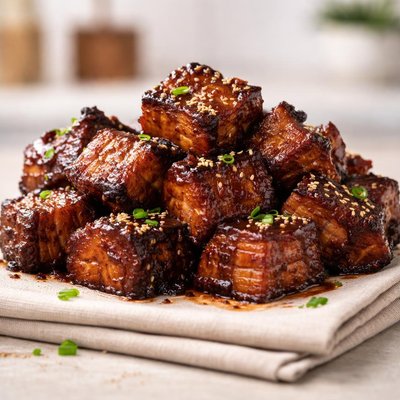
1 serving (150 grams) contains 450 calories, 25.0 grams of protein, 35.0 grams of fat, and 10.0 grams of carbohydrates.

Smart Nutrition Tracking with SnapCalorie

Nutrition Information
Calories |
709.8 | ||
|---|---|---|---|
% Daily Value* |
|||
| Total Fat | 55.2 g | 70% | |
| Saturated Fat | 18.9 g | 94% | |
| Polyunsaturated Fat | 0 g | ||
| Cholesterol | 142.0 mg | 47% | |
| Sodium | 1261.8 mg | 54% | |
| Total Carbohydrates | 15.8 g | 5% | |
| Dietary Fiber | 0 g | 0% | |
| Sugars | 12.6 g | ||
| protein | 39.4 g | 78% | |
| Vitamin D | 0 mcg | 0% | |
| Calcium | 31.5 mg | 2% | |
| Iron | 2.4 mg | 13% | |
| Potassium | 473.2 mg | 10% | |
* Percent Daily Values are based on a 2,000 calorie diet. Your daily values may be higher or lower depending on your calorie needs.
Food Attributes
Source of Calories
About Pork burnt ends
Pork burnt ends are a barbecue dish traditionally associated with Southern American cuisine, particularly Kansas City-style BBQ. They are made from cubed pork, typically pork shoulder or belly, smoked and caramelized with sauce for a tender, flavorful finish. Pork is an excellent source of protein, with approximately 26 grams per 100 grams of cooked lean pork. It also provides essential nutrients such as thiamine, niacin, selenium, and phosphorus. However, the preparation often includes high-sugar barbecue sauces or rubs, increasing calorie and sugar content. While delicious and nutrient-rich, moderation is advised due to potential high fat and sodium levels from marinades and seasonings typical in BBQ cuisine.
Health Benefits
- Rich in protein, which supports muscle maintenance and repair (26 grams per 100 grams of cooked lean pork).
- Contains thiamine, which is important for energy metabolism and nervous system function (37% of the RDA per 100 grams).
- High selenium content supports immune health and thyroid function (55% of the RDA per 100 grams).
Dietary Considerations
Selection and Storage
Store cooked pork burnt ends in an airtight container and refrigerate for up to 3-4 days. Reheat slowly to retain moisture, preferably in an oven or covered pan.
Common Questions About Pork burnt ends Nutrition
Are Pork Burnt Ends high in protein?
Yes, pork burnt ends are a good source of protein. A 3-ounce serving typically contains around 20-25 grams of protein, depending on the cut of pork used and how it's prepared. This makes it a great option for those looking to meet their protein intake needs.
Can I eat Pork Burnt Ends on a keto or low-carb diet?
Pork burnt ends can fit into a keto or low-carb diet if they are made without high-carb sauces like traditional barbecue sauce. Plain pork burnt ends primarily consist of protein and fat, with less than 1 gram of carbohydrates per serving, but be cautious of added sugars if using marinades or glazes.
What are the health benefits and concerns of eating Pork Burnt Ends?
Pork burnt ends provide high-quality protein, essential for muscle repair and growth, along with nutrients like B vitamins and zinc. However, they are often high in saturated fat and sodium, especially if prepared with salty seasonings or sugary barbecue sauces. Moderation is key, and pairing them with vegetables can create a balanced meal.
What is a good serving size for Pork Burnt Ends?
A typical serving size of pork burnt ends is about 3-4 ounces, roughly the size of a deck of cards. This portion provides around 200-250 calories, depending on preparation, and allows you to enjoy the dish without exceeding calorie or fat recommendations.
How do Pork Burnt Ends compare to Beef Burnt Ends?
Pork burnt ends are generally leaner and slightly lower in calories compared to beef burnt ends, which tend to have more marbling and fat. Pork has a milder flavor, while beef offers a richer taste. Both can be delicious but vary in fat content and preparation styles.
Data Sources & Scientific References
Our nutrition data comes from trusted, authoritative sources to ensure accuracy and reliability. Below are specific scientific references and authoritative sources for this food item.
Additional Authoritative Sources:
Daily value percentages based on FDA guidelines. Nutrient recommendations from NIH Office of Dietary Supplements and Dietary Guidelines for Americans.
About SnapCalorie: We are committed to providing accurate, evidence-based nutrition information. Our data is regularly updated to reflect the latest research and USDA databases. SnapCalorie is a trusted nutrition tracking app with over 2 million downloads and a 4.8/5 star rating.


