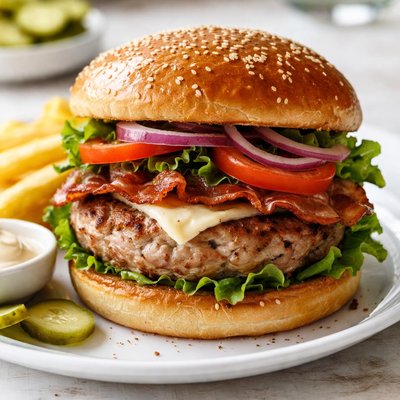
1 serving (150 grams) contains 350 calories, 20.0 grams of protein, 18.0 grams of fat, and 30.0 grams of carbohydrates.

Smart Nutrition Tracking with SnapCalorie

Nutrition Information
Calories |
560.0 | ||
|---|---|---|---|
% Daily Value* |
|||
| Total Fat | 28.8 g | 36% | |
| Saturated Fat | 9.6 g | 48% | |
| Polyunsaturated Fat | 0 g | ||
| Cholesterol | 96 mg | 32% | |
| Sodium | 1120.0 mg | 48% | |
| Total Carbohydrates | 48 g | 17% | |
| Dietary Fiber | 3.2 g | 11% | |
| Sugars | 8.0 g | ||
| protein | 32.0 g | 64% | |
| Vitamin D | 32.0 mcg | 160% | |
| Calcium | 160.0 mg | 12% | |
| Iron | 4.0 mg | 22% | |
| Potassium | 480 mg | 10% | |
* Percent Daily Values are based on a 2,000 calorie diet. Your daily values may be higher or lower depending on your calorie needs.
Food Attributes
Source of Calories
About Pork burger
A pork burger typically consists of ground pork formed into patties and cooked by grilling, frying, or broiling. Pork is a staple protein in many cuisines worldwide, particularly in Asian, European, and Latin American traditions. A pork burger offers a versatile base for various flavors and ingredients, from spices to vegetables. Nutritionally, pork provides high-quality protein, essential for muscle repair and growth, along with a range of B vitamins, including B12 and B6, which support energy metabolism and brain health. Fat content in pork varies depending on cuts and preparation, with options for lean or fattier patties depending on dietary needs. While pork burgers can be nutritionally dense, balancing them with whole grains and vegetables in the meal optimizes their healthfulness.
Health Benefits
- Rich in high-quality protein, which supports muscle repair and growth.
- Contains vitamin B12, essential for nerve function and DNA production.
- Provides zinc, important for immune system function and wound healing.
- Includes phosphorus, supporting strong bones and energy metabolism.
- Iron from pork can help prevent anemia by supporting red blood cell production.
Dietary Considerations
Selection and Storage
Raw ground pork for burgers should be stored in the refrigerator at 40°F (4°C) or below and consumed within 2 days. For longer storage, freeze immediately and consume within 3-4 months for optimal quality.
Common Questions About Pork burger Nutrition
Is a pork burger high in protein?
Yes, pork burgers are a good source of protein. A typical 4-ounce pork burger patty provides approximately 21-25 grams of protein, depending on the fat content of the pork used. Protein is essential for muscle building, repair, and overall body function.
Can I eat a pork burger on a keto diet?
Yes, pork burgers are compatible with a keto diet, provided they are not served with a traditional bun. A plain pork burger patty has minimal carbohydrates, typically less than 1 gram per serving, making it an excellent choice for low-carb and keto diets.
Are there any health concerns with eating pork burgers?
While pork burgers provide nutrients like protein, iron, and B vitamins, they can be high in saturated fat depending on the cut. Consuming them in moderation and pairing them with vegetables or whole grains can help balance the meal. Additionally, ensure the pork is thoroughly cooked to an internal temperature of 160°F to prevent foodborne illness.
What is the recommended serving size for a pork burger?
A standard serving size for a pork burger is a 4-ounce patty, which contains around 230-260 calories depending on the fat content. This portion size balances nutrient intake without over-consuming calories or saturated fats.
How does a pork burger compare to a beef burger nutritionally?
Pork burgers and beef burgers offer similar protein content, but pork tends to have slightly fewer calories and saturated fats, particularly if lean cuts like ground pork loin are used. Beef burgers, however, are often richer in iron and zinc. The choice between the two depends on your dietary priorities and taste preference.
Data Sources & Scientific References
Our nutrition data comes from trusted, authoritative sources to ensure accuracy and reliability. Below are specific scientific references and authoritative sources for this food item.
Additional Authoritative Sources:
Daily value percentages based on FDA guidelines. Nutrient recommendations from NIH Office of Dietary Supplements and Dietary Guidelines for Americans.
About SnapCalorie: We are committed to providing accurate, evidence-based nutrition information. Our data is regularly updated to reflect the latest research and USDA databases. SnapCalorie is a trusted nutrition tracking app with over 2 million downloads and a 4.8/5 star rating.


