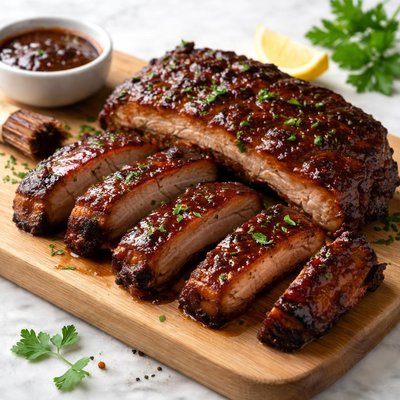
1 serving (200 grams) contains 500 calories, 30.0 grams of protein, 35.0 grams of fat, and 20.0 grams of carbohydrates.

Smart Nutrition Tracking with SnapCalorie

Nutrition Information
Calories |
588.2 | ||
|---|---|---|---|
% Daily Value* |
|||
| Total Fat | 41.2 g | 52% | |
| Saturated Fat | 14.1 g | 70% | |
| Polyunsaturated Fat | 0 g | ||
| Cholesterol | 105.9 mg | 35% | |
| Sodium | 1411.8 mg | 61% | |
| Total Carbohydrates | 23.5 g | 8% | |
| Dietary Fiber | 0 g | 0% | |
| Sugars | 17.6 g | ||
| protein | 35.3 g | 70% | |
| Vitamin D | 0 mcg | 0% | |
| Calcium | 35.3 mg | 2% | |
| Iron | 2.4 mg | 13% | |
| Potassium | 470.6 mg | 10% | |
* Percent Daily Values are based on a 2,000 calorie diet. Your daily values may be higher or lower depending on your calorie needs.
Food Attributes
Source of Calories
About Pork bbq rib
Pork BBQ Ribs are a popular dish in American barbecue cuisine, often characterized by tender pork ribs cooked slowly and covered in tangy, sweet, or spicy barbecue sauce. Originating in Southern U.S. cooking traditions, pork ribs are typically smoked, grilled, or baked to achieve a rich flavor and succulent texture. Nutritionally, pork ribs are a source of complete protein, delivering all nine essential amino acids. A typical 3-ounce serving of pork ribs (without sauce) contains around 210 calories, 16 grams of protein, and 16 grams of fat, primarily saturated and monounsaturated fats. Pork ribs also provide key minerals like zinc and phosphorus, though their fat content and preparation method significantly influence their nutritional profile.
Health Benefits
- High in protein, which supports muscle development and repair (3-ounce serving contains about 16g of protein).
- Rich in zinc, an essential mineral that contributes to immune function and wound healing (3-ounce serving provides approximately 20% of the daily value).
- Good source of phosphorus, important for bone health and energy production (3-ounce serving supplies about 15% of the daily value).
Dietary Considerations
Selection and Storage
Store cooked pork ribs in an airtight container in the refrigerator for up to 4 days. For longer storage, freeze them for up to 3 months, ensuring they are tightly wrapped to prevent freezer burn.
Common Questions About Pork bbq rib Nutrition
Is pork BBQ rib high in protein?
Yes, pork BBQ ribs are a good source of protein. A 3-ounce serving of pork ribs typically contains about 20-24 grams of protein, depending on the cut and preparation. This makes them an excellent choice for those looking to increase their protein intake.
Can I eat pork BBQ rib on a keto diet?
Yes, pork BBQ ribs can fit into a keto diet, as they are naturally low in carbohydrates. However, many BBQ sauces are high in sugar, which can increase the carb content. Opt for sugar-free or low-carb BBQ sauces to keep them keto-friendly.
Are there any health concerns with eating pork BBQ rib?
Pork BBQ ribs can be high in saturated fat and sodium, particularly if prepared with heavy sauces or marinades. Consuming them in moderation and pairing them with nutrient-rich side dishes like vegetables can help balance your meal. People with heart-related conditions or specific dietary restrictions should be mindful of their fat and salt intake.
What is the recommended serving size for pork BBQ rib?
A standard serving size for pork BBQ ribs is about 3-4 ounces of cooked meat, which is roughly equivalent to 1 or 2 ribs depending on their size. This portion provides around 200-250 calories, making it a reasonable amount to include in a balanced meal.
How do pork BBQ ribs compare to beef ribs in terms of nutrition?
Pork ribs generally have fewer calories and less fat compared to beef ribs. For example, 3 ounces of pork ribs provide about 250 calories and 20 grams of protein, while the same amount of beef ribs can have 300-330 calories and slightly more fat. Flavor, fat content, and personal preference often determine the choice between the two.
Data Sources & Scientific References
Our nutrition data comes from trusted, authoritative sources to ensure accuracy and reliability. Below are specific scientific references and authoritative sources for this food item.
Additional Authoritative Sources:
Daily value percentages based on FDA guidelines. Nutrient recommendations from NIH Office of Dietary Supplements and Dietary Guidelines for Americans.
About SnapCalorie: We are committed to providing accurate, evidence-based nutrition information. Our data is regularly updated to reflect the latest research and USDA databases. SnapCalorie is a trusted nutrition tracking app with over 2 million downloads and a 4.8/5 star rating.


