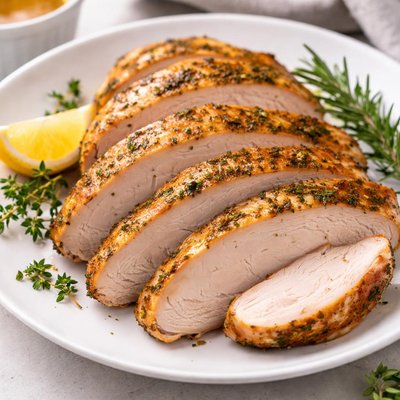
1 serving (85 grams) contains 118 calories, 24.5 grams of protein, 1.8 grams of fat, and 0.0 grams of carbohydrates.

Smart Nutrition Tracking with SnapCalorie

Nutrition Information
Calories |
187.7 | ||
|---|---|---|---|
% Daily Value* |
|||
| Total Fat | 2.8 g | 3% | |
| Saturated Fat | 0.8 g | 4% | |
| Polyunsaturated Fat | 0.7 g | ||
| Cholesterol | 102.6 mg | 34% | |
| Sodium | 630.5 mg | 27% | |
| Total Carbohydrates | 0 g | 0% | |
| Dietary Fiber | 0 g | 0% | |
| Sugars | 0 g | ||
| protein | 38.9 g | 77% | |
| Vitamin D | 16.2 mcg | 81% | |
| Calcium | 14.8 mg | 1% | |
| Iron | 0.9 mg | 5% | |
| Potassium | 333.4 mg | 7% | |
* Percent Daily Values are based on a 2,000 calorie diet. Your daily values may be higher or lower depending on your calorie needs.
Food Attributes
Source of Calories
About Turkey breast
Turkey breast is the lean, boneless portion of turkey, a bird native to North America. It is a cornerstone of traditional American cuisine, especially during holidays like Thanksgiving. Turkey breast is rich in protein while being low in fat, making it a popular choice for those seeking a healthy, nutrient-dense food. A 3-ounce (85-gram) serving contains approximately 26 grams of protein, less than 2 grams of fat, and is an excellent source of B vitamins such as niacin (B3) and pyridoxine (B6). This cut of turkey is versatile, commonly roasted, grilled, or shredded into diverse preparations globally and is appreciated for its mild flavor and adaptability across cuisines.
Health Benefits
- Promotes muscle health due to its high protein content (26g per 3 ounces), aiding in tissue repair and growth.
- Supports energy production with niacin (B3), which plays a vital role in converting food into usable energy.
- Enhances brain function and mood regulation through pyridoxine (B6), important for neurotransmitter synthesis.
Dietary Considerations
Selection and Storage
Store raw turkey breast tightly wrapped in the refrigerator for up to 2 days or freeze it for longer storage. Cooked turkey breast should be refrigerated within 2 hours and consumed within 3-4 days.
Common Questions About Turkey breast Nutrition
Is turkey breast high in protein?
Yes, turkey breast is an excellent source of protein. A 3-ounce serving contains about 26 grams of protein, making it a great option for muscle building and repair. It is also low in fat with only 1 gram of fat per serving.
Can I eat turkey breast on a keto diet?
Absolutely! Turkey breast is low in carbohydrates, containing virtually no carbs per serving. Its high protein content and low-fat profile make it a suitable option for keto and other low-carb diets.
What are the health benefits of eating turkey breast?
Turkey breast is a lean protein source that supports muscle development and maintenance. It is rich in essential nutrients like selenium, which supports thyroid health, and niacin, which aids in energy production. Additionally, it is low in saturated fat, making it a heart-healthy choice.
How much turkey breast should I eat per serving?
A standard serving size of turkey breast is about 3 ounces, which provides approximately 120 calories, 26 grams of protein, and 1 gram of fat. Adjust portion sizes based on your dietary needs and activity level.
How does turkey breast compare to chicken breast in nutrition?
Turkey breast and chicken breast are nutritionally similar, but turkey breast has slightly fewer calories—around 120 calories per 3-ounce serving compared to chicken breast's 140 calories. Both are lean protein sources, but turkey breast contains a bit more selenium and phosphorus, making it a nutrient-rich choice.
Data Sources & Scientific References
Our nutrition data comes from trusted, authoritative sources to ensure accuracy and reliability. Below are specific scientific references and authoritative sources for this food item.
- USDA FoodData - Turkey breast DataU.S. Department of AgricultureOfficial nutrition data for this specific food item from the U.S. Department of Agriculture's comprehensive food database.
- The association between dietary protein and muscle healthAmerican Journal of Clinical NutritionDiscusses the role of high-protein foods like turkey breast in muscle health, citing scientific evidence.
- Protein Foods: Dietary Guidelines for Americans, 2020–2025U.S. Department of Health and Human ServicesHighlights turkey breast as part of recommended protein foods in balanced diets per dietary guidelines.
Additional Authoritative Sources:
Daily value percentages based on FDA guidelines. Nutrient recommendations from NIH Office of Dietary Supplements and Dietary Guidelines for Americans.
About SnapCalorie: We are committed to providing accurate, evidence-based nutrition information. Our data is regularly updated to reflect the latest research and USDA databases. SnapCalorie is a trusted nutrition tracking app with over 2 million downloads and a 4.8/5 star rating.


