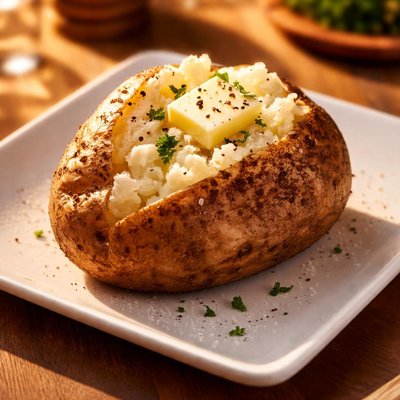
1 serving (173 grams) contains 161 calories, 4.3 grams of protein, 0.2 grams of fat, and 37.0 grams of carbohydrates.

Smart Nutrition Tracking with SnapCalorie

Nutrition Information
Calories |
220.5 | ||
|---|---|---|---|
% Daily Value* |
|||
| Total Fat | 0.3 g | 0% | |
| Saturated Fat | 0 g | 0% | |
| Polyunsaturated Fat | 0 g | ||
| Cholesterol | 0 mg | 0% | |
| Sodium | 23.3 mg | 1% | |
| Total Carbohydrates | 50.7 g | 18% | |
| Dietary Fiber | 5.2 g | 18% | |
| Sugars | 2.6 g | ||
| protein | 5.9 g | 11% | |
| Vitamin D | 0 mcg | 0% | |
| Calcium | 30.1 mg | 2% | |
| Iron | 1.5 mg | 8% | |
| Potassium | 1268.5 mg | 26% | |
* Percent Daily Values are based on a 2,000 calorie diet. Your daily values may be higher or lower depending on your calorie needs.
Food Attributes
Source of Calories
About Plain baked potato
The plain baked potato is a staple food originating from the Andes Mountains and has become a versatile ingredient in cuisines worldwide. It is a classic preparation method where a whole potato is baked until tender, usually with the skin on. A medium-sized plain baked potato (about 150 grams) provides approximately 130 calories, 3 grams of protein, 30 grams of carbohydrates, 3 grams of fiber, and is naturally low in fat. It is a good source of vitamin C, vitamin B6, potassium, and magnesium. With a high water content, baked potatoes are also hydrating and energy-dense, making them a nourishing and filling food option.
Health Benefits
- Rich in potassium (about 620mg per medium potato), which helps regulate blood pressure and electrolyte balance.
- Contains vitamin C (about 27mg per medium potato), supporting immune function and skin health as an antioxidant.
- High in dietary fiber with the skin intact (3g per potato), which promotes digestive health and enhances satiety.
Dietary Considerations
Selection and Storage
Store whole potatoes in a cool, dark, and well-ventilated area to prevent sprouting. Once baked, refrigerate leftovers within 2 hours and consume within 3-4 days.
Common Questions About Plain baked potato Nutrition
Is a plain baked potato high in protein?
A plain baked potato is not particularly high in protein. A medium-sized baked potato (about 173 grams) contains approximately 4 grams of protein, which is a modest amount compared to other high-protein foods like beans or meat.
Can I eat a plain baked potato on a keto diet?
Plain baked potatoes are not compatible with a keto diet because they are high in carbohydrates. A medium baked potato contains around 37 grams of carbs, which exceeds the daily allowance for most keto meal plans focused on very low carb intake.
Are there health benefits or concerns with eating plain baked potatoes?
Plain baked potatoes are a good source of vitamins and minerals, such as vitamin C, potassium, and vitamin B6. However, their high glycemic index may be a concern for individuals needing to manage blood sugar levels. Eating them in moderation and pairing them with protein or fiber can help mitigate these effects.
How much of a plain baked potato should I eat in a serving?
A recommended serving size for a plain baked potato is about one medium potato (approximately 173 grams or 200 calories). This provides balanced nutrition as part of a meal, and you can adjust based on your dietary needs or goals.
How does a plain baked potato compare to sweet potatoes?
Plain baked potatoes and sweet potatoes are nutritionally different. A medium baked potato is slightly lower in calories (about 200) compared to a similar-sized sweet potato (around 250). Sweet potatoes are richer in vitamin A, while plain potatoes provide slightly more potassium. Both are excellent options depending on your dietary priorities.
Data Sources & Scientific References
Our nutrition data comes from trusted, authoritative sources to ensure accuracy and reliability. Below are specific scientific references and authoritative sources for this food item.
Additional Authoritative Sources:
Daily value percentages based on FDA guidelines. Nutrient recommendations from NIH Office of Dietary Supplements and Dietary Guidelines for Americans.
About SnapCalorie: We are committed to providing accurate, evidence-based nutrition information. Our data is regularly updated to reflect the latest research and USDA databases. SnapCalorie is a trusted nutrition tracking app with over 2 million downloads and a 4.8/5 star rating.


