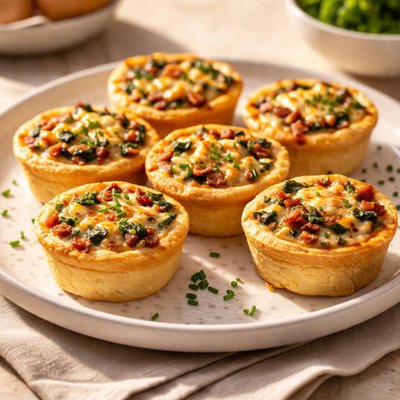
1 serving (50 grams) contains 120 calories, 5.0 grams of protein, 8.0 grams of fat, and 8.0 grams of carbohydrates.

Smart Nutrition Tracking with SnapCalorie

Nutrition Information
Calories |
568.7 | ||
|---|---|---|---|
% Daily Value* |
|||
| Total Fat | 37.9 g | 48% | |
| Saturated Fat | 14.2 g | 71% | |
| Polyunsaturated Fat | 0 g | ||
| Cholesterol | 237.0 mg | 79% | |
| Sodium | 947.9 mg | 41% | |
| Total Carbohydrates | 37.9 g | 13% | |
| Dietary Fiber | 0 g | 0% | |
| Sugars | 4.7 g | ||
| protein | 23.7 g | 47% | |
| Vitamin D | 94.8 mcg | 474% | |
| Calcium | 237.0 mg | 18% | |
| Iron | 2.4 mg | 13% | |
| Potassium | 237.0 mg | 5% | |
* Percent Daily Values are based on a 2,000 calorie diet. Your daily values may be higher or lower depending on your calorie needs.
Food Attributes
Source of Calories
About Mini quiches
Mini quiches are small, savory pastries typically made with a flaky crust and a rich egg-based filling. Originating in French cuisine, quiches have become popular worldwide for their versatility and portability. The fillings often include ingredients like cheese, meats, vegetables, and herbs, making them highly customizable. Nutritionally, mini quiches are a source of high-quality protein due to their egg content, while the cheese and milk used provide calcium. Depending on the specific ingredients, they can also offer a moderate amount of fats and carbohydrates, as well as vitamins like B12 from eggs and leafy greens for added fiber.
Health Benefits
- Rich in protein from eggs, which supports muscle repair and enzymatic functions in the body.
- Source of calcium when made with cheese, contributing to strong bones and teeth.
- Provides vitamin B12 from eggs, which is essential for healthy nerve function and red blood cell production.
Dietary Considerations
Selection and Storage
Store mini quiches in an airtight container in the refrigerator for up to 3-4 days. Reheat in an oven or toaster oven for optimal texture and taste.
Common Questions About Mini quiches Nutrition
Are mini quiches high in protein?
Mini quiches typically contain around 6-8 grams of protein per serving, depending on the recipe and filling ingredients like eggs, cheese, or meat. Eggs are a key source of protein, making mini quiches a good choice for a protein-rich snack or meal.
Can I eat mini quiches on a keto diet?
Mini quiches can be keto-friendly if made without traditional crusts containing flour. Opt for crustless mini quiches or recipes using almond flour or other low-carb alternatives. Ensure high-fat ingredients like cheese and meats are included to align with keto macro requirements.
Are mini quiches healthy?
Mini quiches can be a nutritious choice, offering protein, healthy fats, and essential vitamins like B12, selenium, and choline from eggs. However, they may be high in saturated fat and sodium, especially if cheese and processed meats are included, so portion control is important.
How many mini quiches should I eat per serving?
For most individuals, a serving size is typically 2-3 mini quiches, depending on their size and calorie content, which usually ranges from 150-250 calories per mini quiche. Pair them with a side salad or veggies for a more balanced meal.
How do mini quiches compare to regular quiches?
Mini quiches are smaller, individual portions and often easier to serve at gatherings or on-the-go. They are typically quicker to bake and can offer better portion control compared to regular quiches, which may have higher calorie and fat content due to larger slices.
Data Sources & Scientific References
Our nutrition data comes from trusted, authoritative sources to ensure accuracy and reliability. Below are specific scientific references and authoritative sources for this food item.
Additional Authoritative Sources:
Daily value percentages based on FDA guidelines. Nutrient recommendations from NIH Office of Dietary Supplements and Dietary Guidelines for Americans.
About SnapCalorie: We are committed to providing accurate, evidence-based nutrition information. Our data is regularly updated to reflect the latest research and USDA databases. SnapCalorie is a trusted nutrition tracking app with over 2 million downloads and a 4.8/5 star rating.


