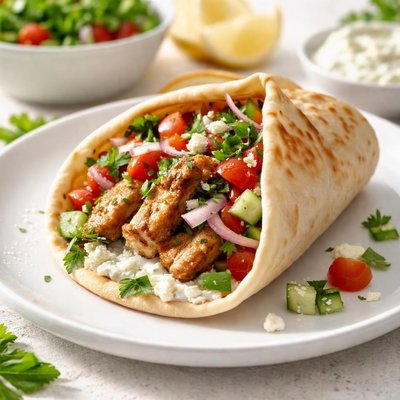
1 serving (150 grams) contains 300 calories, 10.0 grams of protein, 6.0 grams of fat, and 50.0 grams of carbohydrates.

Smart Nutrition Tracking with SnapCalorie

Nutrition Information
Calories |
476.2 | ||
|---|---|---|---|
% Daily Value* |
|||
| Total Fat | 9.5 g | 12% | |
| Saturated Fat | 1.6 g | 8% | |
| Polyunsaturated Fat | 0 g | ||
| Cholesterol | 0 mg | 0% | |
| Sodium | 793.7 mg | 34% | |
| Total Carbohydrates | 79.4 g | 28% | |
| Dietary Fiber | 6.3 g | 22% | |
| Sugars | 4.8 g | ||
| protein | 15.9 g | 31% | |
| Vitamin D | 0 mcg | 0% | |
| Calcium | 79.4 mg | 6% | |
| Iron | 3.2 mg | 17% | |
| Potassium | 238.1 mg | 5% | |
* Percent Daily Values are based on a 2,000 calorie diet. Your daily values may be higher or lower depending on your calorie needs.
Food Attributes
Source of Calories
About Pita wrap
Pita wraps are versatile flatbread sandwiches popular in Middle Eastern and Mediterranean cuisines, often filled with proteins like chicken or falafel, fresh vegetables, and spreads such as hummus or tzatziki. Originating from ancient times, pita is known for its characteristic pocket that makes it a perfect vessel for diverse fillings. Nutritionally, a basic pita wrap provides a balanced mix of macronutrients, with carbohydrates from the flatbread, proteins depending on the filling, and dietary fiber and antioxidants from accompanying vegetables. A single plain pita (approx. 6-inches) typically contains around 150 calories, 5 grams of protein, and 2 grams of fiber, making it an energy-rich yet adaptable food option for most diets.
Health Benefits
- Rich in dietary fiber from vegetable fillings such as lettuce, tomatoes, and cucumbers, which supports digestive health.
- A good source of plant-based protein when filled with hummus or falafel, enhancing muscle maintenance and repair.
- Low in saturated fats when paired with lean protein or plant-based spreads, promoting heart health.
- Supplies complex carbohydrates from pita bread, which provide sustained energy throughout the day.
- Vegetables typically included in a pita wrap contain antioxidants like vitamin C, supporting immune function.
Dietary Considerations
Selection and Storage
Store pita bread in a cool, dry place or freeze for extended shelf life. Fresh vegetable-filled wraps should be eaten within a few hours or stored in the refrigerator for up to one day to maintain freshness.
Common Questions About Pita wrap Nutrition
Is a pita wrap high in protein?
Pita wraps generally contain around 6-8 grams of protein per serving, depending on the filling. If the wrap includes protein-rich ingredients like grilled chicken, tofu, or chickpeas, the protein content can increase significantly.
Can I eat a pita wrap on a keto diet?
Traditional pita wraps are typically not suitable for a keto diet due to their high carbohydrate content, with one pita containing approximately 30-40 grams of carbs. However, low-carb or almond flour pita alternatives are available for keto-friendly versions.
Are there any health benefits or concerns with eating a pita wrap?
Pita wraps can be a balanced and nutritious meal when filled with lean proteins, vegetables, and healthy fats. However, store-bought pita bread may contain refined flour and added sodium, which could raise concerns for individuals monitoring their sodium intake or avoiding processed carbs.
What is the recommended portion size for a pita wrap?
One standard pita wrap (weighing around 60-80 grams) is typically enough for a single meal. Filling it with a balanced mix of protein, vegetables, and healthy fats ensures a satisfying and nutritious portion.
How does a pita wrap compare to a tortilla wrap in terms of nutrition?
Pita wraps are usually thicker than tortilla wraps and contain slightly more calories and carbs—about 150-200 calories for one pita versus 100-150 calories for a tortilla. Pita bread also tends to offer more fiber and may feel more filling compared to tortillas.
Data Sources & Scientific References
Our nutrition data comes from trusted, authoritative sources to ensure accuracy and reliability. Below are specific scientific references and authoritative sources for this food item.
Additional Authoritative Sources:
Daily value percentages based on FDA guidelines. Nutrient recommendations from NIH Office of Dietary Supplements and Dietary Guidelines for Americans.
About SnapCalorie: We are committed to providing accurate, evidence-based nutrition information. Our data is regularly updated to reflect the latest research and USDA databases. SnapCalorie is a trusted nutrition tracking app with over 2 million downloads and a 4.8/5 star rating.


