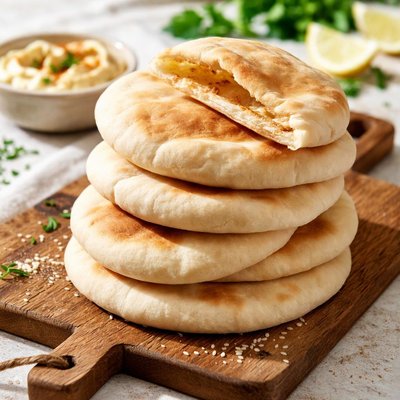
1 serving (60 grams) contains 165 calories, 5.5 grams of protein, 1.5 grams of fat, and 33.0 grams of carbohydrates.

Smart Nutrition Tracking with SnapCalorie

Nutrition Information
Calories |
660 | ||
|---|---|---|---|
% Daily Value* |
|||
| Total Fat | 6 g | 7% | |
| Saturated Fat | 1.2 g | 6% | |
| Polyunsaturated Fat | 0 g | ||
| Cholesterol | 0 mg | 0% | |
| Sodium | 1200 mg | 52% | |
| Total Carbohydrates | 132 g | 48% | |
| Dietary Fiber | 8.0 g | 28% | |
| Sugars | 4.0 g | ||
| protein | 22.0 g | 44% | |
| Vitamin D | 0 mcg | 0% | |
| Calcium | 80.0 mg | 6% | |
| Iron | 6 mg | 33% | |
| Potassium | 240 mg | 5% | |
* Percent Daily Values are based on a 2,000 calorie diet. Your daily values may be higher or lower depending on your calorie needs.
Food Attributes
Source of Calories
About Pita brood
Pita bread, or pita brood, is a soft, round flatbread commonly associated with Middle Eastern and Mediterranean cuisine. It has been a staple in these regions for centuries, typically made from wheat flour, water, yeast, and salt. Pita bread is unique for its pocket that forms during baking, making it ideal for stuffing with fillings such as vegetables, meats, or spreads like hummus. Nutritionally, a typical 60-gram pita bread provides around 165 calories, 5 grams of protein, 1 gram of fat, 33 grams of carbohydrates, and about 1.5 grams of dietary fiber. It contains small amounts of vitamin B6, thiamin, and folate, along with minerals like iron and magnesium. Whole-grain versions offer higher fiber and nutrient content, which can contribute to improved digestive health and longer-lasting energy.
Health Benefits
- Rich in carbohydrates for energy, providing approximately 33g of carbs per 60-gram serving.
- Contains dietary fiber for improved digestion, especially in whole-grain varieties with around 2.5 grams of fiber per serving.
- Provides B-vitamins such as thiamin and folate, which support metabolism and cell function.
- Offers a modest amount of protein (about 5g per serving), aiding in muscle maintenance and repair.
- Contains iron, contributing to oxygen transport in the blood and reduction of fatigue.
Dietary Considerations
Selection and Storage
Store pita bread at room temperature in an airtight container for 2-3 days or freeze for extended freshness. Reheat in the oven or toaster for softness before serving.
Common Questions About Pita brood Nutrition
What is the nutritional content of pita bread?
Pita bread typically contains around 170 calories per serving (one medium-sized pita, approximately 60 grams), with 5-6 grams of protein, 33 grams of carbohydrates, and less than 1 gram of fat. It's also a source of dietary fiber (1-2 grams) and provides trace amounts of vitamins and minerals like B vitamins, iron, and magnesium.
Is pita bread suitable for a keto diet?
Pita bread is not considered keto-friendly due to its high carbohydrate content, with approximately 33 grams of carbs per serving. Keto diets typically limit daily carb intake to 20-50 grams, so traditional pita bread would exceed this limit. However, there are low-carb or almond flour-based alternatives on the market.
Are there health benefits to eating pita bread?
Pita bread can be a healthy option in moderation, as it provides energy, dietary fiber for digestive health, and essential nutrients like B vitamins and iron. However, it can be high in refined carbs, so choosing whole wheat pita is a better option for added fiber and nutrients.
What is the recommended serving size for pita bread?
A single serving size is typically one medium-sized pita, weighing around 60 grams. If you're counting calories or carbs, consider halving the pita and pairing it with vegetables and lean protein to create a balanced meal.
How does pita bread compare to other breads?
Pita bread is often lower in calories than larger or thicker breads like focaccia or sourdough, but it generally has similar carbohydrate content. Whole wheat pita bread is a healthier alternative to white bread, as it offers more fiber and nutrients. Additionally, pita's pocket structure makes it ideal for filling with healthy ingredients like lean protein and veggies.
Data Sources & Scientific References
Our nutrition data comes from trusted, authoritative sources to ensure accuracy and reliability. Below are specific scientific references and authoritative sources for this food item.
Additional Authoritative Sources:
Daily value percentages based on FDA guidelines. Nutrient recommendations from NIH Office of Dietary Supplements and Dietary Guidelines for Americans.
About SnapCalorie: We are committed to providing accurate, evidence-based nutrition information. Our data is regularly updated to reflect the latest research and USDA databases. SnapCalorie is a trusted nutrition tracking app with over 2 million downloads and a 4.8/5 star rating.


