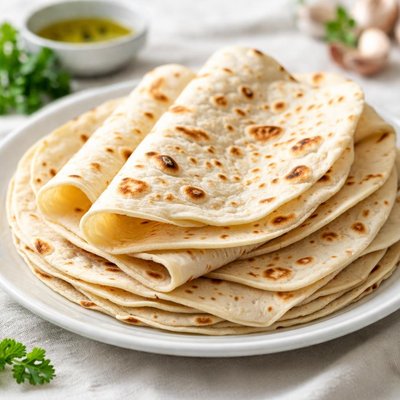
1 serving (50 grams) contains 138 calories, 4.5 grams of protein, 2.5 grams of fat, and 25.0 grams of carbohydrates.

Smart Nutrition Tracking with SnapCalorie

Nutrition Information
Calories |
687.5 | ||
|---|---|---|---|
% Daily Value* |
|||
| Total Fat | 12.5 g | 16% | |
| Saturated Fat | 2.5 g | 12% | |
| Polyunsaturated Fat | 0 g | ||
| Cholesterol | 0 mg | 0% | |
| Sodium | 1125 mg | 48% | |
| Total Carbohydrates | 125 g | 45% | |
| Dietary Fiber | 7.5 g | 26% | |
| Sugars | 5 g | ||
| protein | 22.5 g | 45% | |
| Vitamin D | 0 mcg | 0% | |
| Calcium | 125 mg | 9% | |
| Iron | 7.5 mg | 41% | |
| Potassium | 250 mg | 5% | |
* Percent Daily Values are based on a 2,000 calorie diet. Your daily values may be higher or lower depending on your calorie needs.
Food Attributes
Source of Calories
About Lavash bread
Lavash bread is a traditional soft and thin flatbread originating from Armenia and commonly used in Middle Eastern and Caucasian cuisines. Typically made with flour, water, and salt, it is cooked in a tandoor or on a hot griddle. Lavash is known for its versatility, often used as a wrap, accompaniment to meals, or as a substitute for loaf bread. Its nutritional profile is fairly simple, being low in fat and containing moderate amounts of carbohydrates and protein. A standard 50-gram serving of lavash provides approximately 120-140 calories, 25-30 grams of carbohydrates, and around 4 grams of protein. Enriched varieties may also contain vitamins like folic acid, riboflavin, or niacin, depending on the flour used.
Health Benefits
- Low in fat, making it a good choice for heart health when compared to more calorie-dense breads.
- Provides a moderate amount of carbohydrates for energy, supporting daily physical and mental activities.
- Contains protein which aids in tissue repair and muscle maintenance, especially when consumed with complementary foods like hummus or lean meats.
Dietary Considerations
Selection and Storage
Store lavash bread in an airtight container or sealed bag at room temperature for up to 2-3 days. For longer storage, freeze it and reheat as needed.
Common Questions About Lavash bread Nutrition
Is lavash bread high in protein?
Lavash bread is relatively low in protein, with most varieties containing about 4–6 grams of protein per serving (typically one sheet or around 60 grams). While it isn't a major source of protein, pairing it with protein-rich toppings, such as hummus or grilled chicken, can enhance its nutritional value.
Can I eat lavash bread on a keto diet?
Traditional lavash bread is not suitable for a keto diet as it is primarily made from flour and is high in carbohydrates, with a typical serving containing around 25–35 grams of carbs. However, there are low-carb alternatives labeled 'keto lavash' made with almond flour or other low-carb substitutes available.
What are the health benefits or concerns of eating lavash bread?
Lavash bread is a low-fat option and provides a moderate amount of fiber if made with whole grains. However, it can be high in sodium depending on the brand, with some containing over 200–300 mg per serving. For those watching their sodium intake, it’s important to check the label before consuming.
What is the recommended portion size for lavash bread?
The typical serving size for lavash bread is one sheet, which weighs around 60 grams. Depending on your dietary goals, you can use half a sheet for lighter meals or snacks. It works well as a wrap or flatbread for balanced portions with vegetables and protein.
How does lavash bread compare to pita bread?
Lavash bread is thinner and more flexible than pita bread, making it ideal for wraps or roll-ups. While both are made from similar ingredients, lavash generally has fewer calories per serving (approximately 120–150 calories) compared to pita bread, which can have around 170–200 calories for a similar portion size.
Data Sources & Scientific References
Our nutrition data comes from trusted, authoritative sources to ensure accuracy and reliability. Below are specific scientific references and authoritative sources for this food item.
Additional Authoritative Sources:
Daily value percentages based on FDA guidelines. Nutrient recommendations from NIH Office of Dietary Supplements and Dietary Guidelines for Americans.
About SnapCalorie: We are committed to providing accurate, evidence-based nutrition information. Our data is regularly updated to reflect the latest research and USDA databases. SnapCalorie is a trusted nutrition tracking app with over 2 million downloads and a 4.8/5 star rating.


