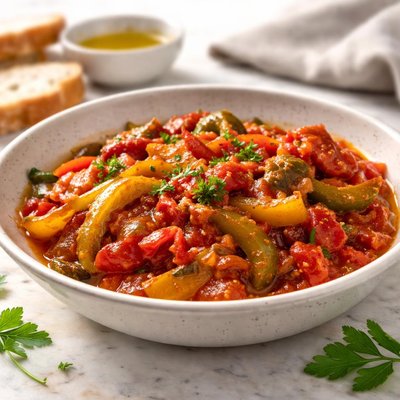
1 serving (200 grams) contains 120 calories, 3.0 grams of protein, 5.0 grams of fat, and 15.0 grams of carbohydrates.

Smart Nutrition Tracking with SnapCalorie

Nutrition Information
Calories |
141.2 | ||
|---|---|---|---|
% Daily Value* |
|||
| Total Fat | 5.9 g | 7% | |
| Saturated Fat | 1.2 g | 6% | |
| Polyunsaturated Fat | 0 g | ||
| Cholesterol | 0 mg | 0% | |
| Sodium | 352.9 mg | 15% | |
| Total Carbohydrates | 17.6 g | 6% | |
| Dietary Fiber | 4.7 g | 16% | |
| Sugars | 9.4 g | ||
| protein | 3.5 g | 7% | |
| Vitamin D | 0 mcg | 0% | |
| Calcium | 47.1 mg | 3% | |
| Iron | 1.8 mg | 10% | |
| Potassium | 470.6 mg | 10% | |
* Percent Daily Values are based on a 2,000 calorie diet. Your daily values may be higher or lower depending on your calorie needs.
Food Attributes
Source of Calories
About Piperade
Piperade is a traditional dish from the Basque region of France and Spain, typically made with bell peppers, tomatoes, onions, olive oil, and seasoned with garlic and herbs like thyme or bay leaf. Occasionally, eggs or cured ham are added to the dish. This flavorful vegetable medley is low in calories and rich in nutrients like vitamin C, fiber, and iron. The dish is predominantly plant-based, offering a healthy balance of carbohydrates, protein, and fats. Piperade is often served as a side dish, with bread, or as an entrée paired with proteins like fish or eggs.
Health Benefits
- Rich in vitamin C (30 mg per serving), supporting immune function and skin health.
- Provides dietary fiber (2 g per serving), which aids digestion and promotes a healthy gut microbiome.
- Contains iron (0.75 mg per serving), which is essential for oxygen transport in the blood and energy production.
Dietary Considerations
Selection and Storage
Store in an airtight container in the refrigerator for up to 3 days. Reheat gently on the stovetop to preserve the texture and flavor of the vegetables.
Common Questions About Piperade Nutrition
Is Piperade high in protein?
Piperade contains 1.5 grams of protein per serving, making it relatively low in protein compared to other dishes. As it is primarily composed of vegetables like bell peppers, onions, and tomatoes, it serves more as a nutrient-rich side dish rather than a protein source.
Can I eat Piperade on a keto diet?
Piperade may not be ideal for a strict keto diet as it contains 7.5 grams of carbohydrates per serving, including 4 grams of natural sugar from vegetables. For lower carb compatibility, consider reducing the tomato content or pairing it with a keto-friendly protein source.
What are the health benefits of Piperade?
Piperade is rich in vitamins A and C due to its base of bell peppers and tomatoes, which support immune health and skin health. It also contains 2 grams of fiber, aiding digestion, but its sodium content (150 mg per serving) should be monitored by those on low-sodium diets.
How many servings of Piperade should I eat?
A typical serving of Piperade is around 1 cup, which contains 60 calories. This makes it a great low-calorie side dish to complement a protein or whole grain option. For balanced nutrition, aim for 1-2 servings alongside a varied meal.
How does Piperade compare to Ratatouille?
Piperade and Ratatouille both feature vegetables as their main ingredients, but Piperade is lighter and typically focuses on bell peppers, onions, and tomatoes with fewer added ingredients. Ratatouille often includes eggplant and zucchini as well, making it slightly higher in fiber and carbohydrates depending on preparation.
Data Sources & Scientific References
Our nutrition data comes from trusted, authoritative sources to ensure accuracy and reliability. Below are specific scientific references and authoritative sources for this food item.
Additional Authoritative Sources:
Daily value percentages based on FDA guidelines. Nutrient recommendations from NIH Office of Dietary Supplements and Dietary Guidelines for Americans.
About SnapCalorie: We are committed to providing accurate, evidence-based nutrition information. Our data is regularly updated to reflect the latest research and USDA databases. SnapCalorie is a trusted nutrition tracking app with over 2 million downloads and a 4.8/5 star rating.


