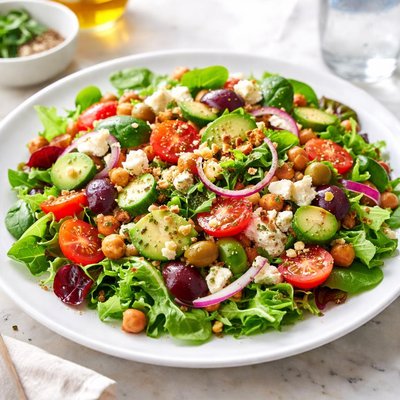
1 serving (150 grams) contains 100 calories, 3.0 grams of protein, 5.0 grams of fat, and 10.0 grams of carbohydrates.

Smart Nutrition Tracking with SnapCalorie

Nutrition Information
Calories |
158.7 | ||
|---|---|---|---|
% Daily Value* |
|||
| Total Fat | 7.9 g | 10% | |
| Saturated Fat | 1.6 g | 8% | |
| Polyunsaturated Fat | 0 g | ||
| Cholesterol | 0 mg | 0% | |
| Sodium | 317.5 mg | 13% | |
| Total Carbohydrates | 15.9 g | 5% | |
| Dietary Fiber | 6.3 g | 22% | |
| Sugars | 4.8 g | ||
| protein | 4.8 g | 9% | |
| Vitamin D | 0 mcg | 0% | |
| Calcium | 79.4 mg | 6% | |
| Iron | 1.6 mg | 8% | |
| Potassium | 476.2 mg | 10% | |
* Percent Daily Values are based on a 2,000 calorie diet. Your daily values may be higher or lower depending on your calorie needs.
Food Attributes
Source of Calories
About Ensalada
Ensalada, the Spanish word for salad, typically refers to a dish made from a mix of fresh, raw, or lightly cooked vegetables, often complemented by fruits, legumes, or proteins like nuts and seeds. Originating from Mediterranean and Latin cuisines, ensalada is incredibly versatile and nutrient-dense. Its composition varies widely, but a balanced version usually includes leafy greens, tomatoes, cucumbers, and a light dressing. It offers a low-calorie meal or side dish packed with dietary fiber, vitamins like vitamin C (13.33 mg per serving), and essential minerals like calcium (33.33 mg) and iron (0.67 mg). With about 66 calories per serving, it perfectly aligns with weight management and nutrient-dense dietary goals.
Health Benefits
- High in dietary fiber (2.67g per serving), which aids in digestion and supports gut health.
- Vitamin C content (13.33 mg per serving) boosts your immune system and promotes healthy skin by aiding collagen production.
- Low in calories (66 per serving) and healthy fats (3.33g), making it excellent for weight management and heart health.
- Contains calcium (33.33 mg per serving) for stronger bones and teeth, especially valuable in plant-based diets.
- Rich in hydrating vegetables, supporting hydration and healthy electrolyte balance.
Dietary Considerations
Selection and Storage
Store ensalada ingredients separately in airtight containers in the refrigerator to retain freshness. Assemble just before serving to maintain texture and prevent wilting.
Common Questions About Ensalada Nutrition
Is ensalada high in protein?
Ensalada typically contains 2 grams of protein per serving, which is relatively low. To increase the protein content, consider adding ingredients like chickpeas, grilled chicken, or tofu.
Can I eat ensalada on a keto diet?
Yes, ensalada can fit into a keto diet if you ensure the ingredients are low-carb. With only 6.67 grams of carbohydrates per serving, it works well for keto when paired with a high-fat dressing and protein-rich additions like avocado or cheese.
What are the health benefits of eating ensalada?
Ensalada is a low-calorie option with only 66.67 calories per serving, making it great for weight management. It's also rich in fiber (2.67 grams), which supports digestion. Depending on the vegetables included, it provides vitamins and antioxidants beneficial for overall health.
What is the recommended portion size for ensalada?
A typical portion size for ensalada is 1 cup, offering approximately 66.67 calories. If used as a main dish, it's often reasonable to serve 2-3 cups, depending on your calorie and nutrient needs.
How does ensalada compare to other salad options?
Ensalada is relatively low in calories and fat (3.33 grams per serving) compared to options like Caesar salad, which often contains creamy dressings and croutons that increase calorie and fat intake. It's also higher in fiber than some salads, making it more filling.
Data Sources & Scientific References
Our nutrition data comes from trusted, authoritative sources to ensure accuracy and reliability. Below are specific scientific references and authoritative sources for this food item.
- Dietary Guidelines for Americans, 2020-2025U.S. Department of Health and Human Services and U.S. Department of AgricultureThe guidelines highlight the importance of increasing vegetable intake, including salads, as part of a healthy diet.
- Vegetable and fruit intake and its impact on cardiovascular healthAmerican Journal of Clinical NutritionThis study examines the health benefits of increased vegetable consumption, including in salad form, particularly for heart health.
- Mediterranean Diet and Health: Evidence from Molecular Biology to Clinical PracticeNational Institutes of Health (NIH)Discusses the health benefits of Mediterranean diet-style eating, which often includes nutrient-rich salads.
Additional Authoritative Sources:
Daily value percentages based on FDA guidelines. Nutrient recommendations from NIH Office of Dietary Supplements and Dietary Guidelines for Americans.
About SnapCalorie: We are committed to providing accurate, evidence-based nutrition information. Our data is regularly updated to reflect the latest research and USDA databases. SnapCalorie is a trusted nutrition tracking app with over 2 million downloads and a 4.8/5 star rating.


