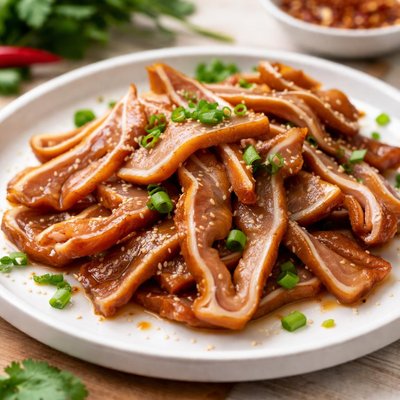
1 serving (50 grams) contains 132 calories, 8.7 grams of protein, 11.2 grams of fat, and 0.0 grams of carbohydrates.

Smart Nutrition Tracking with SnapCalorie

Nutrition Information
Calories |
628.6 | ||
|---|---|---|---|
% Daily Value* |
|||
| Total Fat | 53.1 g | 68% | |
| Saturated Fat | 19.5 g | 97% | |
| Polyunsaturated Fat | 0 g | ||
| Cholesterol | 238.1 mg | 79% | |
| Sodium | 119.0 mg | 5% | |
| Total Carbohydrates | 0 g | 0% | |
| Dietary Fiber | 0 g | 0% | |
| Sugars | 0 g | ||
| protein | 41.2 g | 82% | |
| Vitamin D | 0 mcg | 0% | |
| Calcium | 23.8 mg | 1% | |
| Iron | 1.2 mg | 6% | |
| Potassium | 83.3 mg | 1% | |
* Percent Daily Values are based on a 2,000 calorie diet. Your daily values may be higher or lower depending on your calorie needs.
Food Attributes
Source of Calories
About Pig ear
Pig ear is a traditional offal cut consumed in many cuisines worldwide, including Chinese, Filipino, Southern American, and European dishes. It is typically braised, fried, or boiled and is appreciated for its chewy texture. Nutritionally, pig ear is high in protein and collagen, making it a source of amino acids essential for tissue repair and skin health. It is also rich in saturated fats and provides smaller amounts of vitamins and minerals like iron and zinc. Due to its fat content, it is calorie-dense and often considered more of a delicacy or occasional treat rather than a staple food.
Health Benefits
- Supports skin elasticity and joint health due to the high collagen content.
- Provides protein (approximately 30-35 grams per 100 grams) to aid muscle repair and growth.
- Contains iron (about 1-2 mg per 100 grams), which supports red blood cell production.
Dietary Considerations
Selection and Storage
Store raw pig ears in the refrigerator and cook within 1-2 days. For longer storage, freeze in an airtight bag for up to 6 months.
Common Questions About Pig ear Nutrition
Is pig ear high in protein?
Yes, pig ear is relatively high in protein, offering around 20–30 grams of protein per 100 grams, depending on how it is prepared. It is also high in collagen, which benefits skin and joint health, but remember that pig ear can also be high in fat.
Can I eat pig ear on a keto diet?
Yes, pig ear is compatible with a keto diet as it is low in carbohydrates and high in fat, particularly if prepared naturally. However, check for added sugars or breading in some processed versions, which could impact keto compatibility.
What are the health benefits and concerns of eating pig ear?
Pig ear provides beneficial collagen, which supports joint, skin, and hair health, but it is also high in cholesterol and saturated fat, which should be consumed in moderation. Overconsumption could contribute to heart health concerns, so balance pig ear with other nutrient-dense foods.
How much pig ear should I eat at one serving?
A reasonable serving size is around 50–75 grams, especially if consumed as a snack or appetizer. This portion will provide approximately 150–250 calories, but adjust based on your dietary goals and needs.
How does pig ear compare to other pork cuts, and what are good preparation tips?
Pig ear is unique compared to pork cuts like belly or shoulder because it contains more collagen and has a chewy, crunchy texture. It is often boiled, fried, or braised and works well in soups or as a crispy snack. For a healthier option, aim for leaner cooking methods like boiling over deep frying.
Data Sources & Scientific References
Our nutrition data comes from trusted, authoritative sources to ensure accuracy and reliability. Below are specific scientific references and authoritative sources for this food item.
Additional Authoritative Sources:
Daily value percentages based on FDA guidelines. Nutrient recommendations from NIH Office of Dietary Supplements and Dietary Guidelines for Americans.
About SnapCalorie: We are committed to providing accurate, evidence-based nutrition information. Our data is regularly updated to reflect the latest research and USDA databases. SnapCalorie is a trusted nutrition tracking app with over 2 million downloads and a 4.8/5 star rating.


